
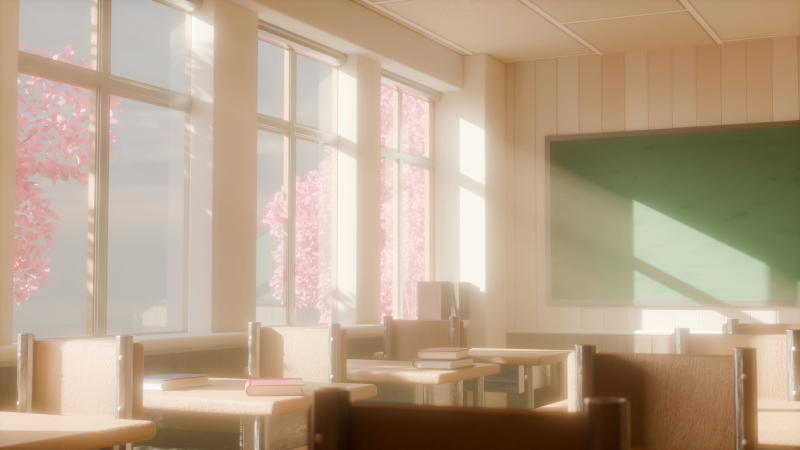
“Get into mound formation, children,” Mrs. Bentwilder said. “I’m going to step on a poem.”
The children, buzzing with excitement after a recess filled with coin melting and uncooked spaghetti fights, formed an unruly pile in the open area of the classroom.
Mrs. Bentwilder spoke loudly, so those on the bottom could hear. “It’s that time of the minute when we have to ask ourselves one question. Who can tell me what question we have to ask?”
“Willy is stenciling again!”
“Willy, we stencil during walrus watching, not during mounding. But also, Charlotte, we don’t spill beans on each other in this class, do we?”
Somewhere, muffled, Charlotte grunted.
Mrs. Bentwilder repeated, “Can anyone tell me the question we have to ask?”
“I know! I know!” The voice was Swinton, the red-haired girl, whose freckled hand emerged from the chaos of writhing bodies waving a packet of tomato seeds, which she tossed at the chalkboard to let the teacher know she was ready to speak.
“Go on, Swinton. What is the question we must ask?”
“Where do skeletons go when they leave our skin?”
“Correct! Thank you, Swinton, for being so hypothetical.”
“But what’s the annfffa?” some boy shouted, his mouth obstructed no doubt by someone’s arm.
“The answer is in the question!” Mrs. Bentwilder responded with a chuckle. “Now we will poem-stomp.”
At the bookshelf she located the collection about the terrible beauty of cauliflower. She opened it and stood upon the pages for twenty-five minutes while the children grunted and ooh-ed and ahh-ed. This was their favorite time of the day aside from catalogue squeeze.
When the activity was finished, Mrs. Bentwilder tossed the book into the fireplace, where it began the process of turning into ash. “Now roll up for story smelling,” she instructed. She placed a novel titled All My Fine Wharves twelve feet from the pile of children, measuring out four lengths of a yardstick to ensure precision.
Gradually the mound disassembled. Students took turns rolling their youthful torsos over All My Fine Wharves while inhaling deeply. Some of them couldn’t help but yell, “Yum!”
Mrs. Bentwilder ensured that no child took more than a single sniff or rolled too slowly. Her own lungs were operating nicely, but her sense of smell had been dulled from overuse during her years of life. She envied the children’s fresh olfactory powers. If only she had sniffed fewer books, fewer folding chairs, fewer chips of shale. But there was no changing the past. Meanwhile, her heart pushed blood around inside her, making her feel slightly better.
A couple of dizzy children staggered to the sink to vomit. Soon each child had smelled the story multiple times.
“OK, everyone,” Mrs. Bentwilder said, laying the book onto the flaming logs in the fireplace. “If you would please go to your pottery wheels, we will sing about sticks.”
“Awwww …” came the disappointed groan. The children tended to hate singing about sticks, but not every activity could be fun like story smelling, and they would just need to learn this truth about life. Long ago, when Mrs. Bentwilder was a student, teachers still tossed automobile tires at their pupils during bathroom breaks! And those corncob pipe towers? Those took weeks to complete. She smiled wistfully, hardly believing those things were ever accepted pedagogy.
“Mrs. Bentwilder, why do my arms cry at night?”
The teacher’s fond memories were derailed. She looked down to see the round, inquisitive face of Bob Knob. He wore triangular glasses framed in herring bone.
“Don’t choke yourself about that, Bob. Most people have weeping limbs of some kind. The important thing right now is to contemplate sticks.”
A web of disappointment spread across Bob’s face, but he scuffled obediently to his pottery wheel and began pedaling like his peers. And like his peers, he was soon hypnotized by the motion of the spinning disc. This gentle trance made students more receptive to the stick songs. Mrs. Bentwilder kicked off her shoes and walked barefoot to the front of the room. There, she did a handstand, leaning against the chalkboard for support.
“A stick is not a stick until it breaks from a tree,” she recited. This line was from an old manifesto by a long-dead cattle rustler. The teacher’s trouser legs slid down to her knees. One of her knees bore an ugly scar from where she had been pierced with an arrow ten months earlier. Silly mistake, dancing in the woods during tree-shooting season. Still, despite the dangers she would do it all again, as tree-shooting season was the best time of year for dancing. Life was indeed filled with compromise and contradiction.
A flying packet of cucumber seeds slapped against the chalkboard, narrowly missing Mrs. Bentwilder’s foot.
“How come a finger is still a finger when it’s on my hand?” a child asked.
Mrs. Bentwilder’s head was filling pleasantly with blood. She was reminded again of all the unselfish work of her heart. She would need to be sure to thank that organ once she had a free moment. Perhaps she would pen a letter. “You children heard the question,” she said to the class. “Why is a finger a finger when it’s on your hand? Would anyone like to staple the answer to the top of their head?”
“Ooh! Ooh!” At least ten kids began making wing-flapping gestures with their arms.
Mrs. Bentwilder belched tenderly. “You may all staple the answer.”
The children quacked like ducks in celebration. Scraps of cloth were gathered from the corner, and the laborious process of carving answers into the cloth with safety pins was initiated. For the next 30 minutes, Mrs. Bentwilder remained upside-down, singing every song she could remember about sticks: “Sticks Talk, We Listen”; “What Kind of Stick is My Daddy?”; “Give a Whittle, Take a Whittle”; “Why the Fuck Do They Call This a Faggot?”; and the happy singalong, “Fire is a Jealous Little Bitch.”
Children couldn’t be trusted to staple their own answers to their scalps—last year, two boys ended up with their eyes stapled shut—so Mrs. Bentwilder turned herself right-side-up and headed to the drawer. The abrupt exit of blood from her head made the world fuzzy. She swayed on her feet.
“When will we do walrus watching?” came the sad voice of Willy. “I want to stencil!”
“Soon, Willy. First, we have to staple those answers to your heads.”
“Mrs. Bentwilder,” another boy said, “my uncle says gravy isn’t real.” It was Bob Knob again. She loved the child, but now wasn’t the time.
“Of course it’s real,” she said, trying to sound reassuring as the world grayed around the periphery of her vision. “Gravy was proven scientifically, years ago.”
She struggled to see. Her stomach churned unpleasantly. The dozens of staplers piled inside the wicker basket looked like a gathering of bones. She did her best to distribute staplers to the eager students, who swarmed her like hairless rabbits. Calling a rabbit hairless was redundant nowadays, but she recalled that rabbits used to have fur, didn’t they? Years ago, when she was a child, yes, she was certain of it. What had happened? Someone had passed a law, that was it, she remembered it now, a law banning rabbit hair. At the time it made sense—her own parents were fierce proponents of the Nude Bunny Initiative—but now, in retrospect, it seemed downright silly. Perhaps one day these children (or their children) would again know the pleasure of hairy hares.
She belched and tasted the vinegar lollipop she’d eaten at Third Lunch. Something was wrong inside her. Her stomach, her head. It was impossible that her time could be up, wasn’t it? Wasn’t it impossible? Her expiration date—she remembered painting it on the side of her refrigerator and then forgetting about it because it didn’t really matter. Surely that day wasn’t today, was it? The idea produced a current of nerves through her body.
She felt someone tugging at her shirtsleeve. Bob Knob. His expression was urgent now, frightened. The little teeth in his mouth made her think of the tombstone collection in her garage. She hadn’t polished those in a while. Would she ever have the chance now?
“But Mrs. Buttwiper,” Bob said, “I’ve never seen gravy. No one I know has even seen it!”
“I can’t get my staple out of my ear,” insisted Willy. He was pacing the floor, slapping at the side of his head.
“When do we walrus watch?” someone yelled. The children were beginning to come apart like snakes who’d swallowed dynamite.
Mrs. Bentwilder knelt beside Bob Knob, poor boy. His lip quivered. She pointed to his heart. “This is where the gravy is,” she said. “It’s running through all of us.”
Immediately a peaceful glow replaced the fear in Bob Knob’s eyes. He stilled like a pond on a breezeless day.
Mrs. Bentwilder stood. The world pitched as if the classroom was a ship on the sea. She experienced the uncanny sensation that she was evaporating, along with the strange thought that she had never been alive at all. But she felt no fear—it was as if she was being brought into a warm embrace. She tried to recall her youth, her adulthood, her family, anything, but her thoughts melted into a sort of stew that she swore she could taste on her tongue.
At that moment the classroom door opened. Principal Highclimber entered, cupping his hands around his mouth and issuing a series of barks like a seal. Beside him stood a young woman in a flowing red dress and a black top hat. Once the children settled, the Principal spoke.
“Let’s all pat our tummies for your new teacher, Ms. Conaway.”
The children raised their shirts and slapped their skin—all of the students but one.
Bob Knob, now a grown man wearing a reddish-gray beard, stood near the corner of the room, staring at the pile of human bones on the floor. He recalled Mrs. Bentwilder’s kindness. At his advanced age, he scarcely resembled the boy she had known, although he still wore triangular herringbone glasses. Gazing down at Mrs. Bentwilder’s skull, ribcage, hips, femur—her dismantled and discarded infrastructure—he smiled, weirdly embarrassed by problems from so long ago: he hadn’t believed in gravy, and his arms cried at night! How silly these fears seemed now, yet how real and urgent they were when he was a boy.
“Are you using these?” a small girl asked him.
“They’re all yours,” Bob Knob said, stepping aside.
The girl gathered as many bones as she could carry and scampered off to play, singing a song about sticks.
Darrin Doyle is the author of seven books of fiction, most recently the novella, Let Gravity Seize the Dead (Regal House Publishing), and the novel, The Beast in Aisle 34 (Tortoise Books). His short stories have appeared in many literary journals. He teaches at Central Michigan University, watches too many horror movies, and has a cat named Ham. His forthcoming novella, The Boy Behind the World, will be released in 2027 from Regal House Publishing. His website is darrindoyle.com.
Image: BlendWorks!, unsplash.com
Check out HFR’s book catalog, publicity list, submission manager, and buy merch from our Spring store. Follow us on Instagram, Bluesky, and YouTube. Disclosure: HFR is an affiliate of Bookshop.org and we will earn a commission if you click through and make a purchase. Sales from Bookshop.org help support independent bookstores and small presses.

