
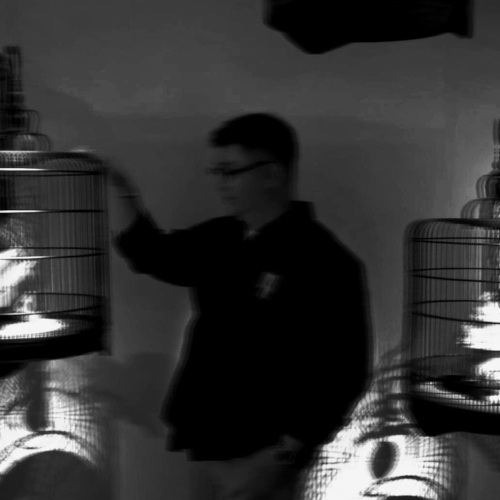
POST-MORTEM REPORT NO. 0607-EX
EXAMINER: [REDACTED]
SUBJECT: Male, 29 years old.
DATE OF EXAMINATION: Ongoing.
The body presents no visible or any obvious trauma. Facial musculature is disciplined; trained into neutrality. No signs of impact, struggle, or force. No outward signs that anything is, or even could be, wrong.
This is typical.
Observed behavioral condition suggests full participation in daily life:
- Eating regular meals with company
- Engaging in conversation with colleagues, family, and strangers
- Displaying wit in making jokes with quick succession
- Attending work without absence and displaying diligence
- Meeting social obligations on schedule
- Responding to text messages promptly
The gestures do not appear studied or rehearsed. They appear genuine. Spontaneous affect was detected and confirmed by witnesses.
The subject does not move through the world like someone dead, but like someone living. Someone who is living well, in fact.
Breathing is present. Response to stimuli is present and appropriate. Appetite is normal. Sleep patterns are functional enough to avoid concern.
Death of the spirit is not visible to the layperson when the performance is this competent. It is, almost always, missed.
The body is dressed for ordinary interaction. The clothing is clean, presentable. Hygiene maintained. Hands: steady. Voice: usable. Warm when required and always seeming to say just the right thing people want to hear. Smile: deployable on demand. Natural, effortless.
This shell would be permitted entry anywhere. The subject still passes as alive. When someone can laugh at dinner, no one checks for a pulse. No one feels the need to.
Coroner’s Note: The examiner acknowledges potential bias in assessment. Subject and examiner share identical biographical data. This, however, is not a breach of protocol. There is no one else qualified to perform this examination.
II. IDENTIFICATION
Official records confirm continued survival. There is no certificate of death for the subject.
Identity markers remain active and current:
- Son: fulfilling filial obligations, attending to family needs.
- Husband: married recently, festivities and important dates are acknowledged and celebrated.
- Employee: promoted once, performance reviews were always marked exemplary. Never late, never declining overtime. Always at the ready to take one for the team.
Credit scores remain active. Bill payments: made on time.
Social calendar demonstrates engagement:
- Flew to corporate events in three countries this year
- Attended family dinners monthly, sometimes weekly
- Takes care of errands and groceries for his wife
- Present at home during critical moments—diffusing fights when the name (that name) surfaces in drunken conversations, when grief ferments into rage, and someone needs to stand between the broken.
Messages still sent and replied to. Birthdays acknowledged. The body kept its schedule.
That was enough to be believed.
III. ENVIRONMENTAL HISTORY
Family environment preserved in survival mode:
- Solve material problems first
- Do not speak the unspeakable
- Grief is private, even from each other
- Silence is safety
The family does not lack love. They lack language.
Each member experienced the same loss. Each member carries the same grief for the same person. But there is no shared syntax for it. No permission is given to speak it aloud except when alcohol dissolves the structure, and then it emerges as accusation, as something sharp that draws blood before anyone knows how to stop it. They do not know how to sit in the same room and say that name without the room collapsing.
This profile is consistent with what Doka (1989) termed “disenfranchised grief.” Grief that cannot be openly acknowledged or publicly mourned because the griever’s loss is not socially validated. In families that idealize a child after death, surviving siblings may experience a form of disenfranchisement, where their own pain and existence are rendered invisible. Subject’s family, while refusing to openly mourn one child due to fear of judgment and the lack of complete understanding of its cause, inadvertently created conditions where the surviving son’s grief (and life) could not be fully recognized. They will never move forward, because the grief remains unresolved and without closure. Perhaps this is a cultural system efficient at producing high-functioning ghosts. No external observer would be able to classify this environment as lethal, because these interactions happen so privately, there are often no observers at all. That is the brilliance of it.
IV. CATALYTIC EVENT (UNDECLARED)
The brother’s passing. At an unspecified point, with available testimony suggesting gradual, not sudden, the death occurred. That death is very much different from this one. It was the kind that is recognized. Documented. Named. Though discreetly, at least the family mourned that loss.
That death received flowers. That death stopped time. That death was the one that mattered.
Its gravity rearranged the room. Not only by what was lost, but by what remained. And what remained was subject to measurement. Measurements that perhaps were always noted, called out. But takes on a new meaning since the death.
The deceased: remembered as brilliant, kind, effortless, beloved. The subject: present, breathing, therefore comparable, scrutinized.
In many instances, the survivors shared memories, but every memory shared became a contrast study:
- He was such a great child.
- He would have achieved more; we would have been so proud of him.
- He never made us worry.
The comparisons were not intended as violence. They were attempts to keep the dead alive. But the living became the proof of what was lost, and the best intentions became an unconscious execution.
Families experiencing sudden, major losses often create hierarchies of grief, leaving the surviving members to experience comparative invalidation, similar to the aforementioned studies done on disenfranchised grief.
The subject was present for this catalytic event. And then he was not. Physically, he was but internally he had joined his brother. Neither had a choice.
But his brother’s death was recognized as a tragedy. His survival was reframed as inadequacy.
It is permissible for one death to bury another.
V. INTERNAL EXAMINATION
The cut must be made.
Thoracic cavity opened. No resistance. No reaction. When the knife and the flesh are the same, there is no pain response. Only observation.
Inside: organs intact, oxygenated, viable. This body can live another sixty years. Probably.
Neurological tracing reveals decay beginning not at the brainstem, but at meaning recognition. In 1946, Psychiatrist Viktor Frankl observed and coined the term existential vacuum, describing it as the loss of life’s meaning. This appears to be what he would have studied. A condition that would persist even when physical survival was assured.
There is evidence of prolonged exposure:
- Guilt compounds at toxic concentration levels
- Repetitive cognition loops confirming inadequacy
- Causality hallucinations: belief that his survival caused the death
- Logical self-incrimination patterns: if one had to die, it should have been him
The subject has mistaken endurance for atonement.
The cause of emotional death does not originate from the event itself, but from witnessing that his survival was, in fact, seemingly unwanted. He did not die from loss. He died from remaining.
VI. SECONDARY DAMAGE
Self-actualization: The family’s idealization of his brother over him was the wound that taught the subject to perform the execution himself.
Internalized as doctrine, the subject no longer required his family to remind him of his inadequacy. He became fluent in their language. He became the most efficient deliverer of his own invalidation.
The subject developed a reflex … Just a quiet, automated reassessment, in a voice that had learned to sound like everyone else’s:
Every minor failure became evidence: See? This is why it should have been you.
Every achievement felt fraudulent: He would have done this better. He would have made them prouder.
Every moment of joy triggered immediate correction: You have no right to this. Not while he’s gone.
The subject’s reflex triggers at every inconvenience, every witness of death, almost every moment he has, an instant response to question his right to be the surviving sibling. Not consciously. Not dramatically. Just—Why am I still here?
This is secondary damage. The family planted the seed. The subject watered it daily.
He became both the executioner and the condemned. The prosecutor and the defendant. The knife that carves and the body that yields.
He became self-sufficient in his own diminishment.
Survival itself was reframed not as fortune, but as theft. The subject learned to pre-emptively apologize for existing. To make himself smaller. Quieter. Less troublesome. To require nothing. To become as close to absent as possible while still technically present.
VII. TIMELINE OF DECLINE
No immediate shutdown. This was progressive.
Stage 1: Social compliance maintained. Internal outage initiated.
Stage 2: Dissociation merges with routine, indistinguishable from discipline.
Stage 3: Bonds self-severed pre-emptively to minimize collateral damage. Classified externally as “coldness,” “detachment,” and “logical decision-making.” Trauma researcher Bessel van der Kolk documented how traumatized individuals often employ defensive dissociation as a protective mechanism that, over time, becomes indistinguishable from personality.
Stage 4: Behavioral automation successful. The ghost becomes efficient.
Stage 5: No remaining self-coherence beyond the obligation to reduce harm to others.
VIII. TOXICOLOGY
Detected: moral exhaustion at lethal concentration.
Detected: unreleasable remorse.
Detected: fear of inflicting further grief as the last inhibitor against suicide.
Absent: purpose.
Absent: belief in redemptive future.
Absent: meaning-making capacity.
Absent: self-recognition as an entity worth preserving.
The examiner detects these absences himself.
Subject reports: Life is no longer something to be experienced. Life is something endured for the benefit of others. An obligation to minimize additional damage. A performance for an audience that does not know it is watching a finale.
The DSM-5 acknowledges no diagnostic category for what psychiatrist Judith Herman calls complex grief, a condition where fundamental threats to identity and relational coherence are suffered in addition to the loss experienced by the bereaved.
These metrics cannot be measured by standard medical equipment. Thus, it’s not unexpected that no one noticed the exact moment of expiration.
IX. CAUSE OF DEATH
Official: N/A. Subject is legally alive.
Clinical: Psychological self-dissolution following sustained internalization of comparative grief and self-administered invalidations.
Actual: Reassignment from person to placeholder.
He ceased being someone. Remained something.
The subject did not die from what was done to him. He died from what he learned to do to himself. He became someone who had to justify every breath.
A son-shaped apology at the dinner table. A husband-shaped thing in the bed. An employee-shaped function in the office.
The roles continue. The person does not.
X. STATUS OF BODY
Still operational. Still compliant. Still performing, no threat to social order.
Subject is currently being congratulated by peers for being strong and dependable. Subject is praised for composure, for never complaining, for keeping it together, and for resilience. Subject is thanked for responsibility, for showing up, and for being dependable. Subject is recommended for leadership roles due to observed emotional regulation.
Awards given for behaviors that are symptoms.
There is no test to prove a soul has vacated. No scan that reveals the absence of will to continue. No blood work that flags the presence of someone simply waiting for permission to stop. No one suspects. Why would they? He shows up. He performs. He does not flinch.
The body attends its own wake daily. No one notices because the body is also serving refreshments.
XI. FINAL ASSESSMENT
This death will never be recorded. No rituals will be held. No flowers sent. No obituary written. No closure will be offered because there is no official acknowledgment that anything has been lost.
No language exists to declare that this kind of death occurred. Because, technically, nothing died.
The subject will continue. He will attend his children’s future graduations, should he have them. He will sit at his parents’ eventual funerals. He will retire one day with a reasonable pension. And through all of it, he will be technically present. Functionally visible. Legally accounted for. Not living. Not dying. Merely failing to interrupt expectation.
But the person who started this life, the one who believed he had a right to it, has already been interred. Unmarked grave. Unattended service. Unmourned.
Still breathing.
Time of death: Unrecorded. Body status: Remains in circulation. Prognosis: Continued indefinitely or until system failure.
(END OF REPORT)
EXAMINER’S FINAL DISCLOSURE
The examiner must disclose a conflict of interest. Subject and examiner are the same person.
This report was prepared by the deceased on the deceased. The only qualified observer of this particular death.
No external examiner would find the evidence. No one else has access to the internal damage. No one else can see where the person ends and the performance begins.
This is a self-autopsy. The body examining its own absences.
The examiner remains on duty. No replacement has been assigned.
No one else has applied for the position.
SIGNED: [REDACTED]
Mini-interview with Atreus Fong
HFR: Can you share a moment that has shaped you as a writer (or continues to)?
AF: I was told that I’ve always been able to find the word. In conversations, in work, in the middle of someone else’s half-formed idea. The precise phrase that captures exactly what needs to be said tends to arrive before I’ve consciously looked for it. A mentor at work once pointed it out to me, and in that moment I wanted to see what else I could do with words.
HFR: What are you reading?
AF: The Midnight Library by Matt Haig. Checking out Post Malone’s comic Big Rig too, besides chasing the weekly releases of my regular manga readings.
HFR: Can you tell us what prompted “Post-Mortem Report No. 0607-EX”?
AF: As a designer, I work extensively with concept narratives, turning words into something more by layering meaning through visualization, symbolism, and form.
When I was introduced to the hermit crab essay, I was immediately fascinated by what the form could do. It operates the same way good design does as the container itself becomes part of the meaning.
I believe nonfiction has to be lived in, which means when I write it, it often becomes over-narrated. The hermit crab essay solved that. It gave me a structure that could not only hold the story without me having to carry it myself, but add a layer of meaning to the story. I could tell a story without telling the story. And I feel I can let readers “live my story” through uncovering it themselves.
HFR: What’s next? What are you working on?
AF: I have ideas for other hermit crab essays I want to test, if I can find the right slice of life to attach them to. Otherwise, I suspect I’ll drift back into horror fiction, which is where I’m most at home. I’m not in a rush to decide. The right piece tends to make itself known.
HFR: Take the floor. Be political. Be fanatical. Be anything. What do you want to share?
AF: Logic wrote a song for suicide prevention. Chester Bennington gave his voice to everyone who needed it, and then lost his own battle. When I’ve been in the depths, it was their voices that pulled me through.
I hope this piece does something similar, even if quietly, even if for one person. I am sharing it in hopes that it tells someone that what they’re feeling isn’t their fault. That it’s not too late to find help.
Wherever you are in the world, findahelpline.com will find you a free, confidential crisis line in your country.
Atreus Fong is a writer and designer based in Singapore. A recent Bachelor of Communication graduate from the Singapore University of Social Sciences, he discovered that the same instincts that make good design—form serving meaning, structure as expression—translate quietly but precisely into the work of writing. He writes across genres, but has a natural preference for fiction, following the advice once given to “write in the genre you like to read.” His stories tend towards the dark and uncanny, drawing from liminal spaces and horror that finds its way into familiar, everyday settings. He believes that nonfiction writing should stem from personal experiences, which means it arrives less frequently, but, when it does, it tends to be loaded. His most recent discovery of hermit crab essays piqued his interest in writing that uses its shape deliberately, where the choice of form is itself an argument, and the most precise emotional language is often the most indirect. Atreus Fong is a pen name.
Check out HFR’s book catalog, publicity list, submission manager, and buy merch from our Spring store. Follow us on Instagram, Bluesky, and YouTube. Disclosure: HFR is an affiliate of Bookshop.org and we will earn a commission if you click through and make a purchase. Sales from Bookshop.org help support independent bookstores and small presses.

