
Early in the first summer of the president’s third term, right before Franny won the lottery, my dad died. The book club had just chosen The Monkey Wrench Gang by Edward Abbey. Gus grumbled into his Cabernet that it wasn’t a queer book proper. Franny sighed. This was an old argument. The Queer Book Club didn’t read queer books. We queered the books we read.
“Orlando!” declared Gus. “Maurice! Those are queer books.”
I’d only joined the club because Franny said it would improve my vocabulary. I learned tumescent from Lolita and effulgent from Lord of the Flies and equanimity from Siddhartha. I read most of The Monkey Wrench Gang on the flight home to Indiana and finished it stationed next to Dad’s hospice bed. I don’t know the exact moment he died, somewhere around chapter twenty-eight when they blow up the bridge. His breathing had been labored, his left shoulder jerking machine-like every few seconds. His mouth gaped open, teeth gone bad, lips curled like a cartoon fish. The doctor called it agonal breathing. “Not like he’s in agony or anything.” That hadn’t even occurred to me. “It’s a completely natural reflex, from the brain stem.” He tapped the nape of his neck as though I didn’t know where to find the brain stem.
The nurses offered sympathetic noises when I arrived, relieved that I’d made it in time. “You can say your goodbyes,” they told me, though I didn’t know how many goodbyes I had to say. “His hearing still works.” I imagine most people convince themselves that this is true. Dad’s hearing was never great anyway, and if he was already in brain stem mode, well ….
I discovered that I only had one goodbye to say, so I said it, if only to hear it myself out loud. “Goodbye,” I said.
I hadn’t brought a suit to wear to the funeral. I was going to grab a cheap jacket at Kohl’s, but Franny texted OMG NO!!! She sent an address in Indianapolis for me to get something nice, her treat. That should’ve been a clue something was up. It wasn’t like her to pick up the tab for anything. She grew up even poorer than I did and was jumpy around money.
I know a guy, she texted.
In Indiana?
She responded with the monocle emoji, her way of saying, Trust me.
I countered with ironic praying hands and a nerd face, then a few minutes later: Seriously tho Fran thanks. I’m her oldest living friend, so I get to call her Fran. She has also answered to Frances, Frankie, Kiki, Coco, Cocoa, Koko, Miss Koko, Miss Franny, then finally just plain Franny, which is probably how you know her if you know her at all. She calls me Bubby because I’m like the brother she never had.
The place in Indianapolis was in a shopping plaza meant to look like a real old fashioned town square, but everything was too clean and new to be authentic. I’d never been to a clothier before. The people there treated me like I was important, which made me feel squirrelly because it was obviously not true. The tailor wasn’t bad looking, though. He had a meticulous five-o’clock shadow. Maybe it was salesmanship, but he seemed to be flirting. He winked at me in the mirror and complimented my waistline. He ran his floppy tape all over my body. When he measured my neck, his fingers brushed against my brain stem. It felt good to have someone touching me. He patted my ribs amiably and said, “Va bene.” We were done, but didn’t I have to try something on? “No no,” he chuckled. “We make your suit from scratch.” He formed an OK sign with his fingers. It would normally take them weeks, but I could return tomorrow for a fitting. The tailor squeezed my shoulder and said, “I give you my condolence.”
I took his single condolence back with me to the hotel, where I posted Dad’s death on Facebook. Without meaning to, I drank a lot that night looking at old pictures. A few times I surprised myself by crying. I fell asleep without jerking off once, but the tailor figured prominently in my dreams.
The funeral was sparsely attended. I couldn’t help feeling like I’d failed Dad. In his later years after Mom died, he had liked to joke with me on the phone when he called on Christmas. “Always go to other people’s funerals,” he’d say. “Otherwise, they won’t come to yours.” He wasn’t a baseball fan—he’d spent most of his life hunched over one piano or other—but he enjoyed the wit and wisdom of Yogi Berra, which became the main theme of my eulogy. When you come to a fork in the road, take it. The future ain’t what it used to be. It ain’t over till it’s over. Well, now it was over for good. Then I quoted Doc Sarvis from The Monkey Wrench Gang: “When the situation is hopeless, there’s nothing to worry about.” Most people at the funeral seemed to be holding out hope for an eternal afterlife in a Christian Heaven. I guess I was just trying not to worry.
I looked amazing in my new suit. After the service a lot of people came up to tell me so. I hadn’t seen Mrs. Crocker in decades. She gave me a hug and cried so hard I worried she’d smear my jacket with mascara. Then she straightened up and held me at arm’s length and shook her head saying how handsome I was, how proud of me Dad was, how sorry she was for my loss. She said all the stuff people say, which is fine. She tucked her business card into my breast pocket. Whenever I was ready to talk about selling the house, she told me, give her a call and come on over. She’d make me a home-cooked meal. I was just skin and bones, and Ricky would love to see me. How long had it been?
It had been decades. Entering the Crocker house felt like walking into the nineties. The living room doubled as Mrs. Crocker’s real estate office. “Tax write-off, don’t tell.” She tapped her lips with a finger. The curtains were blue with a boisterous floral print, matching the upholstery of the couch, the love seat, the chairs, and the frilly pillows perched at an angle on each piece of furniture. An ornate wallpaper border ran along the ceiling and chair rail. Everything smelled like perfume.
As a kid, I’d had many sleepovers in this house. Ricky and I would stay up and play video games and eat potato chips and candy in the basement. We watched wrestling and traded baseball cards. His dad Dell owned the Kingdom Come Gun Club, tucked back in the woods behind the house. He called it Kingdom Come because for him it was like heaven on earth. Ricky and I would sneak up there at night and collect spent casings and shotgun shells, pretending they were treasure. We’d play war, sometimes on the same side, more often as enemies, flinging clay pigeons at each other like frisbees. One time he knocked my glasses off and scratched my cornea. Ricky thought it was hilarious that I had to wear an eyepatch for a week. I thought I looked cool, like a pirate. He called me Three Eyes.
Mrs. Crocker handed me coffee in a teacup with a spoon that rattled like crazy against the saucer. It was fine Royal Albert china. She displayed a complete set in her massive oak cabinet. I sank into the couch, spilling coffee on the front of my khakis.
“I’m thinking we should start at 3:50.”
It was only nine in the morning. I said, “Start what at 3:50?”
“The house of course. It’s in good shape, new roof in the last eight years, almost two thousand square feet, half-acre lot. I know it sounds high, but I think we can get $350,000. Maybe $375,000 if you update the bathrooms.” She stared into space and tapped her lips contemplatively with a shiny red fingernail. “And if you do, I know the best, cheapest plumber in the county.”
“You really did your homework.”
Mrs. Crocker straightened her back. She was the best, cheapest (and only) realtor in Winnsboro, Indiana. “It’s my job.” When she smiled, her hooked nose looked like the beak of a buzzard. “I know this market backwards and forwards.”
“I only know it as backwards,” I said.
She gave me a puzzled look along with some paperwork that was already filled out. I only had to sign. “Then I’ll get the ball rolling,” she said.
“I need to look things over.” I’m nothing if not vigilant about paperwork. In the real estate market I lived in $350,000 wasn’t much, but it wasn’t nothing.
“Well, I thought you—” She patted my knee. “I guess that’ll be all right.”
“I’ll email it.” I was flying back home in the afternoon so that I wouldn’t miss this week’s Queer Book Club.
“You can drop it by,” she said. “Or a fax’ll be fine.” Mrs. Crocker took my teacup and spoon and saucer and told me to go see Ricky before I left. “He’s up the hill, saying his goodbyes, poor thing.”
“Goodbyes?”
Poor Ricky was not a sentimental man, but he had plenty of goodbyes to say, namely to the gun club itself. Membership had plummeted since Dell passed away last fall, right after he’d sunk a fortune into expanding the place. Now they were upside down and had to sell the land, more than a hundred acres. Kingdom Come, Kingdom Go. They were asking a quarter-million dollars, another quarter-million for all the buildings and merchandise, as-is. “It could be a brand-new subdivision,” she said. “Or a luxury estate. It’s worth millions really.”
I cut through the trees and emerged into the open field behind the old clubhouse where I’d had a G.I. Joe-themed birthday party when I turned eleven. The grass was long, and the gravel driveway weedy. No one was taking care of the property. Ricky was supposed to be in charge, but he was never one for upkeep. Muffled popping sounds came from the newly constructed indoor firing range, a long squat concrete building. I’d never been inside before. I was surprised when I swooshed open the glass door to find an enormous gun shop selling every kind of firearm and accessory you could want: handguns behind glass cases, shotguns in cabinets, military rifles hanging behind the register, scopes and holsters and straps, tactical gear in camo, boxes and boxes of ammunition, and nobody minding the store.
The thudding got louder as I walked down the cinder block hallway toward the firing range. I waited at the steel door until I thought Ricky was finished shooting. When I entered, my ears were assaulted by another deafening round. I fell backward onto the ground, and the paperwork went flying around me like an explosion.
Ricky swung his Glock in my direction. He took a decisive step toward me before lowering his weapon. “You almost got yourself killed!” he boomed. He was right, and the new federal Stand Your Ground law would’ve kept him out of jail, too. Luckily, he recognized me as friend not foe and slipped the gun into the holster on his hip. He snickered and removed his ear muffs. “And you pissed yourself there good, Three Eyes.”
“It’s coffee.” I stood and wiped the front of my pants. “I spilled.”
Ricky gave me a manly hug with two sharp smacks on my back. “Sorry about your dad.”
“Thanks,” I said. I gathered the paperwork, and we walked into the lobby to get cokes from the vending machine.
“Nobody should have to go out that way,” he said.
“Yeah,” I agreed. “Sorry about your dad.”
Ricky let out an airy belch. “Well, yeah, Dell went out on his own terms.” His own terms meant trekking into the woods while he could still walk and killing himself while he could still pull the trigger. “One of the Wilson boys found him down by the creek, where we used to go swimming.”
I hadn’t remembered swimming in the creek until that very moment. After a big rain we’d go skinny dipping, swinging on wild grapevines out to where the water was deeper. Ricky would call me a faggot if he thought I was looking at him, but I was sure he was the one looking at me.
“That’s around where they found Rob’s body, too,” he said.
My brain glitched. I didn’t know anyone named Rob. I said, “Who?”
“Fuck you, asshole. Rob. Robbie.” He punched my arm playfully but hard enough to hurt. “Robbie Fucking Kane.”
My throat swelled. “I thought she left.”
“Well, he came back and got himself beat to death.”
Last time I was in town, I’d had lunch with Bobbi at the Cahoots Cafe. The high school girl taking our orders wouldn’t make eye contact. One of the old timers at the counter kept shaking his head and making noises. Finally he slammed his mug down and clattered his fork onto his plate and left in a huff. He revved his truck outside for a long while and peeled out in the gravel parking lot, speeding away down the road. I hope he crashes and dies, said Bobbi. She’d gotten a job in Indy and couldn’t wait to get the hell out of Winnsboro for good. Now I wished I’d told her to join me out West, where she could be herself.
I went numb. I could barely speak but managed to say, “When?”
“About a year ago.” Ricky tossed his empty can into the trash and folded his arms across his chest, resting them on top of his gut. “It was a big fucking mess. All over the news.”
“Jesus.” I didn’t want to cry in front of Ricky. I felt my eyes get warm but held back the tears. “Jesus Christ,” I said.
“Jesus ain’t got nothing to do with it,” he said. “It’s one thing to be queer, but that dumbass shoulda stayed away if he was gonna be fucking queer like that.”
The guy sitting next to me on the plane popped in his earbuds and pulled a ball cap over his eyes. I let myself sob. At one point the flight attendant asked if I was OK. I shook my head. I wasn’t OK. I told her my dad had died, though part of me was crying for Bobbi too. She gave me a couple of free whiskies, which kept me occupied until we landed. I distracted myself by reviewing vocabulary from The Monkey Wrench Gang: tamarisk, chalazion, paloverde, rurp.
“You’ve been drinking, Bubby.” Franny kissed my cheek. I was wearing my new suit, which meant I was overdressed for the Queer Book Club. I twirled, and they applauded. “Worth every penny.” Franny brushed the shoulder of my jacket, Gus slipped a glass of wine into my hand, Sonia scooted over for me to sit on the couch, and Miles announced, “The gang’s all here!” They gave their condolences and said sympathetic things. They laughed about the tailor and Mrs. Crocker and Ricky and the gun club.
“Oh my god,” said Miles, “have you ever shot an actual gun?”
“Of course,” I said.
They seemed impressed and suspicious.
“Haven’t you?” Nobody had. I told them about Bobbi and got choked up. I felt bad for bringing the mood down.
“I remember hearing about that.” Gus refilled everyone’s wine glasses. “They deadnamed her in the obituary.”
Sonia said, “That’s some bullshit.”
“They still haven’t found the killer,” said Gus, “last I heard.” There had been some uproar from allies in Louisville and Indianapolis, even a candlelight vigil outside the Winnsboro Police Station, but after a few weeks, another travesty of justice diverted their attention, and people moved on. There were a lot of clues leaked to the press: a missing shoe, orange clay under her fingernails, a chunk of hair ripped from her scalp, wooden splinters embedded in her skull. Someone named Ollie Braun started a true crime podcast full of conspiracy theories. It only lasted two episodes.
Franny brought out the food, which was always thematically related to the book we were reading. This time it was beef jerky, mixed nuts, and canned beans: survival food, but Franny zhuzhed things up. The jerky was coated in tupelo honey and garlic, the mixed nuts roasted with butter and rosemary, and the beans served on toast with crispy slabs of pork belly.
Sonia asked where the beer was. “I thought for sure you’d serve the kind Hayduke drinks.”
“Not a very queer character,” said Gus.
“No,” said Miles, “but Doc is definitely a bear.” Everyone agreed with them that Doc was a bear. Thus commenced a spirited discussion and deconstruction of normative gender roles in the novel. We hardly mentioned wilderness preservation or eco-sabotage, and I didn’t get to try out any of my new vocabulary.
Things were winding down when Franny made her announcement. She hadn’t gone public with the news yet, but she’d won the lottery. The big one, more than twice as big as the biggest in history, which meant she was an instant billionaire, even after taxes. We congratulated her and celebrated, each of us imagining a new kind of life as a billionaire’s friend, though it was impossible to imagine how everything ended up. That night seemed unreal, like we’d slipped into an alternate universe where good things actually happen to good people. Nobody wanted to go home, so we didn’t. It was a pretty raucous few hours of drinking. Someone said with that kind of money Franny could do some serious monkey-wrenching. We all laughed, but she nodded soberly and said it wasn’t a bad idea.
We clinked our glasses together: “To Franny!”
She countered: “To my Queer Monkey Wrench Gang!” and then we drank.
***
Franny wanted to see where I’d grown up, so she flew with me back to Indiana. Later of course she’d have her own private plane, but for now we were happy drinking champagne in first class. “I’ve never been to Indiana,” she said, staring out the window. “I’ve never been anywhere.”
Dad’s house was hot and stuffy. I put our suitcases away and turned on the AC.
Franny sat at Dad’s baby grand in the front room and lifted the lid, running her fingers along the keys as though petting a skittish animal. “This is where you grew up,” she said.
“This is where I grew up.” I went from room to room turning on lights and then looked for something to eat in the kitchen. In the fridge a glass bowl held a desiccated chunk of chicken the approximate size and shape of a brain stem. Dad’s leftovers. It seemed unfair that he wasn’t allowed finish it. The plastic lid had cracked and was held together with strips of white medical tape. Maybe I was feeling literary, but I thought this container was a perfect symbol for Dad.
A boisterous F major chord startled me, and I almost dropped Dad onto the tile floor. It was followed by a subdued D minor. “What comes next?” Franny yelled.
I shoved the chicken down the garbage disposal, flipped the switch, and ran the water. “G minor!”
She played an ornate glissando. “Now what?”
I dried my hands and peeked my head around the corner. “I didn’t know you played.” Her dark hair shimmered and cascaded down her back.
“Now what?” she repeated.
“C seven.”
She played the chord and held it. “Good boy.” Franny looked over her shoulder to show me her big smile and then stood to give me a hug. I hadn’t realized I was crying. She squeezed hard and whispered, “I didn’t know you played.”
“I don’t,” I said. “Dad did.” I only knew enough to fake my way through a lead sheet. Dad was the professional.
“What comes next?”
“I don’t know,” I said because I didn’t know. I didn’t know anything. Sell the house for $350,000. Go back West. Never return to Winnsboro, Indiana, again. Say my goodbyes.
“What comes next?” she repeated, and I realized she meant the music.
“You start over,” I said. “Back to the root.”
“That’s right, Bubby.”
***
Mrs. Crocker flipped through the paperwork to see that I had signed everything in all the right places. She shouldn’t have bothered. I’m fastidious when filling out forms.
“You have a lovely home,” said Franny. She sipped coffee from her teacup with exaggerated elegance, spine straight, pinkie up. Even the spoon was poised in delicate balance on the rim of the saucer.
“Thank you, dear.”
Ricky leered at us from the kitchen doorway. A holster sagged from the belt of his baggy camo pants. His T-shirt wouldn’t stay tucked in. He wore a bright orange hunter’s cap and held an empty soda can for dip spit. His lower lip bulged tumescently.
I was sweating. Bringing Franny to his house was not how I imagined coming out to Ricky Crocker. In fact, I’d never imagined coming out to Ricky Crocker. I imagined ignoring the existence of Ricky Crocker for the rest of my life.
“And such a lovely little town, too.” Franny ignored Ricky Crocker with the utmost equanimity. “What other listings do you have?” she said. Mrs. Crocker handed her a binder. “Wow, look at this big property with all the guns. Oh, and yours is already here, Bubby!” She touched the photo of Dad’s house.
“Coming soon,” smiled Mrs. Crocker. “I do like to get a jump on things.”
“I’ll take them,” said Franny.
“I’m sorry?”
“I’ll take them,” she repeated. “All of them. I’m offering 5% above asking price for the whole lot.” Franny handed the binder back to Mrs. Crocker, who blinked once, then twice, then broke into open-mouthed laughter. “Bubby will take care of the paperwork,” she said. This was the exact moment I became Franny’s personal assistant.
“What the actual fuck.” Ricky took a step into the room. The china rattled in its cabinet. “You can’t do that.”
Franny looked directly at Ricky, who was already breathing heavily. “I can do anything I want.”
“Mom, you can’t do that. Jesus, don’t sell to this fucking faggot.”
“Take it or leave it.” Franny set her teacup and saucer on the coffee table and folded her hands over her knees, prim.
Mrs. Crocker was overwhelmed. It would be her biggest commission ever, life-changing money, she could retire. She held her chest with one hand and extended the other to shake Franny’s.
“Oh, and I would like to buy this house, too.” Franny scanned the room and nodded as though she’d just decided.
Mrs. Crocker dropped her hand. “Well, I can’t—”
“What is your asking price?”
“Well, I haven’t—”
“Mom, you can’t be serious.” Ricky grabbed his mother by the shoulders. “Dad built this house. You can’t just sell it.”
“Well, I don’t—”
Franny said, “Of course she can sell it. She’s a real estate agent. That’s what houses are for, isn’t that right, Mrs. Crocker?”
I whispered, “What are you doing?” but Franny ignored me. She was creating this scene for my benefit, the director of a play, and I was the only person in the audience.
“Well, I mean, I would have to do some calculations first,” said Mrs. Crocker.
“But you know this market backwards and forwards,” said Franny. “Surely you know your own house better than anyone else.” She gave a little guffaw. “You know all of its nooks and crannies.”
“Shut the fuck up!” said Ricky. “I’m trying—”
“All of its assets and defects.”
“I said shut the fuck up! Mom—!”
“All of its secrets.”
“Mom, this is my home, too. Where am I supposed to go, huh?”
“What is your asking price, Mrs. Crocker?”
The room was silent. Mrs. Crocker was panicked. It really was quite theatrical. I had to resist applauding her performance. She gauged the anger in her son’s face, then measured the earnestness in Franny’s, and then, for some reason, examined mine for guidance. Her eyes pled, What do I do? I shrugged. In a moment of epiphany, she blurted out, “A million dollars!”
“Make it two.” Franny didn’t hesitate. “But I get to keep everything inside.” She twirled a finger in the air.
Mrs. Crocker swam past Ricky, who spilled dip spit down his shirt, and she grabbed Franny’s hand to shake with both of her own.
The deal was sealed, and Franny’s smile returned, so big and bright and bewitching you could only call it effulgent.
***
That fall the Queer Book Club officially relocated to Winnsboro, Indiana, and became a tax-exempt 501(c)(7). It would be another year before we became a 501(c)3 church, which is probably how you know about it. That involved a lot of good, complicated paperwork. Franny turned the gun club clubhouse into her home. It was gutted, expanded, and renovated with every amenity she could think of: hot tub, heated pool, sauna, gym, game room, home theater, and more than one fully stocked bar. The long gravel driveway was paved and hundreds of arborvitaes planted on either side. Mrs. Crocker was right. It did become a luxury estate.
The Crockers were allowed to stay rent free in their old house, but Ricky was contractually bound to take care of the lawn work on Franny’s estate. He puttered around on the tractor smoking cigarettes, drinking beer. He seemed depressed, which had been Franny’s plan all along. Now she owned him. She owned everything in that house: the curtains, the couch, the china, the spoons. Ricky could leave, but where would he go? Mrs. Crocker refused to bankroll him. Instead, she spent her money on a never-ending string of Viking Cruises. She sent postcards from all over the world wishing we were there.
I lived in Dad’s house. I slept in my old bed and poked around on the piano, trying to learn the standards Dad used to play all the time: “In a Sentimental Mood,” “My Funny Valentine,” “Bewitched.” I fed the birds. I mowed the lawn. In the garage I found another symbol of Dad: dozens of cases of expired protein shakes. They smelled sour and vegetal. Don’t we all? I dumped them down the drain and recycled the cartons.
Gus, Sonia, and Miles moved into Franny’s estate. I spent most of my time there, too. As her assistant, it was my job. I arrived every morning and stayed until she fell asleep at night.
The Queer Book Club finally finished the last installment of Jonathan Franzen’s trilogy, then we moved on to Haruki Murakami’s 1Q84, then George Orwell’s 1984, then Percival Everett’s funny Spiritualist novel Spook, then Zadie Smith’s re-imagining of Arthur Conan Doyle’s The Great Boer War. Gus proposed Death in Venice next, but I insisted on Moby-Dick. It introduced some great new words—gurry, hooroosh, orison—even if they weren’t immediately useful.
One morning, between books, Miles nudged me in the hot tub and suggested we go outside to shoot some guns. “You know how, right?”
“It’s been a long time,” I admitted, but Franny wanted to try. We dried off, put on our robes, and watched YouTube videos on the big screen until we felt qualified to march over to the indoor firing range and arm ourselves. All the merchandise was still there, untouched. Gus was afraid, so he wore a black Kevlar vest under his robe. The rest of us decked ourselves out in camo, head to toe: boots, bibs, muffs, wraparound goggles with polarized lenses. Half the fun was playing dress-up.
We sashayed to the skeet shooting machine outside and took turns missing the clay pigeons. Ricky trundled by on the tractor. Everybody turned to wave hello, inadvertently pointing five loaded shotguns directly at him. He recoiled, dropped his beer, and tumbled to the ground. We laughed. He army-crawled into the bushes. “What a great hooroosh!” I yelled. “You almost got yourself killed!”
From then on, I was in charge of safety. No more pointing guns at people, unless we meant it. We’d forgotten Handgun Hank’s Rule #1 from YouTube: Never point your gun at anything you’re not willing to destroy.
Gus didn’t shoot, satisfied to cradle the gun in the nook of his elbow and pose like a dignified outdoorsman. Sonia kept falling on her butt and laughing. Miles bruised their shoulder. And despite being serious and holding her shotgun steady and true like a pro, Franny never hit the target.
We had a good time, but frustration wrinkled Franny’s face. She was a graceful person, naturally talented at everything she tried: singing, dancing, playing the piano, playing the lottery. Now she wanted to be a good shot, too. As her assistant, I hired someone to teach us properly. My high school baseball coach Mr. Youngblood had recently retired. He was nearing eighty, a grizzled Gulf War vet who had been the faculty sponsor for our school’s Gay-Straight Alliance. Everyone called him Hayduke—even me—which confused and annoyed him, but he showed up every day and kept us on task. He started requiring that we run laps and do pushups and jumping jacks and crunches before shooting. “Ain’t no time to catch your breath in war,” he’d say. We laughed and panted and gasped. None of us could imagine being in war, but Hayduke said, “You never know.” Then he began teaching us wilderness survival. We learned how to build a fire, how to build a shelter, how to fish in the creek, how to trap squirrels. Hayduke was having the time of his life. We read Hatchet followed by Robinson Crusoe.
One day after a big rain, I proposed that we go swimming in the creek.
Sonia said, “I prefer the heated pool, thank you.”
Miles was skeptical, too. “Isn’t there like bacteria in the creek?”
“Not to mention pesticide run-off,” added Gus.
I shrugged. “I used to do it when I was a kid.”
“Sounds like fun,” said Franny. “Let’s go!”
Hayduke approved of our impromptu adventure but abstained from swimming himself, as did Gus. They built a fire and watched, passing a canteen of 1996 Château Pontet Canet back and forth. I showed them how to swing out on a wild grapevine and land in the deep part of the creek. The current was swift, and the water was cold and muddy. Despite their initial hesitation, everyone enjoyed themselves. Then Sonia stubbed her toe while wading back to the bank of the creek. From the oozy muck she extracted a Louisville Slugger baseball bat, which I intuited immediately had been the weapon used to kill Bobbi Kane. “Oh shit,” said Sonia and dropped it onto the ground. Before the police arrived, Hayduke examined it. He wrapped his fingers around the handle.
“My God, don’t touch it!” said Miles. “What about fingerprints!”
“It’s been in that water more than a year,” said Hayduke. “Ain’t no more fingerprints on this thing.” Tears welled in his eyes. Bobbi had been a student in his health class and a member of the GSA. “Thirty inches. Twenty-four ounces.” He took a slow swing. “Youth sized. Maple, not ash.”
Franny fingered the barrel where chips and splinters were missing. Winnsboro Chief of Police Duncan Fairfoul said he’d take it from there, and we all trudged back to the house to shower. We had pizza flown in from Chicago and watched queer rom coms to cheer ourselves up.
***
By winter, we were in the best shape of our lives and all fairly accomplished sharpshooters. We moved our lessons indoors and focused on pistols and hand-to-hand combat. We read Little Women and A Christmas Carol. We drank eggnog. We exchanged gifts. Franny bought a whole constellation of stars from the International Space Registry and named them after us. We wrote and performed an original song for her called “The Kingdom Come Queer Gun Club and Wilderness Survival School.” It involved a silly dance and a little skit with hunter costumes. We sang, Never point your gun unless you’re willing to enjoy! and then we shot one another in the face with water pistols full of vodka.
That’s when we got our first new member.
Arthur showed up at Franny’s front door in a blizzard on New Year’s Eve wearing a hoodie, torn jeans, and worn-out sneakers. I thought he looked like Snow White. His cheeks were cherry red. White ice encrusted the black scruff on his chin. He’d heard about our club from a viral rant online by John Paul (a nom de plume) in the Indiana Patriot & Standard, a right-wing blog. Arthur had walked ten miles. In the snow it took him all day to get here. We invited him in for a cocktail, but he was more interested in the crudités. He thawed out by the fire and gave us the broad strokes of his all-too-familiar story: he grew up poor, his family sucked, and he had nowhere to go. Gus handed him a copy of Death in Venice and welcomed him to the club.
“Wait,” I said. “He should fill out a form to join the club. There should be a meeting, and a vote, and minutes.”
“All in favor?” Sonia raised her hand and everyone joined her in saying, “Aye!”
“I’m serious. We’re a 501(c)(7) now. I have to file our taxes soon.” It was going to be tricky. I looked forward to it.
“It’s just a club,” said Miles. “Can’t you fudge it?”
I gave them a death stare. Taxes are sacred.
Franny said, “Bubby’s right. Let’s do this by the book.” We downloaded a template and customized it together. Everything was boilerplate, but after much debate about inclusivity, we agreed to add one final question to the bottom of the form: Are you queer? Yes ☐ No ☐. Arthur checked Yes and signed his name, and we raised a glass in his honor.
***
Spring came early, the snow melted quickly, and we explored the woods in earnest for more clues to solve Bobbi Kane’s murder. Chief Fairfoul wouldn’t give us an update on the Louisville Slugger, claiming an “ongoing investigation,” so we decided to conduct one of our own. We hunted all over the property for the missing shoe, a patch of orange clay, a lock of hair, anything to help us piece the story together and find her killer. The investigation was only a lark, but we were earnest, too.
On the other side of a rusted barbed-wire fence near the edge of Franny’s property, black and white cows grazed in a field. “I’ve never been this close to a cow,” said Franny.
We scraped the mud from our shoes with sticks.
Arthur said he’d known Bobbi. The night before she was killed, they smoked weed together in a friend’s trailer. “Talked about something called Broad Ripple. I didn’t follow.”
“Sounds like a cocktail,” said Miles.
“Sounds kinky,” said Gus.
“Sounds like a clue!” said Sonia.
“It’s a neighborhood in Indianapolis,” I said.
Franny decided we should talk to the friend with the trailer.
“Ollie Braun.” Arthur nodded. “Good guy.”
Franny was excited. “You mean the podcaster?”
The inside of Ollie Braun’s trailer smelled like BO and weed. He shared everything he knew about the Bobbi Kane case. Franny, Arthur, and I squeezed together on a musty sofa. It was lucky the others hadn’t joined us. There was hardly enough room as it was. Ollie seemed embarrassed and tidied while trying to remember things. On the kitchen table a tangled nest of cords enveloped a microphone and dusty four-track mixer. On the night before Bobbi’s murder, she’d come over to hang out. They listened to the new Taylor Swift album Ultimatum and got high before Arthur arrived. She talked about how sad she was, how she needed to get out of Indiana. I felt guilty all over again. I could’ve taken her away. I could’ve saved her life. Ollie was trying to be helpful. He had a lot of theories he planned to record podcasts about—QAnon, UFOs, FBI—but couldn’t offer any new information. He said, “The only other thing I can think of is sometimes we’d get high and go swing at the park. Maybe she went there that night.”
***
We crossed the railroad tracks into Winnsboro Park. The rims at the basketball court had no nets, and the asphalt was crumbling. Eventually, Franny would revamp everything, turning the park into a world-class recreation area. For now, the three of us swayed on the squeaky swings trying to understand Bobbi Kane’s frame of mind. Behind us, the creek purled and whispered, a faint whiff of urine on the breeze. We were upstream of Franny’s estate. As kids, Ricky and I would make boats out of bark and race them, running along the bank until they disappeared into the culvert. Sometimes the boats would make it through the long dark cement tunnel and pop out the other side, continuing northwest beyond the park, maybe all the way to the gun club, but sometimes they wouldn’t.
A pick-up truck slow-rolled the perimeter of the park, creeping up the hill over the bridge on the other side of the creek behind the trees. The engine revved and roared in the distance, and the tires squealed. Then the truck rumbled back down the road in a cloud of exhaust, swerved into the grass, and skidded to a stop in front of the swing set. A man launched himself from the cab of the truck and marched toward us. His long beard brushed the dingy T-shirt beneath his flannel. He carried an aluminum bat in one hand, youth sized. “What the fuck are you doing, faggot?”
We looked at one another, genuinely unsure which faggot he might be referring to.
“You better get the fuck out of our town.” He pointed the bat at Franny. It looked to be about thirty inches long. “I know what you been up to in your pedophile cult compound.” He’d obviously heard about us from John Paul in the Indiana Patriot & Standard.
Franny smiled big.
“I’ll knock that smile off your freak face,” he said.
She laughed. Her face was beautiful.
His face was gnarled. He gripped the handle of the bat with both hands and charged, ready to bash our heads in.
Franny calmly unlatched her purse and retrieved a Walther PDP Compact Steel Frame four-inch handgun and aimed it directly at the man.
He froze.
“What is your name?” she said.
“Fuck you,” he said.
She took a step forward. The gun was inches from his nose.
“Gabe.” He dropped the bat on the ground.
“Gabe …?”
“Wilson.”
Arthur snapped and pointed at him. “I knew you were a Wilson!”
“Where do you live, Gabe Wilson?”
He hesitated.
“His dad owns the farm behind your place,” said Arthur.
I searched on my phone. “He lives in a duplex in the bottoms,” I said.
He furrowed his brow.
“He works for All American Roofing, and—” I had more information, but Franny took over.
“Do you want me to shoot you, Gabe Wilson of All American Roofing?” she asked.
He shook his head. He was going to cry.
“Do you want me to let you go free?”
He nodded and released a breath he’d been holding.
Franny explained that he could go, but he would never be free. She knew who he was, where he lived, where he worked. She’d taken a keen interest in Gabe Wilson. By the end of the day she would own every duplex in the bottoms. She would own All American Roofing. She would own everything in his life. He would live in constant fear because somehow, someway Franny would always be watching, following him to the supermarket, the ballgame, the gas station, maybe even church, and who knows, that might just be the moment she changed her mind about letting him go. She was very convincing. She said, “I’ll let you go for now, Gabe Wilson, but tell your friends and family and everyone in this town exactly what happened here today. Tell them everything. Tell them that I am finally willing to destroy you.”
After that, Franny outfitted us with rainbow-striped Glocks and matching holsters, which, according to the United States Supreme Court, we had a constitutional right to carry whenever and wherever we liked. We might not be able to marry whoever we wanted any longer, but we could stand our ground and use deadly force. Nevertheless, we wore body cams to protect ourselves against the corrupt justice system. I didn’t like guns—I still don’t—but if I was going to be surrounded by men who would beat me to death for who I was, I’d prefer packing some heat. It did feel empowering to live without fear for once in my life. I experienced a new freedom. Random men in public no longer scoffed or whispered faggot when I walked by. Franny and I even ate at the Cahoots Cafe. The old timers at the bar kept their heads down and mouths shut. No one made eye contact because they were the ones afraid of us.
More people from neighboring towns filled out the form, checked Yes, and joined our club. Franny bought hundreds more acres of land and built cabins throughout the woods around town. Hayduke trained them all. We went from a half dozen to nearly thirty by the end of spring. You never knew when you might run into a card-carrying member of the Kingdom Come Queer Book Club in Winnsboro, Indiana.
***
That summer was hot and dry. Chief Fairfoul officially closed his investigation into the death of Bobbi Kane. It had been two years. We didn’t have any new leads either. What would we have done anyway if we’d located a shoe or a strand of hair or a patch of orange clay? It wouldn’t matter if we pieced together clues or analyzed motives or did surveillance or interviewed suspects. The truth was, anyone could have killed her. The truth was, most men here had a motive to do so: hatred. It could have been Gabe Wilson or Ricky Crocker or even Chief Duncan Fairfoul himself. It could have been a pack of high school bros. It could have been any of the old timers at the Cahoots Cafe.
Then Arthur was attacked. He was in the next town over on his way to visit Ollie Braun, who had new evidence in the Bobbi Kane case. Arthur was filling up his car with gas when someone threw a bag over his head and cinched it tightly around his neck. Hands latched onto his arms and legs and carried him to the gravelly lot behind the store, where a pack of angry men did what angry men do. Improbably, but thankfully, Arthur survived. When he got out of the hospital, he left town for good.
Franny grew agitated. She spent most of her time alone in her room. We stopped reading books. We even stopped training together. I showed up early one morning to discuss the expansion of the new Queer Book Club Food Bank we were planning to launch in the fall before Thanksgiving, but I couldn’t find her. I looked in the hot tub, the heated pool, the sauna, the gym, the game room, the home theater, and all three fully stocked bars. I wandered the estate, checking the skeet shooting machine and the indoor firing range. Finally, I spotted her by the creek where we’d been swimming. She was lying on the bank, legs sprawled unnaturally, one arm tucked behind her back, one foot bare, blood on her face and neck. I rushed to her side, tears in my eyes, thinking she’d been attacked, fearing that she was dead, but she was only pretending, gazing blank-faced into the understory of trees. “What took you so long?” she said.
“What are you doing?” I wiped my eyes and nose.
“This is where they found her,” she said.
I said, “Bobbi,” and nodded.
“This is how her body was arranged.”
“How do you know?” I said.
“This is what she was wearing.” It was a pretty yellow summer dress from Kohl’s.
“Fran, what’s going on?”
“Will you take a picture of me, Bubby?”
I did. I sent it to her.
Franny sat up, wiped the grenadine from her face, and licked her fingers. She opened her phone to inspect the picture. “Perfect,” she said, and emailed it to the Indiana Patriot & Standard with the subject line WWG1WGA. John Paul responded immediately asking, Who is this? to which Franny replied with an American flag emoji.
“What comes next?” I said.
“You start over,” she said. “Back to the root.”
I was enlisted to complete Franny’s plan while she retreated to a secret bunker I didn’t know existed. I contacted Chief Fairfoul to report her disappearance. We put up flyers all over town with Franny’s face on it. Hayduke prayed. Gus joined him. Sonia paced and cursed. Miles dry-heaved. Arthur texted a crying face emoji. John Paul published the photo and ran an exclusive article with the headline: PEDAPHILE CULT LEADER BROUGHT TO JUSTICE. The men in Winnsboro were once more emboldened. Now when they saw us, they grinned or sneered and called us faggots.
Late one night the following week, it rained for the first time in a month, a thunderstorm. The creek overflowed its bank, and the power was out all over town. Franny was found at the park, where she was attacked by three men. She was wearing Bobbi’s dress, missing a shoe.
The body cam footage is shaky and blurry at first because she’s swinging on the swing. Then you can hear glass exploding as a beer bottle is tossed and lands at her feet. Franny stops swinging and whispers, “Finally.” Later, in court, the prosecution would play that moment over and over to establish intent and premeditation. Then dark shapes emerge from beneath the pavilion through a sheet of water. The first guy punches her in the jaw, and her face lands in a puddle that shimmers and ripples with each kick to her ribs. Franny is choking on blood when the man in the center unbuckles his belt and unzips his pants. The other two men laugh like they know what comes next. But they don’t know what comes next. What comes next is one after the other after the other—pop pop pop—three shots, three bullets, three men standing, upright but already dead, no pain, no agony, falling backwards into the wet black sky and disappearing forever out of frame.
J.D. Schraffenberger is editor of the North American Review and professor of English at the University of Northern Iowa. He is responsible for a few books of poems, most recently American Sad (Main Street Rag). His other work has appeared in Best of Brevity, Best Creative Nonfiction, B O D Y, DIAGRAM, Prairie Schooner, and elsewhere.
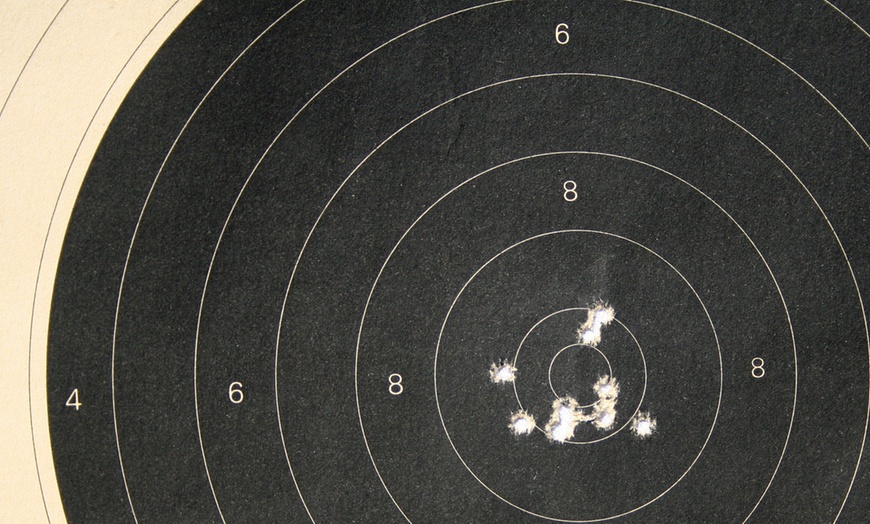
Image: istockphoto.com
Check out HFR’s book catalog, publicity list, submission manager, and buy merch from our Spring store. Follow us on Instagram, Bluesky, and YouTube. Disclosure: HFR is an affiliate of Bookshop.org and we will earn a commission if you click through and make a purchase. Sales from Bookshop.org help support independent bookstores and small presses.

