
Matteo called it a crude thing. In the end that’s what stuck with me the most. A crude thing, a visitation, something unspeakable. The crude thing, and where it took us all.
I was there and Erin was there when Matteo shared what had happened, the three of us sitting at an empty table in Erin’s bar. Erin’d opened the place to us a few hours early, with plenty of daylight remaining. Matteo wasn’t going out after dark so much anymore.
A few months earlier, something had happened to him on a stretch of road a few miles away. Neither Erin nor I’d been told much about it. We’d guessed at specifics, tracing the things Matteo wasn’t doing so much anymore, monitoring his hours like chaperones. Sometimes he’d allude to fragments of it. Some parts of it we’d gleaned, on our own or in hushed conversations over the phone or approaching closing time at Erin’s bar. We didn’t like this—Erin had said as much one night and I’d told her I’d agreed with her. It felt surreptitious where empathy was required, and yet neither of us had any idea what the right approach could be.
I looked around the bar in the afternoon light. There’s a point in late autumn when the three p.m. light becomes heartbreaking, because you know it’s already starting to dwindle. We were getting near that point. The bar itself was old and full of relics; we weren’t far from the ocean, and Erin had leaned in to the waterfront theme. She’d inherited the place and many of its adornments and hadn’t changed much since then. She’d just kept it clean, which for this bar was more than fine.
I lived a short walk from there and Matteo’s place was a twenty-minute drive away. Erin and I kept track of sunset times and traffic patterns, and Erin had left her watch atop the table so that we’d never be unsure of the time. We’d each seen Matteo more than a few times since whatever the incident had been, but it had always been close to his home—coffee a half-mile away, conversations overlooking the dog park beside his development, an ill-fated trip to the beach. All during daylight hours, and all our congregating done with the sun high above.
Erin had fired up a pot of coffee once we’d all arrived, and it was from that that all three of our mugs had been filled. Seemed odd, I’d said to Erin, all of us drinking coffee at a bar.
It’s not that odd, she’d said. I have a coffee pot here. Sweet tea would’ve been odd.
It would be nice if I could say that Matteo took that as his cue to begin: a statement of Well if you think that’s odd, let me tell you about …, but it wasn’t. The pleasantries kept going for a while longer, and every once in a while I found myself glancing at the clock and imagining its face in my mind and wondering whether we’d actually hear from Matteo or if he’d decamp before saying a thing. Which was his right. But still, I was curious, and being aware of that curiosity made me want to damage myself over it.
That three p.m. light was turning melancholy when Matteo excused himself and walked to the restroom and Erin and I just sat there for a little bit in the quiet, neither of us really feeling like saying much. It was Matteo’s story to tell, we understood. But we were starting to lose faith that he’d say it, today or ever.
And then he returned and sat down and started talking without even taking a sip of coffee.
Do you know that stretch of 35 where it gets hilly? he asked. We both nodded. We all knew it well. We’d had a classmate in high school who used to tell stories about speeding his car down that stretch of road with his eyes closed; none of us, not me, not Erin, and not Matteo, was ever less than amazed that he’d managed to do this without killing himself or someone else.
I was on that stretch of 35 one night heading home, he said. It was late and I’d have rather been in bed than anywhere, but I was still 15 minutes from home. It was late enough that the roads were almost empty, no high-beams shining in my eyes or tail lights hovering in the distance. I wasn’t speeding but it felt like I was, you know?
I nodded. I knew that feeling; I’d had no idea if Erin did, though I did notice that she looked unmoved.
When I was coming over the first hill I saw something in the middle of the road, so I slowed down, said Matteo. I didn’t think it was a person and I didn’t think it was a deer but it looked like something, and if it was something I knew I didn’t want to hit it. Whatever it was, it was right in the middle of the southbound lanes, so I slowed down and drove closer to the median.
He was quiet for a little after this, and it took Erin asking him what he’d seen for him to continue.
That’s what the problem is, he said. It was crude, like I said. At first it looked almost neutral there, a shipping box brown. And then I saw that it wasn’t propped up but was floating a few inches off the asphalt. And then I saw it do something like—unfold.
It was like it was all folded up and then it got longer and thinner, like it was becoming something else, he said. And there was something on the topmost piece, these things that looked like carvings, like a jack o’lantern face. Two square eyes and a rectangle mouth, and light pouring out of both from somewhere deep inside.
And then the panel below that started to glow, he said. I couldn’t see shit. Just this crude thing spilling out light onto 35 with this face that looked like—nothing. Reaching out to touch nothing at all.
So it was something some kids left out in the road? I said, and I could hear Erin’s sharp intake of breath, that move that says, You shouldn’t have done that.
Well, said Matteo. This is the part I don’t get. Well, the first part I don’t get. As far as I could see, all it was was a sheet of cardboard. That’s how thick it was, anyway. Paper or cardboard or a plastic backdrop, like a kid’s art class project. It was thin, and there was no light behind it. There was no stand propping it up. It was just there, above the road, like someone set up a nightlight and left it too close to a heater, so it started to melt and got all lopsided.
I couldn’t stop staring at it, he said. And maybe that’s why I didn’t hear the sound at the doors until they were almost in.
Like a stooge, I asked the question. The sound at the doors? like some lukewarm echo. I didn’t think about it until afterwards, that lingering question, to wit: did I actually want to know about the sound at the doors? I’d grown up a churchgoer, and there were parts of the liturgy that I had committed to memory, even now; maybe it would be more accurate to say that they were now ingrained in me, to the point where I could be a passable rector in the event of an emergency, provided none of the congregation asked too many questions. And that’s what this felt like, as though we were all getting together to acknowledge and bewail our manifold sins and wickedness, or that we were all readying ourselves to deliver some keening refrain.
Anyway, I asked Matteo about the sound at the doors, and here’s what he said. He said, I heard the sounds at each of the passenger doors, not quite in rhythm but starting at about the same time. I didn’t look back, but I had a sense of something there and I had a sense that something was trying desperately to get into the car. Not trying their hand at the handles, but scratching at it, trying to burrow through. I could hear it suffusing through the car, too, like something in the frame was resonating with it, like some part of the metal had thrown its lot in with whatever was trying to get in.
DId you ever look back? I asked. I gave Erin a quick look, and I wondered when she was going to ask something, if she was ever going to say something or if she was just going to luxuriate in the space, conduct the vibes, do whatever it is one does in a situation like this. Be the host, I suppose. Keep the ambiance flowing. Curate.
Matteo looked at me dead-on with hollow eyes and said, There was no way I was ever going to do that. And out of the corner of my eye I saw Erin nodding slightly. That’s right, I thought. Go on and nod.
I floored it from there, said Matteo. I got the car up as fast as I could go. I didn’t care if a cop chased me down. There was no one else on the road by then. I had the northbound lanes and I took them as fast as I could, leaving the glowing behind.
And the scratching? I asked, again the intercessor.
Matteo swallowed. That kept going, at least for a little while. Fifteen miles an hour, twenty, that sound was still there. Maybe even a little louder than before. Maybe whatever it was was trying harder, figuring if it put its back into it, or whatever it had, that would be enough to get it in. The sound got—I can only call it desperate—when I hit thirty-five. And by the time I had the car up to fifty, I didn’t hear it any more.
Did you look in the mirrors? Erin asked, and I thought, finally.
I didn’t dare, said Matteo. All I could look at was the road in front of me. I was terrified, but I knew I also had the willpower to keep going, and all I could think was that if I looked in my rear view mirror or my side view mirrors the terror would get the upper hand and I’d be done for.
We stopped there. Matteo looked exhausted, like he’d come in from running a marathon twice over. I noticed that he kept glancing through the window, keeping his eye on the daylight. Mostly, we just sat there in silence, looking at each other’s faces, steeping in that reassuring familiarity. I think five or ten minutes passed like that. Maybe it was longer, but knowing Matteo’s preference for daylight hours I didn’t think it likely.
If we’d been smokers we’d have been down to our last pack, but we weren’t. One more ritual we’d never gotten to the bottom of.
It was Matteo who made the next move, draining his cup and raising his hand to us in a strange benediction. I should go, he said. I try not to be out on the roads past sunset, he said. Even now. Erin nodded and I nodded, but I also felt compelled to speak, to ask one last question.
When did you finally get out? I asked him.
I just drove for a while, he said. I didn’t want to be out on the road in case it got in, but I also didn’t want to bring it home with me. So I circled for a while. I got on the Parkway and drove south and then I circled back around and went north. I finally got home and stepped out of my car and looked at the damage, and there was no damage. I don’t know what the thing or the things were doing, but whatever it was it didn’t leave a mark. The car doors looked the same way they did when I’d left home earlier that night. I looked at them that night and the following day and there they were, immaculate, inviolate.
And then he stood up. I’m sorry, he said, but I really need to go. We both nodded and told him we understood, and then Erin let him out.
I lingered around the bar for a little while longer, past the time when Erin had actually opened up, when there was a proper clientele in the place. We didn’t have much to say at that point, and we weren’t sure what else we could say. An exorcist or a theologian or one of those Fortean Times guys might have had some insights, but we didn’t. I was just worried about my friend, and I thought the same was true for Erin.
***
The fall and the winter were always busy times for me, and I didn’t see much of anyone, Erin or Matteo included. And by the time my head cleared and I thought it would be good to get back to Erin’s bar and watch the afternoon light come through the windows, I found out she had closed up shop from another old friend. I emailed Matteo to see if he knew anything about that and got a cursory two sentences back, which seemed like all I deserved. I called Erin a few times, to hear if she’d been having money troubles or had sold under duress or just wanted a change, and I got back seven varieties of silence for my troubles.
Another couple of months passed and I found myself driving down 35 on that stretch where it gets hilly. It was my first time traveling there since Matteo had told us about the crude thing, and I wondered again just what it was that my friend had seen. It was late enough that the landscape was largely deserted, and I scanned the road and the median strip and tried to imagine what it had been like on that night that Matteo had driven by this place.
Then my eyes went to the median strip and I saw something there. I saw someone there. I saw something that might have been an altar there, and something that might have been a bundled figure there, no thicker than a piece of cardboard. And I saw someone who I believe to be Erin standing alone there, a celebrant waiting for their flock, a pilgrim waiting for revelation. And there, I wanted nothing more than to salt the earth, to leave this stretch of road, to never catch sight of any of it again.
Tobias Carroll is the author of five books, most recently the novel In the Sight. He is a member of the board of the National Book Critics Circle and writes a monthly column on translated books for Words Without Borders.
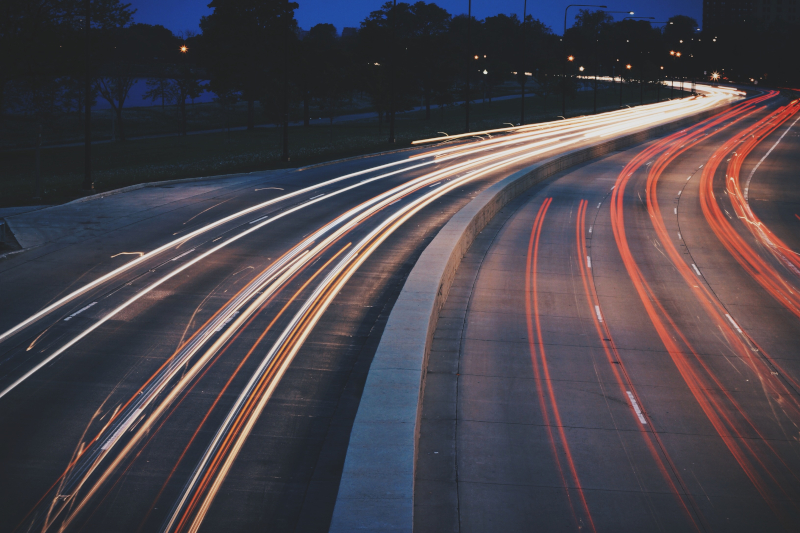
Image: njlegalhelp.com
Check out HFR’s book catalog, publicity list, submission manager, and buy merch from our Spring store. Follow us on Instagram and YouTube. Disclosure: HFR is an affiliate of Bookshop.org and we will earn a commission if you click through and make a purchase. Sales from Bookshop.org help support independent bookstores and small presses.
 Heavy Feather Review