
I happen to drift off into the dead returning to say we didn’t make it—
as a race as a nation as huddled families as one crouched at a starting line
when off goes an enormous gun that claims everyone
close by with pure oblivion yet farther out may visit upon them all
the expected ravagings—limbs not there at all at first yet then, with increasing distance,
strewn suggestive of new dance positions or entrail divination.
All lie there cauterized instead of running rings
on the chalked field—some completing reassuring
old gestures or taking a last lap in their dream
of what they were just moments ago able to embody before walking
charred to find a place to gently lie down without splitting stiffened skin
as they begin to stream heavenward looking around for lost loves—
even if strangers before this day—embracing where they lay—
sharing something they wished all their lives to seek the intimacy of—
loving the whole world just outside solitary skins of illusory separation.
Skeletons of leaves glow on trees before taking flight.
Laundry set to dry on the line loses all damp in a flash before the shockwave
allows it to twist free and clothe in burning all it wraps as splintered barn boards,
torn lapels, legs of farm animals, mitten strands, a blender still
miraculously attached to its base—all racing across the plains to steam
hot then cool in what distance or rivers they may find.
The dead come to me when I am unguarded.
Absence draws their streams almost hydraulically.
They flow gently with the power of barely being there.
It reminds one of a sunlit porch where some grandfather is talking
back to angels in swirling tobacco smoke. They forgive
those who won’t believe in them—
just as they themselves didn’t see this coming.
They are outside of time with us when we sleep
or wear thin enough to see them almost streaming
back to warn us yet mostly dismissed as visions people have
when in need of rest—a sleep that lulls,
quietus.
Matt Jasper came of age in the late 80s zine revolution doing things like interviewing young bank robbers or Helen from the Shaggs for Rollerderby magazine—which was read by and sometimes participated in by members of Sonic Youth and Nirvana and Magnetic Fields. His first poems appeared inside the covers of mock-religious pamphlets he passed out for free on streetcorners. He wrote a series of poems for various issues of Grand Street that were on and in mental illness. Susan M. Shultz called his work “documentary surrealism.” He has autism and four diagnosed kids.
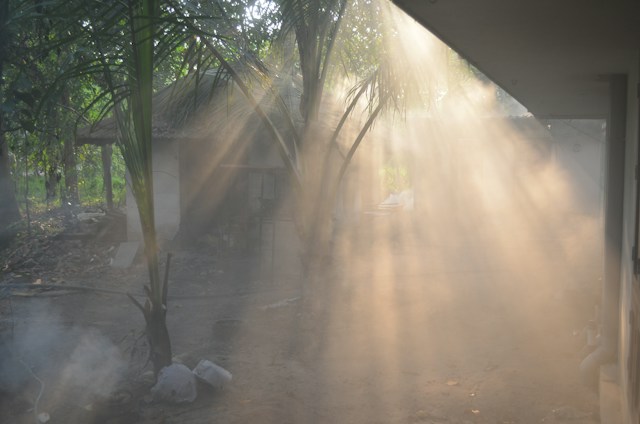
Image: srikanth, unsplash.com
Check out HFR’s book catalog, publicity list, submission manager, and buy merch from our Spring store. Follow us on Instagram, Bluesky, and YouTube. Disclosure: HFR is an affiliate of Bookshop.org and we will earn a commission if you click through and make a purchase. Sales from Bookshop.org help support independent bookstores and small presses.

