
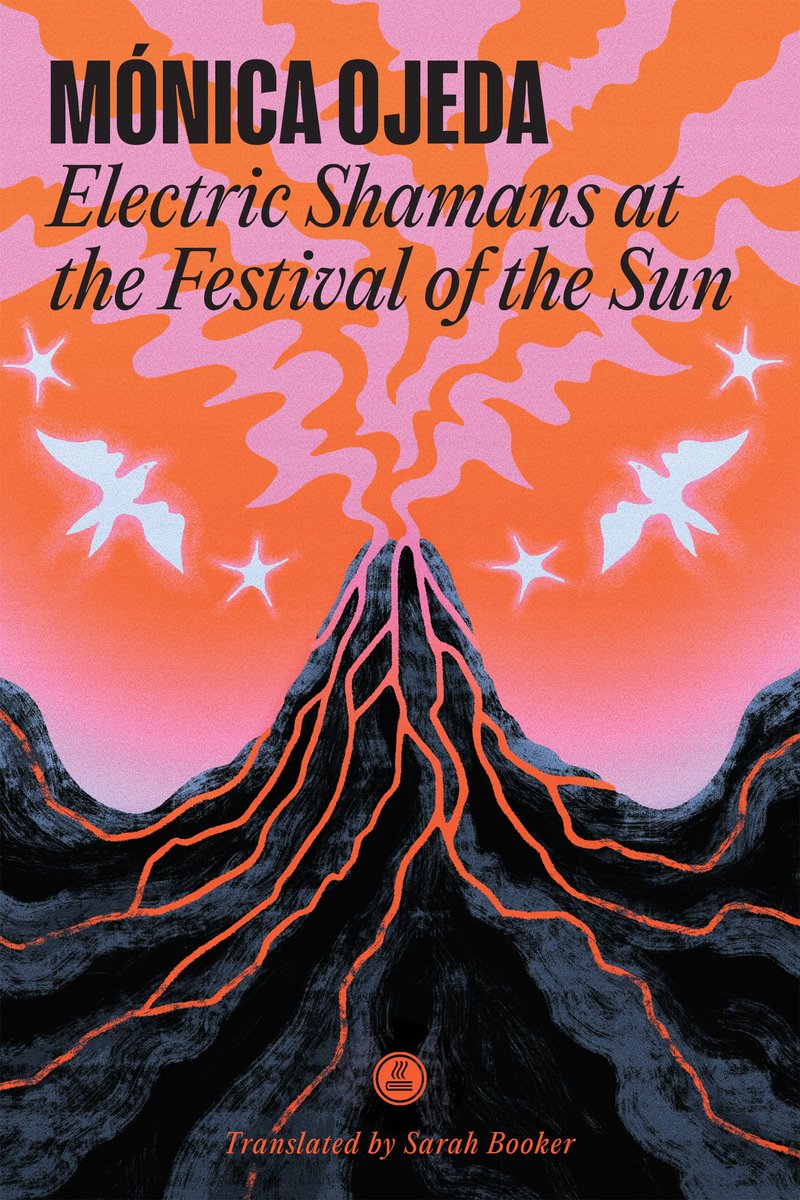
We are living in a shared apocalyptic dream, go ask anyone. Every headline a prophecy of doom, every drizzle diluvian, every vibrato a volcano. The world is being undone, line by line, voice by voice, note by note. It is a time of discord, and Electric Shamans at the Festival of the Sun, the new novel from the fearless Ecuadorian writer and National Book Award finalist, Mónica Ojeda (translated into English with verve by Sarah Booker), has joined the cacophony.
The world is dying, the eponymous band seems to croon, and all there’s left to do is dance. Be sure to bring a friend.
Ojeda’s key strength in Electric Shamans at the Festival of the Sun is less with her characters and plot than her ability to conduct a world that is all crescendo and no pianissimo. In Ojeda’s Ecuador, the children of the Guayaquil are buried beneath the ash of a volcano named Mother. Cartels leave severed heads in neighborhood battlegrounds. Fissures are splitting the landscape in twain. Noa and Nicole, the pair of friends at the center of the novel, flee the blood-soaked streets of their home and make their pilgrimage to the Solar Noise Festival, the “retro-futuristic/neoshamanistic” festival in the shadow of an active volcano.
The pair amble into the fray of festival goers, all on their own introspective journeys and respective gyrations. Noa is on a quest to find her distant-father, and Nicole is determined to keep Noa alive, all while finding solace in the midst of masked demonic Diabluma dancers writhing to the apocalyptic words of the mysterious MCs known as The Poet and the Songstresses. Drums (possibly made from human flesh) tattoo a propulsive rhythm in the margins of the festival, even as characters slip in and out of time. Reality dissolves, everyone dances. As the true band leaders, Ojeda and Booker play a great set, complete with flurries of dense prose and neigh-manaical monologues, all while keeping everything cranked to eleven from the intro to encore.
Readers of Ojeda’s previous work, Jawbone (which was acquired in September 2025 Gael García Bernal, Diego Luna, and Kyzza Terrazas’ production company La Corriente del Golfo to adapt as a television show), will perhaps be reminded of the core friendship in the heart of both novels, as well as the expansive narrative scope utilized to bring the characters to life. Ojeda is skilled at portraying this kind of friendship in this kind of novel, and attentive readers will be able to track the heartbeat beneath the din of everything else.
Like her previous work, Ojeda tells the story of Noa and Nicole by weaving their narrative through a tapestry of different perspectives intertwined equally with philosophical and hallucinagenic strains. Ojeda’s writing takes on a different enough octave to make each character immediately distinct. The strident (and secretly pregnant) goddess Pamela is more contemporary, bold, and staccato, tracking both the chaos of the festival around her and the soft metronome of the fetal heartbeat inside of her. The mournful and stone-obsessed Pedro is more meandering and philosophical, but prone to long tirades about his lost love, rocks, and time. These voices, each an important part of the overall narrative, are able to convey the clear intelligence and skill of the author while still sounding distinct from each other, and, more importantly, from the author herself.
Ojeda’s ambitions are apparent long before her Author’s Note cites Friedrich Nietzsche, Virginia Woolf, and William Faulkner amongst her influences. Electric Shamans at the Festival of the Sun is probing and philosophical look at time, death, the end of the world, and music. It is too loud and overpowering to be called an epic; its swirling notes of nihilism, darkness, and abandon are more reminiscent of a dirge. For those not attuned to Ojeda’s wavelength, the sound and fury of her writing will send them straight to the cooldown tent. However, those able to hang are in for something special. Or at least, one hell of a party.
Electric Shamans at the Festival of the Sun, by Mónica Ojeda. Translated by Sarah Booker. Minneapolis, Minnesota: Coffee House Press, May 2026. 240 pages. $20.00, paper.
Adam Camiolo (@upandadamagain) is a writer, and occasional firefighter, who lives in New York. He edits fiction for Heavy Feather Review. His work has appeared in Heavy Feather Review, World Literature Today, Five South, and others.
Check out HFR’s book catalog, publicity list, submission manager, and buy merch from our Spring store. Follow us on Instagram, Bluesky, and YouTube. Disclosure: HFR is an affiliate of Bookshop.org and we will earn a commission if you click through and make a purchase. Sales from Bookshop.org help support independent bookstores and small presses.

