
“Writing ethnography offers the author the opportunity to encounter the Other ‘safely,’ to find meaning in the chaos of lived experience through retrospectively ordering the past. It is a kind of Proustian quest in which the ethnographer seeks meaning in events whose significance was elusive while they were being lived.
Dorrine Kindo, ‘Dissolution and Reconstitution of Self: Implications for Anthropological Epistemology.’”
(from “Autoethnography with the Other,” Cristina Rivera Garza, trans. Francisca Gonzalez Arías)
I was always struck, when reading Michael Taussig, by his affinity for Marcel Proust. It seemed particularly curious that, given the nature of ethnographic fieldwork, one would feel such a strong kinship with a writer who composed most of his seven-volume, involuted work on time, memory, and dream while confined to his sickbed. But in her story “Autoethnography with the Other,” Cristina Rivera Garza opens toward the sense that the ethnographer like Proust and also like Walter Benjamin, another figure with whom Taussig has a strong affinity—was intent on tracking the subtle shifts in perception that bring about transformations in individual and collective sensibility. Proust, then, was because he saw too in memory and dream a form of fieldwork for the everyday.
Writing of the beach, Taussig sees a “fantasy space” where the natural and the carnival meet. One needs only to walk along the shore to find, in this fantasy contact zone, substantive productions: from whole classes of new materials formed—nurdles, plastiglomerates, techno fossils—to entire ways of living—novel ecological adaptations and human improvisations—already changed—
Things composed with the first light
Seeing shifts from rods to cones, color returns to you. A kind of noise in the middle vision present as pink. Lapping sounds melt into the world. Rods overrun with light begin to bleach. Overrun by a love so intense for color to whiten a prehistoric memory turned local, gifted from the outer reef to your mind, a heliotropic green.
* My friend M told me the other night, after we had been drinking at Fred’s, and as we lingered while they smoked before heading home, that my haibuns feel like they need the “I.” Usually, I forego the I, and because I’ve recently been writing haibuns, I invoke, or perhaps hide within, the idea that Japanese sentences often omit it altogether. Often, I inhabit a we that oscillates between the collaborative space of the we that contains you and I, and the collective we that includes others. When I must refer to a self, I shift into the second person, a you that creates a space between the fragmented, writing self and the moving, experiencing person. Then the lyric becomes the lines that drift in this gap, as a vector of a particular sensing— from “The Burning Beach” by Édouard Glissant: “[Is this we] some community we rhizome into fragile connection to a place? Or a total we involved in the activity of the planet? Or an ideal we drawn in the swirls of a poetics? Recently, I’ve also started working on my French again, which I had initially taken up some years ago in connection with a work assignment. In French, there are two versions of we: the formal nous, which always includes the I ofthe one speaking, and the spoken, casual on which covers nous’ sense of we but also extends to the impersonal or amorphous we that consists of everyone or anyone—sharing agency, or expanding a simple, latent fact into a pervasive belief. Then, the pronominal verb, which to the English speaker appears as if to split the subject from itself: I wake up … Je me réveille … I wake myself up. The intimate violence of the verb’s cleave, which is likely a remnant of the middle voice (from Sanskrit or Ancient Greek), finds its way to French through vestiges in Latin. Je me sens: the pronominal as a form of touch or hearing, reciprocal, an echo meeting the subject back, bound to itself— I take a walk … Je me promène … I take myself for a walk … We see ourselves in the mirror. Nous nous regardons dans le miroir. I mistake things for other things, a haibun: My error was thinking that we shared a language. I was thinking about how to make light out of color; you were thinking color is an aspect of light. You said, mineral; I thought vegetal. You said the weather and not social practice. Sounds arrive at a lag, not a temporary reprieve. Two colors placed very near each other is our sky not the quiet piece of water not the calm across a channel not the temporary coastal vacuity caused by money and construction not overtourism.
White was the point we could see music— Bits of now Fringe Pattern The ventral luminescence the downwelling moonlight. silent at night. on echo of song Heat signal stained Comb jellies arrive of a ship Unhearable space Mini-interview with Raymond de Borja HFR: Can you share a moment that has shaped you as a writer (or continues to)? RB: As a kid, I remember pulling down the two-volume illustrated dictionary from my lolo’s shelf and copying select words and their definitions into my notebook. The A section had the usual “aardvark….,” but also Abu Simbel and acanthus, with drawings of the Abu Simbel temples and an acanthus leaf, which I happily copied as well. It was a wonderful shelf, lined with atlases, almanacs, and novelizations of Shakespeare’s plays, which was how I first got to read The Tempest and A Midsummer Night’s Dream. HFR: What are you reading? RB: I recently finished Karim Kattan’s The Palace on the Higher Hill (Foundry Editions), translated by Jeffrey Zuckerman, and Glenn Diaz’s Xavierville (self-published and released at the BLTX Small Press Expo Dec 2025). Kattan’s novel is set in a Palestinian chalet and was written before 2023. The narrator, Faysal, returns to his village, to his family’s grand, deserted house (the palace on the higher hill). There he is haunted by memories and ghosts—records of the past but also the anxiety from the ongoing, impending violence—specters of the mind, but perhaps too of ghosts that manifest from a will to resist being erased. Diaz’s Xavierville, chapters of what could be his next novel, incidentally also has its own set of phantoms, ghosts as noun and as verb, as they have become architected into urbanization and urban loneliness. These past days I’ve been rereading chapters from Fredric Jameson’s Archaeologies of the Future for an essay in progress for my latest book. The essay is turning out to be a haibun of sorts. On my reading desk, too, are books I pick up when taking a pause from the essay work: Jena Osman’s A Very Large Array: Selected Poems, Josh Paradeza’s Ang Bagyo Bago ang Bagyo, and MONKEY New Writing from Japan Vol. 4: Music. HFR: Can you tell us what prompted “, I mistake things for other things,”? RB: The M in this piece is my friend, the brilliant poet Mark Anthony Cayanan. Before the conversation in the piece, I visited his class to read an essay on my work in progress, and that initial invitation became a prompt that shaped a new book. HFR: What’s next? What are you working on? RB: Fonograf Editions has just released the dust of a contact that is everywhere, a selection of essays and poems written between 2012 to 2019 on writing and art. I’m currently working on a couple of pieces before turning over the completed manuscript for my forthcoming book with Ugly Duckling Presse, titled for the sake of an instant in the eyes. HFR: Take the floor. Be political. Be fanatical. Be anything. What do you want to share? RB: No to mining in Dupax del Norte! https://www.cecphils.org/defend-dupax-del-norte-cec-statement/ Raymond de Borja is the author of the dust of a contact that is everywhere (Fonograf Editions); facture (Broken Sleep Books); as well, on our estrangement (Aklat Ulagad); and they day daze (High Chair). His latest book, for the sake of an instant in the eyes, is forthcoming from Ugly Duckling Press in May 2027. He lives in the Philippines. Check out HFR’s book catalog, publicity list, submission manager, and buy merch from our Spring store. Follow us on Instagram, Bluesky, and YouTube. Disclosure: HFR is an affiliate of Bookshop.org and we will earn a commission if you click through and make a purchase. Sales from Bookshop.org help support independent bookstores and small presses.
Who is this intervening they? They that is Other? or they the neighbors? or they whom I imagine when I try to speak?
These wes and theys they are evolving. […]
They find full-sense in the extension of discourse in which peremptory abstract notions gain force only through the force of accumulation, since they cannot burn in the body’s charcoal fire. The word-mass burns from its amassing
They find full-sense in the echo of the land where morne meets beach, where motifs are intertwined in a single vegetation, like words off the page.”
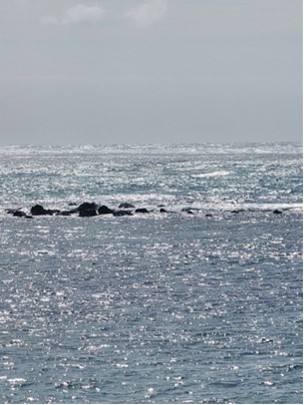
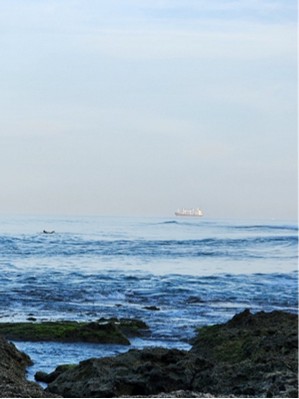
wend towards the sea
by magnetism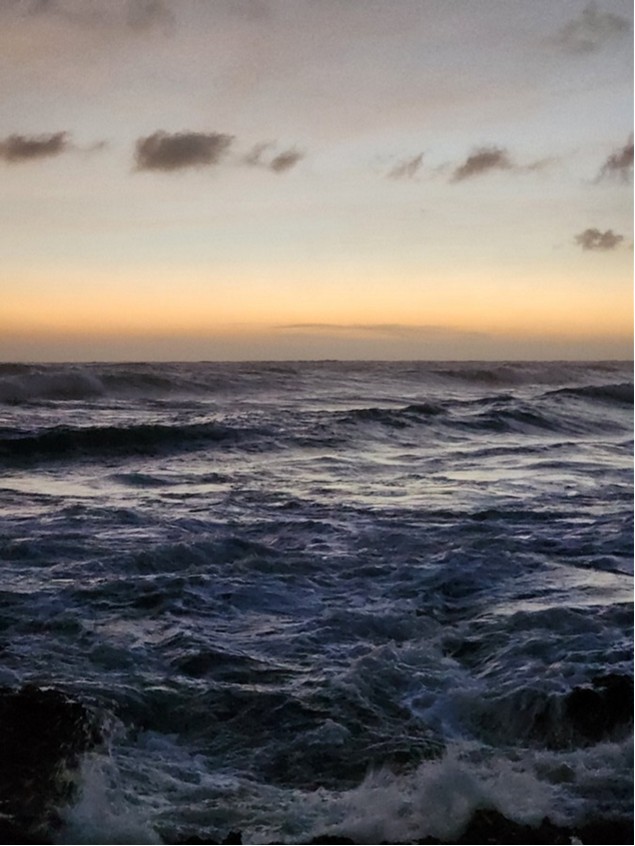
of the squid matches
Certain frequencies fall
Magnetic scan overlaid
with smell of blood.
in the ballast waters
diffracting new surroundings.
made true in someone waiting.

