
This Autistic Puts on Her Mask
Because the world wants
a woman smiling louder
than her voice, scripts rehearsed
because the only answer
to How are you? is Fine
which is a lie like making eye
contact with the center
of someone’s forehead,
manufacturing small
talk and big gestures
about the world and weather,
whether or not you actually
care, autistic a show
where the marionette
wooden dances and sings
and the audience pretends
not to notice the strings
but laughs at the awkward
fumble, the way the puppet
tumbles over itself to convince
the world it is real
and I’ve willed myself smaller
than the expectation
that disabled people exist
to do more than envy
ability, constructing a mask
to beam and nod under the lights,
fastened to the tangled
lines that hold me
up for inspection.
Invisible
Disability is not measured
with methods for the scientific
or the doctors of words
with a predilection for never
agreeing, even with themselves,
the way meetings are for making
more meetings, problems opportunities
to discuss like What do we do
with so many students on the spectrum?
as though identity is a problem
the way the budget is declining
along with enrollment, or robots
are crowding the sidewalks
on their ways to deliver Starbucks
to students who have no social
skills and Back in my day
interrupts a voice in a suit
no one needed accommodations
and a room full of elbow patches nods,
concerned by all the failures
to make eye contact or answer
questions, like the way I can’t explain
that satin makes my heart
vibrate but velvet hurts
like polyester or popping
knuckles, the noise of clocks at night
and fluorescent lights, static
sound and sight that feels like sick
like stop like how do I escape
the electricity I hear in the walls,
the perfume I smell in empty halls,
the taste of something metallic, bloody
halfmoon nails on palms
clenched from holding still
in a room discussing the detriment
of disability, and yes, my needs
are special but not in the ways they think
so they can keep the rubric rationalizing
solutions to help professors cope
because I recover at the end
of each meeting and day by turning off
the lights, hanging up the face
I wear to work, eyes that can gaze
back at another, mouth that can big smile
and small talk like How are you?
when the only acceptable answer is Fine,
so who even cares, but I can pretend,
ace the test where I profess expert
in a place too dumb to know
I’m the one they think doesn’t belong.
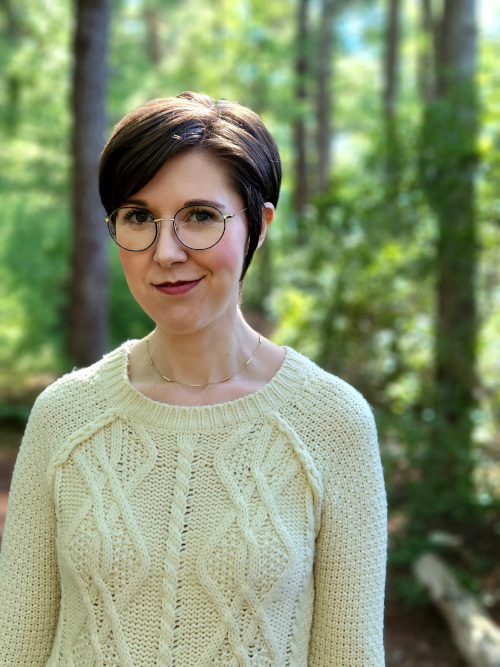
Sarah Fawn Montgomery is the author of the craft text Nerve: Unlearning Workshop Ableism to Develop Your Disabled Writing Practice and Quite Mad: An American Pharma Memoir, which The Atlantic says, “Exemplifies a nuanced approach to life with mental illness” and The Paris Review describes as “The wakeup call we need.” She is also the author of the essay collection Halfway from Home, winner of a Nautilus Book Award for lyric prose, the flash collection Abbreviate, and three poetry chapbooks. She is the Founder and Editor-in-Chief of Nerve to Write, a magazine for disabled, chronically ill, and neurodivergent writers, and an Associate Professor at Bridgewater State University.
Check out HFR’s book catalog, publicity list, submission manager, and buy merch from our Spring store. Follow us on Instagram, Bluesky, and YouTube. Disclosure: HFR is an affiliate of Bookshop.org and we will earn a commission if you click through and make a purchase. Sales from Bookshop.org help support independent bookstores and small presses.

