
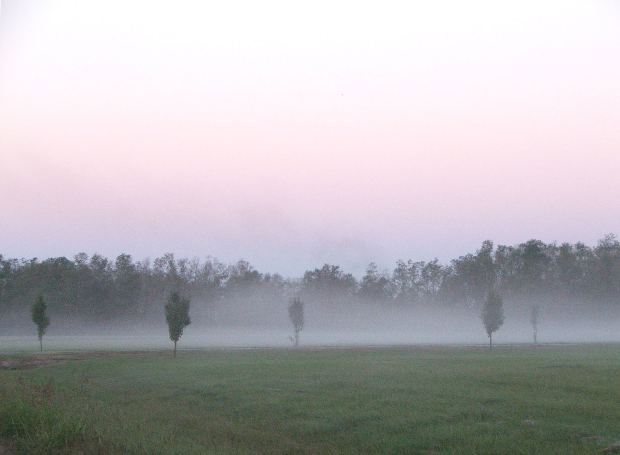
“I’m nobody! Who are you?” —Emily Dickinson
I. Invocation: Lost Names
“No, my name is lost.” So says Edgar in Act V of King Lear, a man dismantled by power and betrayal, speaking from the ruins of identity. Not a voluntary effacement but a forced disappearance. This is not the freedom of the nameless mystic; it is the exhaustion of someone no longer found, no longer needed. There are days I’ve felt the same: unframed, unnamed, excessive to context. This essay proceeds in that key: not a hymn to obscurity as liberation, but a bleak acknowledgment of its function as shield, wound, and occasional grace.
II. Against the Will to Fame
What is this drive to be known? Where Thoreau extolled the quiet, simple life of relative obscurity, the Hegelian ideal of recognition, identity forged through the gaze of others, has metastasized. Fame is no longer rare; it is systemic. Social media, branding, influencer economies: these are engines of coercive visibility. The self becomes a pitch deck; the soul, an algorithmic profile. Fame has become the price of relevance. Hito Steyerl, named the most important artist of 2017 by ArtReview, is a German filmmaker and theorist known for her writing on visual culture and politics of the digital image. She urges de-influencing, not just a rejection of branding. It’s a call to rebuild identity outside the regime of metrics, followers, and feedback loops.
To be seen now is not to be affirmed, or even truly observed, but to be processed, doxxed, memeified, tracked, and ultimately stored somewhere you’ll never access but always sense. The panopticon has gone crowdsourced and dark webbed. In such a world, obscurity isn’t rejection, it is survival. Obscurity today is not a moral ideal or a personal failure, but a historically recurring adaptive tactic under regimes that extract identity as value.
III. Obscurity as Shelter
The 1990s cyber-utopians imagined the internet as a decentralizing force: democratic free speech, privacy, individualism. But the dream decayed. Surveillance capitalism triumphed. The algorithm sees more than the state ever did.
Given fight or flight, it is not senseless to flee, or at least try. Hong Kong protesters flocked to video games to bypass censorship and maintain anonymity. Black Lives Matter staged rallies in Toontown. Marches for Palestinian solidarity occurred inside Roblox. These aren’t games; they are evasions. Young activists use pseudonyms, encrypted apps, burner phones. They fear not just arrest, but erasure, ridicule, misrepresentation.
The Atlantic’s profile of extreme-privacy consultants details lives carefully scrubbed: hundreds of virtual debit cards, rerouted mail, burner credentials. Obscurity has become a luxury good, available to the wealthy for whom it is no longer just a lifestyle.
IV. Open Secrecy/Dirty Transparency
This is a strange era of open secrecy: encrypted anonymity amid total legibility. Groups once impossible to assemble now form across the darknet, exchanging resources in plain sight but under masks. This is not liberation; it is lateral evasion. From cyberactivists to far-right hate forums, everyone uses the same tools.
What looks like marginality at the individual level becomes infrastructure at the collective one. Consider Kartemquin Films, deliberately marginal, rigorously unbranded documentary films, excluded from canonical film histories. Why? Because it refused the aesthetics of fame. No red carpets, no ideological purity, no celebrity directors. Its refusal to professionalize, ramshackle budgets, non-hierarchical editing structures, no ex cathedra narration, made it invisible to film history. Their obscurity is not invisibility. It is resistance to a system that demands a name for every act.
Obscurity is not always solitary. Sometimes, it is shared. Anonymous collectives, pirate networks, samizdat circulations, these are not simply escapes, but strategies. They form a kind of shadow infrastructure: provisional, low-resolution, and harder to dismantle. In resistance movements, the refusal to name becomes a kind of naming. Invisibility becomes a Commons. To move unseen is not just a retreat from power, but a way of sheltering others from it.
V. The Cruelty of Being Unseen
Yet obscurity is not always chosen. There are the invisibles: the elderly in homes, the queer erased through straightwashing, the poor edited out of city plans. Social invisibility wounds. Its psychological toll is real, disconnection, breakdown, a loss of social agency.
What digital systems automate, these texts record in human terms. Old English literature knew obscurity long before the algorithm enforced it. The Exeter Book, the tenth-century anthology of anonymous, often title-less poems, feels like a prehistory of the invisible subject. Its elegies speak from a condition of lost frames: the lordless wanderer whose kin are dead, the seafarer driven between worlds, the wife entombed in an earth-cave by hostile kinsmen, the speaker of The Ruin contemplating a vanished city built by “giants.” These are voices speaking from a world where meaning has already collapsed.
To lose one’s hall, one’s community, one’s social function, this is the medieval form of becoming unreadable. The poems are preserved, but the people who wrote them are gone without a trace: no names, no signatures, no claims to authorship. Their anonymity is not romantic but structural, a world where identity dissolves with circumstance.
In them one sees an ancient version of the same violence Kafka records: the self made illegible once its frame is stripped away. Obscurity is not a digital pathology. It is one of the oldest modes of human sorrow. Kafka intuited something about obscurity before the word had its modern, digital stress. Gregor Samsa doesn’t become monstrous; he becomes illegible. The family doesn’t recoil from the insect so much as from the sudden collapse of his social function. What frightens them is not the carapace but the sudden uselessness. Kafka’s joke, if it is one, is that the metamorphosis merely reveals what was already true: Gregor had been invisible long before he woke up on his back. His new body only made the condition undeniable. In this sense Kafka’s Metamorphosis is less a fable of transformation than a field report on obscurity’s violence. To go unseen is one thing; to be seen only as a burden is another. Gregor becomes the prototype for the modern invisible subject: present, but unrecognizable; alive, but already excluded from the frame that gives a person meaning. There’s a violence in going unrecognized, not because one craves attention, but because recognition provides structure. Without it, the world becomes flat. You slide across it like a shadow with no source. Without a frame, there is no meaning. Without a name, no presence. Obscurity strips context. It flattens the sacred.
Joshua Bell, one of the world’s greatest violinists, played Bach incognito in a D.C. metro station. Almost no one stopped. Children tried; their parents pulled them on. The music, exquisite, went unheard. What went unseen was not the artist, but the absence of an aesthetic and institutional frame around him.
But obscurity, for all its defenses, is not without cost. To retreat is to gain privacy, but also to risk estrangement. The artist who vanishes may find clarity, but they may also miss communion. A refusal to be seen may protect the self, but it may also starve it of reflection. Silence can nourish, or become a vacuum.
In many traditional societies, obscurity was not stigma but structure. One could live a full life without ever being known beyond the village, without ever leaving a trace beyond memory. Anonymity was not erasure, it was equilibrium. Customs, rituals, and kinship networks provided meaning without exposure. But with modernity came rupture. Industrialization drew people into cities, atomized labor and dislocated community. The village vanished. The elder’s memory was replaced by the archive; the oral by the searchable. In the rush toward visibility, civic, economic, algorithmic, the old shelters of obscurity fell away. What was once ordinary privacy became anachronism. What was once obscurity became disappearance.
Obscurity is not distributed equally. For the poor, the undocumented, the underemployed, obscurity is a sentence handed down by systems that prefer them silent, invisible, and interchangeable. Their labor is consumed, but their presence erased. Visibility, in contrast, becomes a form of capital, traded and accrued by those with access to time, technology, and taste. But even within this asymmetry, obscurity can become a refusal: a strike against commodified personality, against forced legibility. In this sense it is revolt in negative space.
There can be a loneliness to being unread, unremarked, uninvited. Missed opportunities accrue, not just of recognition but of genuine engagement: the student who never finds the teacher, the thinker whose resonance is delayed by decades, if not lost entirely. Obscurity preserves. It can also entomb.
VI. The Decline in Wanting to Be Unique
A Michigan State University study confirms a broad decline in people’s desire to stand out. Over the past 20 years, a population-wide drop in the need for uniqueness has taken hold. Fewer people are willing to defend their beliefs publicly. More are fearful of how they’ll be perceived or targeted. This is not just shyness. The public sphere has become punitive. Visibility is dangerous. To stand out is to be exposed. To be noticed is to risk ruin.
To be seen is now a form of labor, one that demands constant maintenance, availability, and emotional expenditure. Social media doesn’t just encourage self-branding; it enforces it. Every post is a pitch, every interaction a soft audition. The pressure to remain visible has transformed attention into an unpaid, full-time job. In this light, obscurity isn’t just withdrawal; it’s refusal. The refusal to labor in public. The refusal to monetize personality. The refusal to be a product in a market of selves. The self is withheld, blended, shrunk. Even in a spectacle-driven economy, who wants to be watched? The performative self now lives in hiding.
VII. Quiet Figures
There are those who lived quietly, not in monastic retreat, but in understated resistance. John Archibald Wheeler declined to have a building named after him. Physics, he said, “isn’t done that way.” Banksy sells anonymously. Joyce Carol Oates writes under pseudonyms. Kazuo Ishiguro periodically withdrew into isolation to write, shunning distraction for unbranded creation. These are not saints of withdrawal. They are figures who slipped the frame, or refused to remain inside it. Across eras and cultures, obscurity appears not as failure or virtue, but as a recurring strategy for living outside regimes that convert recognition into value.
Others became obscure not by choice, but by delay. Emily Dickinson, now canonical, was almost entirely unread during her lifetime. Nearly 1,800 poems lay folded in a locked chest until after her death. Her obscurity was not retreat in the modern sense, but quiet autonomy, writing as interior necessity rather than social currency. That her recognition arrived posthumously underscores the instability of fame itself. Her invisibility was never absence; it was amplitude deferred.
Paul Cézanne retreated to Provence not to disappear, but to see more clearly. His Card Players, two men in silence, no drama, no resolution, refused the nineteenth century’s appetite for heroes and gestures. In that refusal, he rebuilt painting from the ground up. Yet today, that very silence sells for $250 million. The market rewards the appearance of withdrawal, even as it monetizes the unseeable. Cézanne’s work remains a testament not to obscurity as escape, but as concentration: a way of making the world visible again by first subtracting the noise.
Some embraced obscurity as aesthetic position. Edward Dahlberg titled his 1965 essays Alms for Oblivion, a phrase that reads as both lament and dare. Once celebrated and later forgotten, Dahlberg wrote in a style resistant to easy consumption: fragmentary, incantatory, indifferent to market time. His disappearance may be less a tragedy than a fidelity, to a vision that refused relevance as a measure of worth. Not all value arrives framed for recognition.
W.J.T. Mitchell once asked, “What do pictures want?”, not as a rhetorical flourish, but as a serious ontological question. Some images, he suggests, don’t want circulation; they want silence, slowness, even disappearance. Cézanne’s late landscapes, with their fractured brushwork and withheld perspective, don’t invite easy consumption. They resist the algorithmic gaze that scans for recognizable patterns, trending styles, or shareable moods. In this sense, they want obscurity, not as lack, but as condition of integrity.
A rarer form of withdrawal rejects recognition outright. Thomas Pynchon’s decades-long refusal of publicity is not mystique or marketing, but a sustained authorial offstage life conducted almost entirely through the work. Grigori Perelman went further: after solving the Poincaré Conjecture, he declined every prize and honor, including a $1 million award, insisting that truth, not recognition, was sufficient. In such cases, obscurity is not cover but refusal: an insistence that understanding does not require applause.
In an era where the artist’s name is often as commodified as the work itself, it’s easy to forget that the greatest artists have historically dwelled in anonymity. Bruce Conner, reflecting on this paradox, stated, in the 2016 University of California Press catalog Bruce Conner: It’s All True, “The greatest artists have always been anonymous. It’s only in the last 600 years or so that an ego identification has been attached to things. It has been to the detriment of the work.” This observation resonates deeply with the argument for embracing obscurity. For, in the pursuit of recognition, much of the true essence of artistic creation is lost to the ego’s demands.
This posture is not uniquely Western. Chinese intellectual history is threaded with retreat-as-resistance. Confucius wrote, “I am not bothered by the fact that I am unknown.” Hanshan, the Tang dynasty poet known as Cold Mountain, vanished into caves, carving poems into stone, retreating from every attempt at incorporation. Song Dynasty hermit-literati such as Tao Yuanming relinquished office to tend chrysanthemums, painting and writing against corruption through withdrawal. These figures were not failures of ambition but critics of it, building moral architectures from silence and distance.
Today, retreat often takes more desperate, commercialized forms. In Japan, jōhatsu, the “evaporated,” disappear from their lives entirely, hiring companies to erase identities and sever traces. This is not rebellion but necessity: vanishing as last defense in a culture where visibility punishes and quitting shames. Similarly, contemporary gestures like tang ping (“lying flat”) refuse not labor itself, but labor performed in public. To lie flat is not to do nothing, but to withdraw from compulsory performance, to redirect effort inward, or disperse it altogether. Obscurity here has a backbone. It is refusal without spectacle.
What unites these figures is not protest but contour. Their absence unsettles because it negates the demand to appear. Not erasure, but a quiet “no.” Technology has made obscurity harder, and stranger. The algorithm demands constant legibility; the platform enforces performance. Yet disappearance can now be engineered: encrypted chats, anonymous avatars, vanishing messages. Obscurity is no longer default. It is a design choice, and increasingly, a privilege few can afford.
VIII. Coda: Staying Lost
Every day brings news of the need of obscurity in a cyber-insecure world. To praise obscurity is to praise what is unclaimed. What cannot be framed, processed, or sold. In a culture of unbearable exposure, it may be one of the last remaining gifts that resists commodification.
Obscurity isn’t a virtue. It’s a tactic, sometimes a wound. But in a culture built on spectacle and extraction, to remain unseen, to stay lost, may be the last unmarketed act of care. Not a retreat, but a form of holding space. Not silence but a refusal to be consumed. There is no utopia in invisibility. Only temporary shelter. A soft negation. A space not yet monetized.
Thomas B is an independent writer and analyst living in New York City. His essays explore the intersections of culture, history, and ideas in a fragmented world, with work appearing in literary and critical journals.
Image: ronnieb, morguefile.com
Check out HFR’s book catalog, publicity list, submission manager, and buy merch from our Spring store. Follow us on Instagram and YouTube. Disclosure: HFR is an affiliate of Bookshop.org and we will earn a commission if you click through and make a purchase. Sales from Bookshop.org help support independent bookstores and small presses.
Works Cited
Adorno, Theodor W. Prisms. Translated by Samuel and Shierry Weber. Cambridge, MA: MIT Press, 1981.
Aufderheide, Patricia. Kartemquin Films: Documentaries on the Frontlines of Democracy. Oakland: University of California Press, 2023.
Barlow, John Perry. “A Declaration of the Independence of Cyberspace.” February 8, 1996. Electronic Frontier Foundation.
Bogost, Ian. “Welcome to the Age of Privacy Nihilism.” The Atlantic, 23 Aug. 2018, https://www.theatlantic.com/technology/archive/2018/08/the-age-of-privacy-nihilism-is-here/568198/
Chopik, W. J., Götschi, K., Carrillo, A., Weidmann, R., & Potter, J. (2024). Changes in Need for Uniqueness From 2000 Until 2020. Collabra: Psychology, 10(1), Article 121937.
Confucius. The Analects. Translated by Edward Slingerland. New York: W. W. Norton, 2003.
Conway, Steven. “Virtual Protests in Roblox and Other Games.” ABC News, November 9, 2023.
Dahlberg, Edward. Alms for Oblivion. Minneapolis: University of Minnesota Press, 1965.
Dickinson, Emily. The Poems of Emily Dickinson. Edited by R. W. Franklin. Cambridge, MA: Harvard University Press, 1998.
Exeter Book. The Exeter Book: Old English Poetry. Edited and translated by Bernard J. Muir. Exeter: University of Exeter Press, 2000.
Frieling, Rudolf, and Gary Garrels, eds. Bruce Conner: It’s All True. San Francisco Museum of Modern Art in association with University of California Press, 2016.
Hegel, G. W. F. Phenomenology of Spirit. Translated by A. V. Miller. Oxford: Oxford University Press, 1977.
Ishiguro, Kazuo. “Kazuo Ishiguro, The Art of Fiction No. 196.” Interview by Maya Jaggi. The Paris Review, no. 196 (Winter 2010).
Kafka, Franz. The Metamorphosis. Translated by Stanley Corngold. New York: Bantam Classics, 1972.
Lee, Pamela. Work in Progress: Pamela Lee. Lecture, Yale University Department of the History of Art, New Haven, CT, February 23, 2022. https://arthistory.yale.edu/event/work-progress-pamela-lee
“Liberate Hong Kong (video game).” Wikipedia. https://en.wikipedia.org/wiki/Liberate_Hong_Kong_(video_game)
Melville, Herman. “Bartleby, the Scrivener.” In The Piazza Tales. New York: Dix & Edwards, 1856.
Mitchell, W. J. T. 2005. What Do Pictures Want? The Lives and Loves of Images. Chicago: University of Chicago Press.
Nasar, Sylvia, and David Gruber. “Manifold Destiny: A legendary problem and the battle over who solved it.” The New Yorker, August 28, 2006. https://www.newyorker.com/magazine/2006/08/28/manifold-destiny
Oates, Joyce Carol. A Garden of Earthly Delights. New York: Vanguard Press, 1967.
Paché, G. (2025). Shadow Supply Chains of Escape in Japan: A Logistical Analysis of Voluntary Disappearance. International Affairs and Global Strategy, 102, 27-36.
Peers, Alexandra. “Qatar Purchases Cézanne’s The Card Players for More Than $250 Million, Highest Price Ever for a Work of Art.” Vanity Fair, February 2, 2012. https://www.vanityfair.com/culture/2012/02/qatar-buys-cezanne-card-players-201202
Perelman, Grigori. “The Entropy Formula for the Ricci Flow and Its Geometric Applications.” arXiv preprint, 2002–2003.
Pynchon, Thomas. Gravity’s Rainbow. New York: Viking Press, 1973.
Shakespeare, William. King Lear. Edited by R. A. Foakes. London: Arden Shakespeare, 1997.
Steyerl, Hito. Duty Free Art: Art in the Age of Planetary Civil War. London: Verso, 2017.
Snyder, Gary. Riprap and Cold Mountain Poems. San Francisco: North Point Press, 1969.
Thoreau, Henry David. Walden. Boston: Ticknor and Fields, 1854.
Twain, Mark. Life on the Mississippi. Boston: James R. Osgood and Company, 1883.
Waldrop, M. Mitchell. “John Wheeler Saw the Tear in Reality.” Quanta Magazine, September 25, 2024. https://www.quantamagazine.org/john-wheeler-saw-the-tear-in-reality-20240925/
Weingarten, Gene. “Pearls Before Breakfast.” The Washington Post, April 8, 2007. https://www.washingtonpost.com/archive/lifestyle/2007/04/08/pearls-before-breakfast/f81bbfdf-d73d-4022-94a8-aff196ccedbe/
Whitman, Walt. Leaves of Grass. 1855 edition. New York: Library of America, 1982.
“Why Have People Taken to Video Games to Express Solidarity with Palestine?” Al Jazeera, March 22, 2024.
Wittgenstein, Ludwig. Tractatus Logico-Philosophicus. Translated by C. K. Ogden. London: Routledge & Kegan Paul, 1922.
Zhang, Y. (2021). “Tao Yuanming’s Perspectives on Life as Reflected in His Poems on History.” Journal of Chinese Humanities, 6(2-3), 235–258.
Zuboff, Shoshana. The Age of Surveillance Capitalism: The Fight for a Human Future at the New Frontier of Power. New York: PublicAffairs, 2019.
 Heavy Feather Review