
We packed bottomless bags, sharpened ↑ stubby pencils, ticked none of the boxes, choiced □□□□
multiplicity, essayed our thesis-loathing hearts out, regurgitated forgettable dates and wrong facts, and ran ○○○ circles around a track that put us in our ꜚ ꜚ ꜚ corners. We trusted suspiciously, argued respectfully, attended religiously except when we weren’t. We borrowed borrowed $ money for non-nutritious lunches, hung out in blind spots, learned how not to grow up, avoided the wrong ∟ turns at every turn. We volunteered involuntarily, formally applied the ill-defined dream, pretended we’d won the scholarship ∑ lottery, signed off on ₠ finance contracts. We faked future. We carried electronic books for each other, held hands only if they were washed, consciously conserved toilet paper, sleep, burned ± brain cells. We did everything right. So ≠ wrong. We built it brittle brick by brittle brick and channeled calm °°°° weathers so nothing would blow it down before < [or] > after.
Mini-interview with Alina Zollfrank
HFR: Can you share a moment that has shaped you as a writer (or continues to)?
AZ: Literacy was a big deal in my family, so it was more an accumulation of moments that determined my path. Books and journals were guarded like treasure in East Germany. My maternal grandfather always typed letters and magazine submissions on his old manual typewriter and would proudly show off when one of his pieces, often on zoological topics, was published. I was in awe of that. My paternal grandmother, who was tied to her apartment due to mobility issues, listened to fairytales on the radio. When I came to spend the night, she’d retell those stories for me, and if felt like such a comforting escape. It’s no wonder by the time I could hold a piece of chalk and draw on our shed door, all I wanted was to craft stories.
HFR: What are you reading?
AZ: Sandwich by Catherine Newman (a gorgeous midlife novel that reads like a memoir).
Disability Visibility (Adapted for Young Adults): 17 First-Person Stories for Today, edited by Alice Wong (candid accounts and at times jarring perspectives all of society needs to consider).
Poetry of Presence: An Anthology of Mindfulness Poems, edited by Phyliss Cole-Dai & Ruby Wilson (I keep returning to poetry when my heart falters, and this book is a survival mechanism for 2025).
HFR: Can you tell us what prompted “Contrary”?
AZ: Yup. A couple years ago, our kiddo—despite battling autoimmune disease for years and missing out on a lot due to illness—finished high school with an impressive 3.99 GPA. They had several letters of recommendation, had co-captained the percussion ensemble, self-published several books, and won a local poetry recitation competition. But they could not secure a good-enough scholarship to afford a four-year school. The research I did that year about the cost of university education in the US had me shaking my head in despair. It makes zero sense for our new generations to play by all the rules, put in so much effort, and then still go into debt that will hold them hostage for decades. This world feels upside down, and I tried to convey that in this piece. Education should not be a tool for profit and control.
HFR: What’s next? What are you working on?
AZ: I have a couple things I’d love to see published before I kick the bucket: one is a children’s book about a kiddo with juvenile idiopathic arthritis and the grief cycle she goes through as the disease hits, gets diagnosed, and treated. We need more representational books out there like that. I’ve also begun to solder more flash creative nonfiction and poetry about my grandparents’ memories. They survived WWII in Europe, and those war service experiences, turbulent escapes, famine, and—what we now know is PTSD—shaped their lives, the way they brought up my parents and even interacted with me as a grandchild. I’m increasingly intrigued by the concept of generational burden and the ways wars start when people feel helpless or detached in the face of corruption and threats.
HFR: Take the floor. Be political. Be fanatical. Be anything. What do you want to share?
AZ: You know, this feels risky given the state of our nation and shrinking freedoms, but here I go: It is scary as shit to see lies turn into truth and hate and scapegoating become contagious. But it’s all happened before, notably in my grandparents’ lifetime: selfish choices beget suffering. So I tell myself and my kids when we don’t even want to look at the news (but have to): Care about your neighbors. Get to know them. Show up. Connect on a human level like you never have before. Put aside all the differences the social media and government and puppeteers would have you believe divide us from the person across the street and just be there, with them. It’s what got people through other atrocities and regimes, and it will again. And when things are really bad, adopt a dog and pour some love into another being to counteract fear. Love is contagious, too.
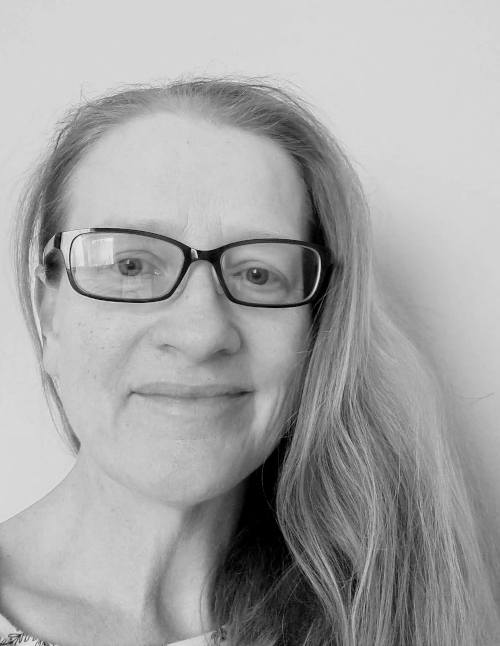
Alina Zollfrank dreams trilingually in the Pacific Northwest. She believes artists and writers are humanity’s true pulse, social media might just kill our essence, and produce should be shared with neighbors. Her work has been nominated for Best of the Net and the Pushcart Prize and recently appeared in SAND, Sierra Nevada Review, Door Is A Jar, and Another Chicago Magazine. She has upcoming publications in The MacGuffin, Salt Hill, Thimble, and Tint. She is a grateful recipient of the 2024 Washington Artist Trust Grant and committed disability advocate.
Check out HFR’s book catalog, publicity list, submission manager, and buy merch from our Spring store. Follow us on Instagram and YouTube. Disclosure: HFR is an affiliate of Bookshop.org and we will earn a commission if you click through and make a purchase. Sales from Bookshop.org help support independent bookstores and small presses.
 Heavy Feather Review