
Stained Glass
There will be shards on the floor, beer-stuck to the tile, when Dominic walks back into the kitchen. All the broken things will still be there, the visible and invisible ones. The glass, at least, he will be able to sweep up.
*
The first time Natalie had invited him over, he pretended he didn’t see the blood lining her chewed cuticle or the way her hands fluttered in the air, ready to hoist her daughter into her arms. But Amina had gripped his fingers, two in each of her small hands, and tugged him toward the garden. The memory still glowed: how the flowers were overexposed in the sharp sunlight, the terrible fragility of the petals’ thin skin, the black shadow in the center of a columbine’s four-chambered heart, how the blossom trembled under his finger when he tipped it down so Amina could see the pollen-dusted bumblebee curled inside.
*
Now his throat swallows his heart, a parody of the feathery joy that had embarrassed him that day. He rereads the text, hoping it’s a mistake.
Amina’s tests came back. It’s bad. Stage 4.
Oh god, he types, although she had been the one to keep god after the breakup. It’s a custody agreement he hadn’t yet regretted.
Will you pray for her?
Yes, he lies.
Instead, he runs.
*
“C’mon, Nicky,” Natalie had said the last time she called, more than a year ago now. “It won’t be like last time. Just this one Sunday. Amina really wants you there.”
But Nicky didn’t exist anymore, and he couldn’t find the words to tell her that. So he said he’d try to make it, and then drove across two states to visit his parents, swapping guilt for guilt.
*
Footsteps crack branches behind him, and Dominic ducks into a cluster of trees, out of sight. While he waits for the hiker to pass, he scrolls through his phone, searching for someone who would understand without explanation this strange degree of separation, the expanse of grief he feels but is scared he has no right to. But there’s no one. It’s nothing but a directory of dead connections.
*
On his second visit, he had brought her a kaleidoscope. Just a cheap one from St. Vinny’s, its faux leather casing dented. Amina had squealed in outsized delight as each blade of grass, each ladybug and dragonfly and mica-specked lump of gravel burst into multitudes through the lens.
*
What uncanny geometry did the doctors see in the microscope when they pinched drops of her blood between the glass slides?
*
At the end—before Dominic knew for sure it was the end—Natalie took him on a date and insisted on driving.
“What are we doing here?” he’d asked when she pulled into the pastor’s driveway.
She had reached over, brushing her thumb softly across the back of his hand, but the sharp crescents of her nails bit into his palm. “It won’t take long. We’ll still go to dinner. But this is something I really need you to do.” There was an unspoken or else behind her words. Before he could protest, she added, “Besides, Amina’s already in there.”
Unease had skittered inside him as he followed her into the house.
He really had tried, although Natalie hadn’t believed him when they fought about it afterward. He had tried to feel something of the murmured love, hope, grace that filled his ears, but there was only a tightening thread of claustrophobia.
“And drive away the demons of doubt from our brother,” Pastor Amos had said, and Dominic stood like it was a cue, shedding the hands—of the pastor and church leaders, their wives, Natalie, Amina—that had pressed into his shoulders, his back, his knees.
Dominic had bent down to pick Amina’s hand back up, kissed her knuckles, and then walked out into the night.
*
Trees communicate through the entanglement of their roots, even from across the vastness of a forest. Dominic had read that once. They share nutrients, resources, information about threats and infestations. The leaves flicker in his breath and the breeze. He marvels at their strange transubstantiation, the way they trade sunshine for sugar and sugar for air, unaware that they’ll yellow and fall. Backlit by the sun, they become a stained glass dome in shades of watershot, chlorophyll-drunk green—no black of sin, no red blood of sacrifice.
The hiker is well out of earshot now; Dominic could leave. He could turn back and face what he’s left behind. The green-stained sunlight lands on his face. Somewhere above him, a woodpecker taps away the time.
Mini-interview with Lindsey James
HFR: Can you share a moment that has shaped you as a writer (or continues to)?
LJ: I taught middle and high school English for a decade or so, in a time of escalating school violence on the national level. One short story I wrote, “By Act Three, the Gun Must Go Off,” was inspired by a half dozen real-life conversations and experiences and one very problematic staff meeting. The experience of slanting reality into fiction gave me my first sense of actively and publicly making meaning from what had previously felt like chaos and often absurdity.
HFR: What are you reading?
LJ: The Light Pirate by Lily Brooks-Dalton. It’s heartbreakingly prescient and beautifully rendered. Check it out if you haven’t read it yet.
HFR: Can you tell us what prompted “Stained Glass”?
LJ: Last summer when I was hiking up the mountain behind my house, the morning sun caught the leaves of a mock orange bush, lighting it up like a fort made of stained glass. Something about that image captured my imagination—it evoked the sense of refuge, but also of fragmentation and fragility. It got me thinking about the complexities of relationships and the way that grief can’t be constrained by straightforward diagrams of family. The story that sprang from that image is one of agony over loss—the imminent loss of someone Dominic once loved fiercely, but also the loss of the interconnectedness he’d once counted on.
HFR: What’s next? What are you working on?
LJ: I’ve been playing around the outskirts of a novel about motherhood and ecological change and the technological corruption of personal and natural spaces. I’m hoping to dig into that project more fully in the near future. In the meantime, I’m always working on more short stories.
HFR: Take the floor. Be political. Be fanatical. Be anything. What do you want to share?
LJ: With the proliferation of technology, and generative AI in particular, it is becoming increasingly and disturbingly easy, even tempting, to outsource the very things that make us human. To continue to think, to feel, to create—to be intellectually and emotionally present in the day-to-day details that make up a life and a world—is the greatest and most meaningful act of protest. In any given moment you can choose between feeding the machine or feeding your humanity. Choose well.
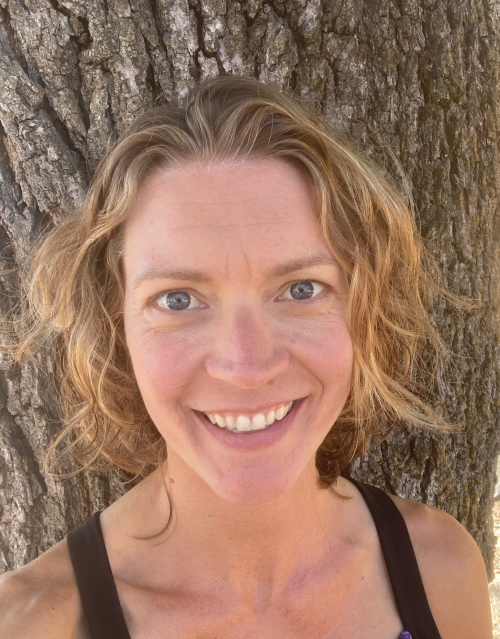
A native of the Pacific Northwest and a recovering English teacher, Lindsey James draws inspiration for her writing from the people and landscapes of eastern Washington State. You can read her published work in The Adroit Journal, Necessary Fiction, Vast Chasm, Brilliant Flash Fiction, and elsewhere.
Check out HFR’s book catalog, publicity list, submission manager, and buy merch from our Spring store. Follow us on Instagram and YouTube. Disclosure: HFR is an affiliate of Bookshop.org and we will earn a commission if you click through and make a purchase. Sales from Bookshop.org help support independent bookstores and small presses.
 Heavy Feather Review