
“All happy families are alike; every unhappy family is unhappy in its own way.”
It’s probably safe to presume that anyone reading this site with any regularity knows this line by heart. As the first of Tolstoy’s Anna Karenina, it sits comfortably close to the top of the ranks for most famous first lines in all of literature, and also contains within its precise fourteen words such a timeless pith as to render it endlessly unpackable and applicable to most any family, real or fictitious, happy (if such a thing even exists) or un-, to this day. It’s a line with the weight of prophecy, if not outright scripture. The kind of truism so true we now take it for granted. But I found it returning to mind again and again as I fell in with the Memenons—the extraordinarily unhappy-in-its-own-way family at the center of Jesi Bender’s powerful new novel Child of Light.
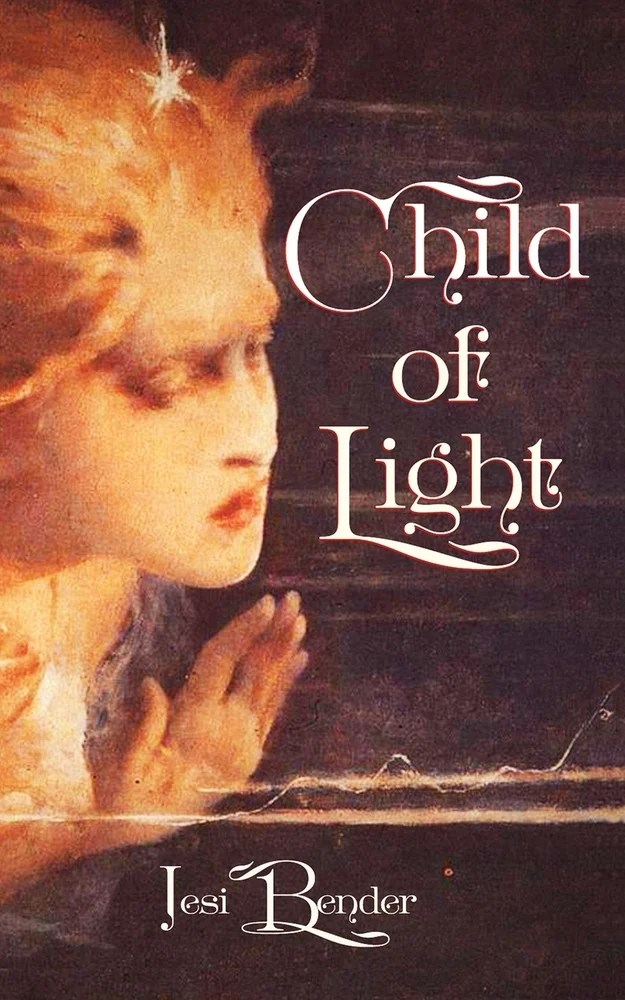
Set in Utica, New York, around the turn of the 20th century, Child of Light is relayed to us through the downcast, but observant eyes of Ambrette, a 13-year-old girl whose failed electrical engineer Papa is haunted by science, and whose unfulfilled artist Maman believes she can commune with ghosts. Though the corrosive couple barely speak to one another, lost in their separate vortices of consumptive regret, they remain tethered by the concept of energy, and the myriad meanings, both physical and meta-, that word can contain. Caught between their opposing dipoles, and dogged by violent shocks from her unpredictably cruel older brother Georges, Ambrette charts a path to young adulthood both uncommonly illuminated, and yet outlined in nuclear shadows that much darker because of it—indelible reminders that “You don’t even know the people closest to you.”
That theme of dual or secret identities expresses itself throughout—especially tellingly within the family unit, where each member, at least with regards to Ambrette, even answers to two different names. Papa (Thales) speaks only French, and is separated from his daughter by a daunting language barrier (further exacerbated by his alcoholism) which she spends the entire book trying to bridge. Maman (Agathe) seems to be involved in a clandestine affair with her nursemaid Lizzy, and spends much of the story sequestered in her room, drifting between reality and laudanum-thickened fever dreams. And Georges is actually a name her brother (né Modeste) chose for himself, to signal his grudging ascendancy to de facto head of household, and decisive break with his and Ambrette’s shared childhood. In a bravura side-by-side flashback passage, we get a guided tour-de-force of the ways in which the parents’ very different upbringings set them on a collision course toward the unique dysfunctions of both their marriage and their respective adulthoods, and a clear view of how the same problems are finding their footing anew in their children. It’s as concise and devastating an illustration of inherited trauma as you’re every likely to see in print.
And that nifty bit of typographic flare is just the beginning, as Child of Light also includes poetry, musical stanzas, a handful of illustrations, and enough anagrammatic and multilingual wordplay to warrant heady comparisons to Nabokov. In addition to Papa’s infuriating incapacity to know with his daughter, the thrillingly-recounted origin story of his time working with real-life inventor Lucien Gaulard (a kind of godfather of the modern transformer) at Paris’ Exposition international d’electricite serves as a particularly frustrating reminder of how limited all of humanity is in our ability, if not willingness, to communicate with one another, even toward potentially world-changing greater good. As a non-French speaker, and hopeless science student, I can only imagine the easter eggs this book has in store for someone educated enough to fully grasp its every word, but at the same time, in acceding to my periodic lack of comprehension, I could feel myself plunging deeper inside Ambrette’s own isolated mind—that fractured, childlike headspace of wanting to understand your parents in ways they can’t or won’t allow.
In contrast with her present/absent father, Ambrette’s relationship with her Maman is undoubtedly the novel’s candent centerpiece—a woman who doesn’t resent being a mother so much as just the fact that a mother was the only thing she was ever allowed to be. Slowly deteriorating behind closed curtains and locked doors, her wasted potential eating her alive, she imparts wisdom both forlorn and fatidic about the “special melancholy that afflicts only women.” Amid attempts to engage with local suffragettes, and employ her daughter as the conduit for a disastrous séance, she can’t ever seem to escape the traps her own mind continually sets for her, much less the external circumstances to which they’re both bound. And yet, through her harsh lessons about the iniquities of sex and society, the pendulum of hope and despair, and the nearness of spirits and death, she imbues Ambrette with a greater understanding of the mystical, creational energy that courses through them both, and fortifies her for much of what awaits in the brutally formative days to come.
And in the end, that feels like what Child of Light is really about—the rocky journey toward seeing beyond your preconceived, childhood notions of the world and how it functions, and seeing adults as people with their own emotions and shortcomings; their own pain and past. In addition to its exploration of toxically cyclical family dynamics, the book employs to great effect a kind of resurrection motif—Ambrette spends unwanted time in both a coffin and a grave, and we see both her parents succumb to the thanatoid effects of substance abuse before wearily rising again—which seems to suggest that every new step out of innocence, and into experience, is itself a little death (entendre occasionally intended), but also a chance to start over, better informed and equipped to get things right. The flipside of escaping the snug cocoon of naivete, however, is that it also protects us from truths we’re not yet ready to know, and as many of the book’s darkest secrets are revealed across its final act, Ambrette learns how irreversibly life can be overwhelmed by horror in the instant it takes to grow up too fast.
While Child of Light comes to us via genre-crosspollinating indie publisher Whiskey Tit (and Bender herself runs that press’ spiritual sister KERNPUNKT), it carries the kind of high-literary gravitas you expect to find rubbing deckled elbows with the shortlist for the Pulitzer. It contains more marvels than any review could do justice, and more surprises than any reviewer should reveal. I’ve eschewed at least a half-dozen socially-conscious subplots and ancillary characters here, just in the name of brevity—examinations of race, sex, and class discrimination that bleed through and permeate every scene—and Bender’s meticulously integrated deep research, and sumptuously sensorial, textural prose brings to exquisitely detailed life the clothing, architecture, language, and music of 1900s upstate New York. Likewise, in Ambrette we are gifted a classic adolescent heroine worthy of mention alongside Bernarnos’ Mouchette and McCullers’ Mick Kelly, a girl who “questioned every single thing, and it drove her mad. [Who] found herself fulfilling a cycle. The cycle prepared especially for women.”
All of which is to say, while Child of Light is by no means an uplifting story with a fairytale ending—far from it—it does contain stunning, moving moments of resilience and hope amid its profound darkness. And in the extremely unhappy-in-their-own-way Memenons—“The husband that didn’t speak. The mother that never left her bed. The boy that built coffins. […] The girl with the moon on her tongue”—it shows us a family simultaneously alien and devastatingly familiar in its symbiotic misery; both pushed beyond its breaking point, and yet somehow never quite broken. “Energy never dies” after all, as Papa manages to tell his daughter in one of those rare moments—a brief, electric flicker of true connection which can’t help but remind us of the cyclical miracle of life itself, and evoke that most famous and enduring first line of them all: “Let there be light.”
Child of Light, by Jesi Bender. Whiskey Tit, August 2025. 352 pages. $18.00, paper.
Dave Fitzgerald is a writer living and working in Athens, Georgia. He contributes sporadic film criticism to DailyGrindhouse.com and Cinedump.com, and his first novel, Troll, was published in May 2023 by Whiskey Tit Books. He tweets @DFitzgerraldo.
Check out HFR’s book catalog, publicity list, submission manager, and buy merch from our Spring store. Follow us on Instagram and YouTube. Disclosure: HFR is an affiliate of Bookshop.org and we will earn a commission if you click through and make a purchase. Sales from Bookshop.org help support independent bookstores and small presses.
 Heavy Feather Review