
We were having dinner, and she said, “I signed us up for a foster.” I thought she was kidding, but everything had already been arranged. His name was Lollie. The next morning, he was in the kitchen making toast. He wore a cardigan and kept his shoes on inside. He had dietary needs, emotional needs, and a schedule taped to the fridge. The rescue lady who brought him to us said to be patient. That foster husbands needed time to adjust. The first week, he followed her around the house. Sat beside her while she read. Stood behind her while she cooked. Asked her about her day, even if she hadn’t left the house. She said it was sweet. I said it was weird. I wasn’t supposed to discipline him, but I went off on him when he started singing random Morrissey lyrics while I was trying to watch the game. That was a mistake. He pouted for a day and a half and left damp tissues around the living room. She said I wasn’t being supportive. I said maybe he could go live with someone else until the husband café had a spot for him. She said he’d had a hard time before us. That this was his pathway to a forever home. He tried to bond with me. Asked if I liked board games. Said he was a good listener. I said I didn’t need a listener, I needed my recliner back. He sat in it every night like it was assigned to him. Eventually, she put up a baby gate across the door to my man cave and told me to give him space. I said, “That’s my space.” She said I was being selfish. One night, I came home from work and found the two of them doing a puzzle. She didn’t look up. He offered me a piece. I didn’t take it. The next morning, my toothbrush was missing. Then my jacket. Then my name on the mailbox. He started sleeping in our bed. I moved to the couch. She said it’s just until a space opens up for him. That someone else will want him. That he’s a good man, just misunderstood. I said nothing. That was a year ago. Now and then I still knock on the door and ask if they need anything. Sometimes she says no. Sometimes she doesn’t answer. When he answers, I stare at him as he tries to make small talk until I decide to turn and walk away.
Mini-interview with Tom Busillo
HFR: Can you share a moment that has shaped you as a writer (or continues to)?
TB: It’s tough to come up with one. I think it’s a series of moments where you’re constantly discovering or re-reading writers who really grab you and show you what’s possible. The first time I ever read a Daniil Kharms story, my head nearly rolled off. Ray Carver’s “A Small, Good Thing”—just a dagger to the heart in such an understated way. The first time reading Diane Williams, Lydia Davis, George Saunders, Charles Bernstein—they just open your eyes to new levels of what’s possible. I’m constantly coming across pieces in literary journals like HFR that do the same. Last week, it was a piece by the Irish writer David Hayden in X-R-A-Y that I reread twice just to try to understand all that was going on. Just masterful. I’m constantly reminded how far I have to go, knowing, most likely, I’ll never truly arrive.
HFR: What are you reading?
TB: I’m finishing up Break It Down by Lydia Davis. It’s a re-read, but she’s amazing. I’m also reading a collection of Barry Hannah stories. I don’t know where he stands in terms of his place in literary history, I just know he’s one of my favorite authors. There’s a sense of controlled chaos in what he’s doing, such a vibrancy. If The Stooges were proto-punk and led to the Ramones, then Barry Hannah was proto-George Saunders. Then again, I could be getting everything wrong. I’m also reading Lost Girls by Robert Kolker, author of Hidden Valley Road. It’s one of those books that makes you realize how lucky you are to have whatever piece of normalcy in your life you have.
HFR: Can you tell us what prompted “The Foster”?
TB: It was prompted by real-life events. My wife, son, and I are crazy cat people. We have three and have been taking in fosters to help a local rescue. Our current foster is the most affectionate cat we’ve ever seen, but he’s a demon when it comes to our other cats. My wife said something like, “How would you like it if I brought in another man and he punched you in the face whenever he saw you?” When I described the situation to a friend who writes long fiction, he used almost the same language. I told him in an email response that I needed to explore that idea, and a couple of hours and three cups of coffee after hitting send, I had the story where I wanted it.
HFR: What’s next? What are you working on?
TB: Whatever the coffee and intermittent insomnia spark. It sounds rootless, but it’s the truth. Since August of 2024, I’ve been waking up most mornings around 3 or 3:30, wide awake and wanting to write. It was very odd, as I hadn’t written a single thing in 10 years before that—back when I was in another similar fugue state, only then it was third-wave Flarf and language poetry. I fed a personal blog for years until my son was born. So when it comes to short fiction, I’m really a newcomer, a total apprentice.
I have a series of Google Docs titled “Terrible Openings from Terrible Novels, Vol. X” where I try to just free write without judgment, without really caring if things hold together. I tend to have this mentality of, “You came up with a few things yesterday, but now it’s today, and you’ll probably never write another thing again. Prove me wrong.” Which, in a way, sucks, but that’s how I’m wired. So I’m always trying to keep writing new stuff while I can.
I’m also trying to write more “serious poetry,” but I have a tough time with that. There are pieces that are “my poems,” and there are “poems I think I could get published.” I don’t need to tell you which ones I prefer. Ploughshares is never going to publish a poem called “This Poem Does Not Contain Peanuts,” but JAKE did! I think it’s places like JAKE and HFR where the really interesting things are happening. If I could just tell myself, “You’re not a poet. At least not in the normal sense. You’re a short fiction writer,” and actually listen, I think I’d have a lot less heartbreak and frustration.
HFR: Take the floor. Be political. Be fanatical. Be anything. What do you want to share?
TB: I wanted to make this response, “Why Soundgarden was the best band on the Seattle grunge scene—not Nirvana, not Pearl Jam, not Mudhoney, not even Skin Yard or Malfunkshun,” but we’re not living in normal times. We’re living in a dystopian YA novel that happens to be real. The damage Trump is doing will take decades to undo, if it can be undone at all. Everything that made us great, albeit with warts, he’s undermining. He’s a fascist in the dictionary definition of the word, and he’s already created a constitutional crisis with his openly defying SCOTUS re: Abrego Garcia.
I started hanging out on Twitter to follow lit mags (I’m on Bluesky too!) and in the process have gotten deep exposure to the MAGA way of thinking—the language they use in everyday discourse, the level of venom they have toward anything outside of what they’ve been brainwashed to believe—and it’s scary. Obviously, I’m coming at it from the other side, but how anyone can’t see that he’s a dangerous, deranged, erratic, unhinged sociopath is beyond me. I guess that shows you what propaganda organs like Fox News, all the lunatic-fringe far-right blogs, and his ridiculous Truth Social can do.
Fifty years ago, people were aghast that Nixon might have used the IRS to target political enemies. Now, Trump is siccing the IRS on Harvard to revoke their tax-exempt status and is bragging about it—and half the country is actively cheering him on.
Who are the heroes of this novel? Us. Jim Morrison—not my favorite poet—said it best: “They’ve got the guns, but we’ve got the numbers.” There have been a smattering of protests, and I feel bad that I haven’t been able to make the two biggest here in Philly because of band commitments, but Trump cares about these things. My wife has always maintained that he has a deep, deep need to be loved that’s stronger than his need to be perceived as strong, and I agree. We saw it with his temporary pullback on tariffs.
Weekend after weekend of mass protest is the only way to get through to him and to his Republican enablers in Congress. When the time comes, get out in the streets. Let them see our numbers. Let’s show up in such numbers that we can’t be dismissed as “the radical lunatic left,” but seen for what we actually are—the American people.
In the meantime, I am trolling members of his cabinet on Twitter. It does no good, but there’s something a tiny bit empowering about asking Howard Lutnick if he thinks it’s possible for Trump to live to be 400 years old like Noah, or asking Stephen Miller if he likes to jet ski.
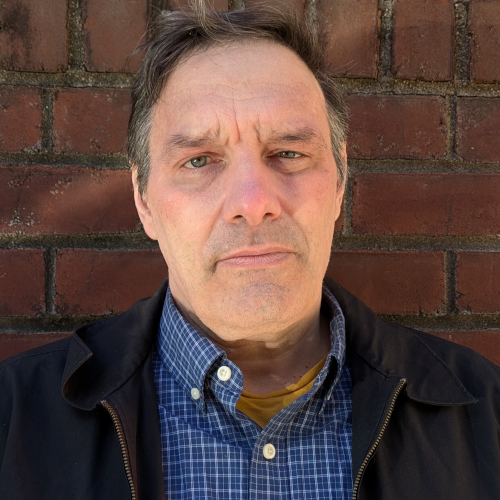
Tom Busillo’s (he/his) writing has appeared or is forthcoming in McSweeney’s, PANK, The Broadkill Review, and elsewhere. He is a Best Small Fictions nominee and is the author of the unpublishable 2,646-page conceptual poem “Lists Poem,” composed of 11,111 nested 10-item lists. He lives in Philadelphia, PA.
Check out HFR’s book catalog, publicity list, submission manager, and buy merch from our Spring store. Follow us on Instagram and YouTube. Disclosure: HFR is an affiliate of Bookshop.org and we will earn a commission if you click through and make a purchase. Sales from Bookshop.org help support independent bookstores and small presses.
 Heavy Feather Review