And Then It Died
The presentation of the thing was …
Spongy
Friable
Feathered, and
Cold.
(It had not been looking great for some time.)
When we tried to pick it up, it was seen to …
Cower,
Whimper
Hiss, and
Snarl.
(It gazed upon us in sad disbelief.)
For the longest time, we had …
Fed it an unhealthy diet
Taken it for granted
Tested its limits, and
Denied it—over and over and over.
(Some of us had even beaten it with sticks.)
But we weren’t worried—we said …
It’s stood the test of time!
It can never happen here!
The guardrails will hold!
Let’er rip!
(You need to break eggs to make omelets.)
But all the while, it was being …
Perverted
Subverted
Severed, pillaged, and
Drowned in the bathtub.
(We left it in the darkness to die.)
Some of us tried to save it. We …
Wrote words that no one heard
Hit the streets with our feet and our faces
Sued, litigated, and
Drove ourselves quite mad.
(Spoiler alert: It was too late.)
One day, we found it …
Lying in a ditch
Hanging by a thread
Knocking on death’s door, and
Waiting for the answer.
(Seriously, it was hanging with the reaper.)
So we …
Shook and slapped it
Held a mirror to its lips
Checked its pulse, and
Cried and whined and bitched and moaned.
(Some were even seen to ululate.)
Turns out, it had always been …
Priceless
Our superpower
What made us great, and also
What made us exceptional.
(The thing had made the center hold.)
Now all we can do is …
Fight each other, apportion blame
Scourge ourselves with whips and thorns
Take a picture to remember it by, and
Learn the trumpet, play Taps.
(Stick a fork in it. It is done.)
Still, there are those who whisper …
The thing is not dead, just resting in Avalon, or
It faked its death and hired an impersonator to assume its identity, or
It will rise on the third day, or even:
No. There is another.
(We are nothing if not high on our mythology.)
And there are those who proclaim …
We must believe in it to make it live
We must love it to make it real
We must let it go for it to come back to us, which
makes some sense to me.
(The thing has feathers, after all.)
Mini-interview with Heather Pegas
HFR: Can you share a moment that has shaped you as a writer (or continues to)?
HP: My mother was a writer (and a grant writer), so I knew about writing from a very early age. I knew it was hard because she’d markup school essays with a red pen, and sometimes this made me cry. Out of college, I went to work in the nonprofit field, and somehow, I became grant writer too.
For many years, I tried to think of myself as a “real” writer, but I knew I wasn’t. I was a “day job writer,” and I said my day job took up all my creative energy so I couldn’t get any of my writing done. Which was a lie.
Two things changed this. First, I turned 45, and realized that unlike many far-more-brilliant young people, I hadn’t had anything to say until I was properly middle-aged. Then, life took me to Los Angeles, where I fell among “creatives.” There’s nothing like being dropped among creative people to free your own potential.
HFR: What are you reading?
HP: I just finished Orbital by Samantha Harvey. It’s one of those “slim novels,” but packs a punch with six astronauts of different nationalities on a space station in continuous low earth orbit, recording their thoughts and feelings about Earth. Obviously, Earth isn’t looking so hot. Or rather, it’s looking too hot? Anyway, the novel is plotless and Earth is the main character. I really liked it! Now I’m reading Strangers on a Train by Patricia Highsmith. I like to mix things up.
HFR: Can you tell us what prompted “And Then It Died”?
HP: Disgust. Depression. Disorientation. Despair. All the D words, including some hopeful ones: Defiance. Defense. Disobedience. Democracy.
HFR: What’s next? What are you working on?
HP: I continue to fit too many story ideas (as well as some stalled novels) in around my day job, which is harder than ever. Here is what I’d like people to understand about the federal grant landscape in 2025.
There isn’t one.
Almost all federal grant opportunities, for climate work, for behavioral health, for uncensored arts funding, for HIV prevention, for helping people from disadvantaged communities, etc.—all the work our underappreciated government used to do is going away. And it’s going to hurt people of every political persuasion. If you read Project 2025 in advance you saw it coming. I saw it coming. But I never anticipated what a nation or a world without American funding would look like.
It’s bad. Really, really bad.
HFR: Take the floor. Be political. Be fanatical. Be anything. What do you want to share?
HP: Whoops, I think I already did! But in addition to the above, it is a source of maximum aggro to me that the climate crisis takes a back seat to every other “crisis.” When Trump got elected (again), I said to myself, Now the crises will be manufactured and they will never stop.
When will the most important thing become the most important thing?
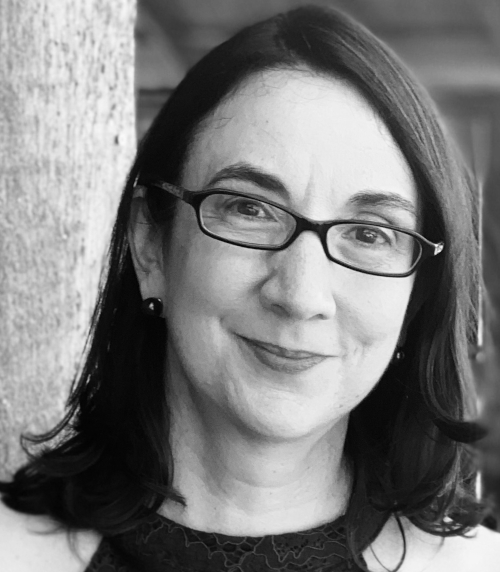
Heather Pegas lives in Los Angeles where she writes grant proposals, essays, stories, and flash. Her work is featured in publications such as Does It Have Pockets, Tahoma Literary Review, Tiny Molecules, Fatal Flaw Literary Magazine, and Weird Lit Magazine. She cares a lot. Find her at heatherpegas.com.
Check out HFR’s book catalog, publicity list, submission manager, and buy merch from our Spring store. Follow us on Instagram and YouTube. Disclosure: HFR is an affiliate of Bookshop.org and we will earn a commission if you click through and make a purchase. Sales from Bookshop.org help support independent bookstores and small presses.
 Heavy Feather Review