
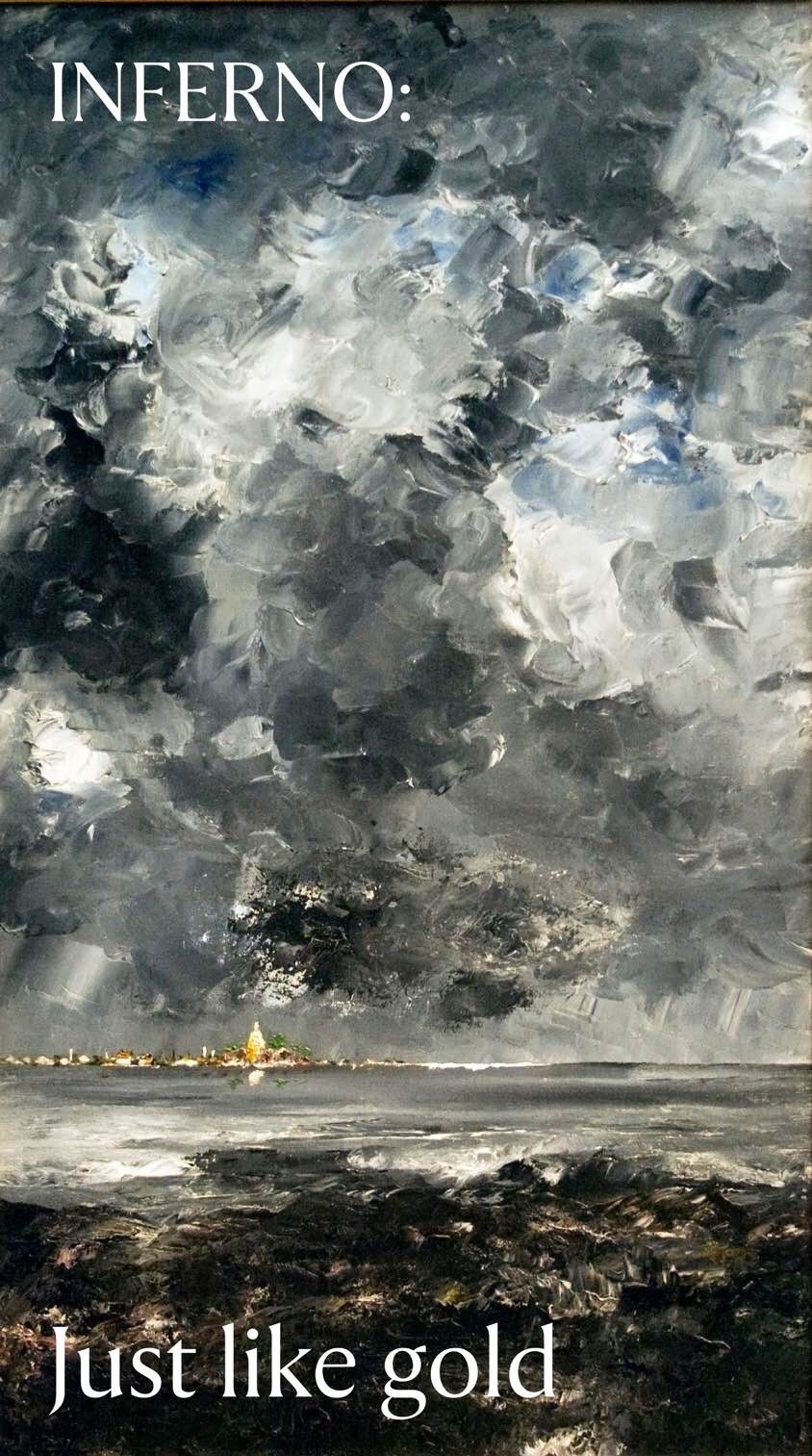
A very wise person once posited that the historical provenance of Sweden’s sustainable mindset is attributed to the absence of substantial oil reserves. Wealth has never been on tap, so to speak, and as such the country implemented something more long-term, if not resilient by cultivating and expanding on renewable practices. Danes on the other hand, well, not for wont of generalizations. A somewhat more shoot-from-the-hill kind of gang by comparison; cultural radicalism is part of their DNA. They like to cut a deal there and then.
The critic, Georg Brandes, meets such Danish criteria. A testament to the individual agency so engendered in Western culture—facets of which, today, paradoxically—contribute to its almost terminal, macro-level stagnation. As an enabler of cultural production, Brandes was instrumental in bringing to the fore the crème de la crème of late nineteenth century European literature.
Copenhagen of the 1880s was the literary capital of Scandinavia, and it would be Denmark where Sweden’s most estimable author was first roundly embraced for an opus that would change the course of modern Scandinavian literary history. Despite a home audience being somewhat circumspect of what to make of The Red Room (Rödarummet)—now dubbed Sweden’s first modern, realistic novel, and which is still taught in classrooms today—its author, August Strindberg, had alighted on the literary stage. The Red Room and the Copenhagen literati were central in establishing a literature movement invariably labeled the 1880s (åttiotalet), The Young Sweden (det unga Sverige), and The Modern Breakthrough (det moderna genombrottet) with Gustaf af Geijerstam, Tor Hedberg, Axel Lundegård, Oscar Levertin, Anne Charlotte Leffler, August Strindberg—and of course Georg Brandes—front and center of the latter.
The success of The Red Room elevated the Stockholmer from the parsimony of a struggling writer and within months he and his wife were expecting their first child. The publication year, 1879, synced with the beginning of Sweden’s first major strike. Its themes of social injustice permeating myriad Stockholm strata struck a chord with a growing labor movement of the times. However the infamous Strindbergian storm clouds which benighted his humör quickly circled. The all-familiar trappings of the repressive social order of the time seeking to encompass this maverick; musician; artist and writer, initiated a sort of extended, self-imposed exile following charges of blasphemy in the Fatherland. Strindberg made for the continent. Strindberg on Emanuel Swedenborg:
He crushes me through his naturalism in the descriptions (han förkrossar mig genom sin naturalism i beskrivingarne).
Unlike the psyche of his countrymen, nothing about the life of August Strindberg between November 1894 and May 1897 could be described as sustainable. Written in Lund, Skåne—a region which two hundred years previously belonged to Denmark—Strindberg’s INFERNO is a structuring of the material of reality: a delineated autofiction through the lens of an author undergoing a tectonic spiritual transition. At first—a lived-in hellscape between the empty pleasures and the thin walled hotels of Paris—and thus finally, to Austria, at the estate of the god-fearing (gudfruktig) grandparents of his second wife, Frida Uhl. It is here where Strindberg undergoes a radical re-evaluation of Catholicism paired with the devastating writings of Emanuel Swedenborg.
Paris, dipsomania
Paris was a disaster for Strindberg. Drunk most days on absinthe; a regular user of potassium bromide. Such was his awful state of health, various doctors’ diagnoses at the time ranged from neurasthenia; angina pectoris; emphysema; and paranoid psychosis. His entire existence lies in avoiding the dreaded institutes of the time. And at all costs. Patently alcohol and drugs were exacerbating the fire of anxiety. Regular references to the occult—a cultural phenomenon at the time—further cloud his sanity where even the most inanimate organisms might set Strindberg off in a tizz. He writes with great clarity about escaping cafés at the slightest movement of pansies in a vase (penséer som skakar på huvudet), to running from Edvard Munch’s door at the sight of a devilish dog. The Swedish polymath’s other encounters with Munch don’t go much better. Like Strindberg, Munch is under self-imposed exile following fierce, public criticism of the artist’s work in Norway. Each is either sick, tired or just mentally spent at every unfortunate rendezvous. A rare insight, perhaps, into the barriers obstructing anarchic artists/writers of the time who dared challenge a status-quo.
In the spirit of Strindberg’s autofictional ambiguity, Munch is referred to as a “Dane” (danske) and the painter’s work of being feminist in nature “the feminist paintings of my woman-worshipping Danish friend” (de feministiska tavlorna av min kvinnodyrkande danske vän). A 1974 film biography about Munch’s artistic process by the English director, Peter Watkins, would have been well served to have read INFERNO because the interactions with Strindberg in Paris, albeit part-fictional, provide an additional layer of context to their friendship. There is but a fleeting reference to Strindberg’s time in Paris in the film which incorrectly characterizes INFERNO as a short story, and no mention of both men meeting there. An understandable omission, perhaps, given that tactile English translations of INFERNO have been in and out of press with the last official publication in 1962.
The main theme of INFERNO in the Paris sections are Strindberg’s attempts at alchemy. He is convinced that elements can be combined. A failed chemistry student, Strindberg attempts to remedy a sort of traumatic, adolescent life event in a quest to disrupt the scientific establishment. Amazingly, he garners the attention of various respected French occult journals that publish his research. Yet none of these small victories quell his increasing isolation, nor diminish the shadows that lurk at every other Parisian street corner—his “electricity-powered enemies” (elektricitetsförfarna fiender) as he describes them, with from whom and malicious intentions (illvilliga avsikter) stalk him daily. Even a most impartial reviewer would have difficulty in not arriving at the conclusion that August Strindberg is, at this point in his journey, stark raving mad.
Originally written in French, Strindberg doubtless believed he had an audience in the country at the time. While nothing concrete becomes of his dabblings in alchemy, the black comedy on display as he strolls Parisian cafés drinking or wandering the local cemetery courting women; cursing acquaintances who are persecuting him (förföljer mig) harks to the country satire The People of Hemsö (Hemsöborna) and of course The Red Room itself.
Money, mania, marital, and messiah complexes are all parallel themes against the constant backdrop of Strindberg’s inner thoughts and conviction as being some sort of deity. By the time he reaches Austria, Strindberg will declare that he is Job “the upright and irreproachable” (den rättsinnige och oförvitlige): the central figure of the Book of Job in the Bible.
Austria, Swedenborg
Strindberg first read Swedenborg during the 1870s when he loaned a book from the Kungliga library in Stockholm, however it didn’t make much of an impression on him. Such are the forms of art, music, and literature not to mention the cultural and political context of the moment—timing is crucial. It was only when he visited his daughter in Austria during the INFERNO period and he was given a German translation that the restless mind of Swedenborg, a mystic and scientist, impressed upon him.
Swedenborg’s pursuits in natural sciences, over and above the religious epiphanies, paints an understanding why Strindberg identified and probably admired him. Swedenborg was the first scholar to localize the motor area in the cerebral context. His achievements in natural sciences are undeniably worthy of praise for Strindberg who himself is, of course, maneuvering his own discoveries.
What really draws Strindberg is Swedenborg’s visions of hell and heaven, the so-called doctrine of “correspondences” which could have been drawn from Plato and the Neo-Platonic traditions of the Renaissance. Strindberg posits this, questions it, yet has no answer:
Where has Swedenborg seen this hell and heaven? Are they visions, intuitions, inspirations? That I cannot say.
But the correspondence between his hell and Dante’s, as well as that of Greco-Roman mythology and Germanic mythology, makes me inclined to believe that the powers have always used almost analogous means to realize their intentions (men överensstämmelsen mellan hans helvete och Dantes, samt grekisk-romerska mytologiens och den germanska mytologiens gör mig böjd att tro makterna alltid betjänat sig av i det närmaste analoga medel för att förverkliga sina avsikter).
While Strindberg gradually reaches a sort of spiritual calm towards the end of INFERNO, his obsession with the occult continues unabated. Everything he experiences is a sign of persecution. Even the color of cigarette papers during an inconsequential walk to the store are wrong. He experiences a thunder and lightning storm which he assumes goes on for longer just because of him, not only that—his persecution complex suggests that “every flash aims at me without a hit” (varje blixt siktar på mig utan träff).
The messaging in the final chapters is a somewhat more sober Strindberg who states that sometimes it’s only by educating yourself that a person can truly recover and heal. In a rare moment of reflection, Strindberg draws on the example of the different doctors who diagnosed him with a range of different conditions—whether or not he was suffering from any of these remains to be seen—but the message he wishes to convey is that of the writings of Swedenborg—a man regarded as a seer and a prophet—which ultimately released him from his INFERNO:
Swedenborg, by enlightening me on the true nature of the horrors that have befallen me during the last year, has freed me from the electrical engineers, the black magicians, the destroyers, the jealous goldmakers, and from madness” (Swedenborg har, genom att upplysa mig om den rätta naturen av de fasor som drabbat mig under sista året, befriat mig från de elektriska ingenjörerna, de svarta magikerna, förgörarne, de avundsjuka guldmakarne, och från galenskapen).
A generic, broadsheet column headline of INFERNO might be written as thus: a return to form. Rumors of Strindberg’s idiosyncratic attire and eccentricities on the continent had filtered back to Stockholm fueling the naysayers with whom he had entered into very public, cultural disputes. But the critics would soon be silenced because the more discerning Strindberg reader can’t but just bask in what is finally, and unlike The Red Room, a well-structured and more than competent autofiction. Such was Strindberg’s indefatigability, a Swedish critic once described his style as “no one has a shorter way from the blood to the ink” (ingen har kortare väg från blodet till bläcket). This is no more than true for INFERNO. His hands were literally bleeding from psoriasis due to chemical handling in his alchemy pursuits.
ES Sandberg is a writer based in Stockholm, Sweden. He is a purveyor of art and cultural production. Sandberg recently finished editing his debut novel Zero Ek—a speculative fiction based on his adopted city for which he is seeking publication.
Check out HFR’s book catalog, publicity list, submission manager, and buy merch from our Spring store. Follow us on Instagram and YouTube. Disclosure: HFR is an affiliate of Bookshop.org and we will earn a commission if you click through and make a purchase. Sales from Bookshop.org help support independent bookstores and small presses.
 Heavy Feather Review