
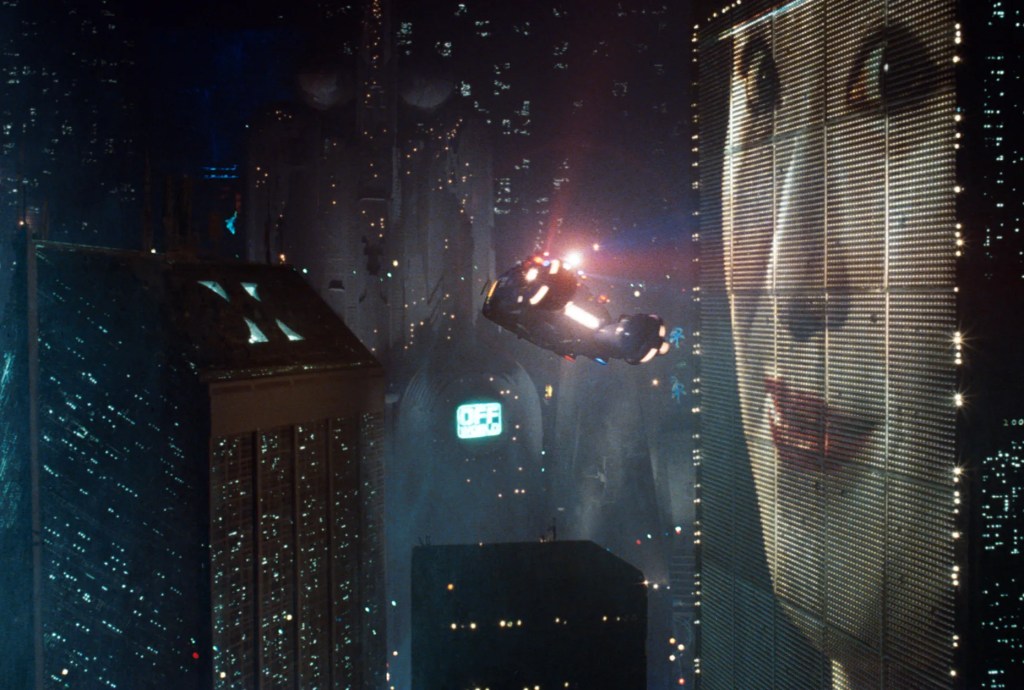
The Last Words of the Replicant, or, Blade Runner Revised
“I have tasted flavors of which my fellow replicants have never even dreamed …
I have consumed Sweet Mango Pringles in South Korea
and Hawaii-style Poke-bowl crisps in Hungary.
I have gobbled down chocolate-coated snacks in Finland
and Lasagna-flavored potato chips in Thailand.
But I have never understood why the tastes of meat-based machines
known as humans vary by geography.
Why are the so-called Europeans addicted to paprika?
Why are salt-and-pepper pretzels eaten with such relish in Norway?
Why are oven-roasted chicken Doritos only sold at the tip of the Asian peninsula?
I have traveled the world and sampled what it offers.
I have witnessed the flavors of comfort food transformed into powders.
But I take no comfort in my knowledge.
I still do not understand why gravy-soaked chips are loved in Canada
and nowhere else—
or why Spanish tomato tango flavor rules the junk food in India
but is despised by Sri Lankans.
When my creators programmed me, they neglected to include
a capacity for the arbitrary, the whim, a taste for continental contingency.
And without these mysterious talents
I feel the unexpected has escaped me
and all these flavors begin to fade from my metal tongue
like a country where prawn-flavored cocktail chips have been discontinued.
Time to die …
or is it, time to buy and buy again—
in hopes of finding the lost flavor of surprise?”1
Under the Golden Horse
It makes sense
that when I smile
while walking by
the woman sitting
on a Styrofoam cooler
with a gray parrot on each shoulder
she ignores my visual applause
of her performance, staring instead
intensely, almost angrily, into the windows
of the Gentile Gelateria in front of her.
In this city, unsolicited warmth
or even mere acknowledgement, can be prelude
to some sort of con or more dangerous encounter.
This is also why it also makes sense that when the waiter
for to-go orders, brings my food
under giant golden horse at PF Chang’s
he greets me if I were his oldest friend.
It’s as if we go back a way, once hanging
out on the criminal streets together, recognizing
each other as veterans of some urban war.
“We’ve been waiting for you, Mr. Jerome,”
he says, with a warmth that only transactions
have a right to elicit. “I see you have new dishes
on the menu,” I say. “My wife and I
may be by to try a few.”
“That’s awesome,” he replies,
“I hope I’m here when you do.”
Urbane Planning
“I recognized art / as wildness”
—Frank O’Hara
The sparrow in the tree outside my window
is working for the city planners.
But if the bird loses its birdness,
what good is it
at symbolizing urban Arcadia?
It is the duty of the sparrow to display
a degree of autonomy. Otherwise, humans
think they’re living in a town of canned cartoons,
a notion that leads to a decline in property values.
Ask the gallery goer staring reverently
at the old Jackson Pollock, say, One: Number 31, 1950,
if the painting still shimmers with a bit of profundity,
a becoming arising from the war between being and nothing?
My guess is yes. Why else would people pay to storm
through somber white hallways scored by whispers?
How else to get them to behave as proper art lovers?
Which is to say the managed world requires a little wildness
to hide its management. Sure, it’s okay, occasionally, for
a rat to act cute, stumbling down the subway steps
with a slice of pizza in its jaws. Shit like that makes
for good photos and memes. But rats need to be rats,
occasionally rabid; and sometimes they need to bite.
How else to convince people to visit for an authentic
urban experience? The city paid good money to put
that tree there. The least it could do in return is do
what a tree is supposed to do: grow nice-looking leaves
that make you sigh, ahh Nature. Okay, every so often,
when no one’s looking, it’s allowed to wave to a cloud or passing car,
but a tree should be a tree, a car a car, a cloud a cloud.
Things are free to change their nature, but not out loud.
Host of Reality Show on Accusations of Misconduct:
“It Hurts, but I have No Regrets”
To the less than vulnerable
accusations melt like snowflakes
on hot barbeque briquettes.
He cannot be blamed
for the magnifying glass glare
that sets fire to conversations
like a match to a thirsty prairie.
The information farmers
burn these fields
of necessity—
bank accounts depend
on fallacious accounts
a favorite being
the return of the counted out.
He readies for his own return
in a vintage
Creature from the Black Lagoon suit
or the equivalent
tweaked for today’s tastes.
Perhaps an alien protoplasm explodes
from his chest
right on the camera’s que.
It’s his first jaunt
on the resurrection circuit.
He is like a melody and lyric
from the umpteenth hit
by the pop singer
whose genius equates
to a billion ways of saying
“so there!”
Etude on a Wah-wah Pedal
The old music came back, sneaking in between
the chords of today. We need those new chords
else our minds would have been recalled
to that land from which we ran smirking.
The mementoes are sort of nice, though.
Each a small flag waving from one of the windows
of the vast new architecture of the moment.
It’s okay to be overwhelmed by the present
when from crevices in its mighty technology
you can still enjoy a few reassuringly friendly winks.
The only problem is if you wink back all you get in return
is a cold stare, and from thousands of expressionless eyes.
Friendship is just another component of the program,
and not just for you, but for the fun and frolic of all
generations. There are even jargonistic words for it.
Don’t ask me what; I’m no longer part of the industry.
Now I’m on the other side—the side whose job it is to pretend
there’s a special contraption out there with my name on it.
One that knows my moves, and what I want but didn’t know I did,
and looks out for me, and at a price I can afford.
And that there’s a magic to it all.
Recipe for Disaster
Have you noticed that crudités
sounds a little like coup d’etat?
If it is true
as the philosophers say
that even when we lie to ourselves
our language tells the truth
perhaps the reason
we’re not so worried about a coup d’etat
is that it seems like a snack you eat
before the dinner of democracy.
Whereas the people
who throw the coup d’etat
think of it as the whole meal.
Wish
“I want the idea.”
—William Bronk
The science fiction books I’ve been trying to read
are all action, no idea, just like the movies.
No doubt the writers had the movies in mind
when they composed their adventures in planet hopping.
But I want the idea—the kind of science fiction
that uses extrapolation as fuel. Instead it’s no ideas
but in blockbusters and premium TV mini-series.
In those worlds, ideas are scarce; they are the true aliens.
Once one appears from outer space, the nations of earth
band together, realizing there is one idea they can agree upon:
“we cannot let our culture be invaded by the one thing
that would destroy it. This we must avoid by any means necessary.”
Jerome Sala’s latest book is How Much? New and Selected Poems, from NYQ Books. His work has recently appeared or is forthcoming in The Nation, Pleiades, and The Brooklyn Rail. His blog—on poetry, pop culture and everyday life—is espresso bongo: espressobongo.typepad.com.
Image: platform.vox.com
Check out HFR’s book catalog, publicity list, submission manager, and buy merch from our Spring store. Follow us on Instagram and YouTube. Disclosure: HFR is an affiliate of Bookshop.org and we will earn a commission if you click through and make a purchase. Sales from Bookshop.org help support independent bookstores and small presses.
- Source text: Amelia Tate, “‘How do you reduce a national dish to a powder?’: the weird, secretive world of crisp flavours.” The Guardian, 12/2/23. theguardian.com/food/2023/dec/02/the-weird-secretive-world-of-crisp-flavours ↩︎
 Heavy Feather Review