
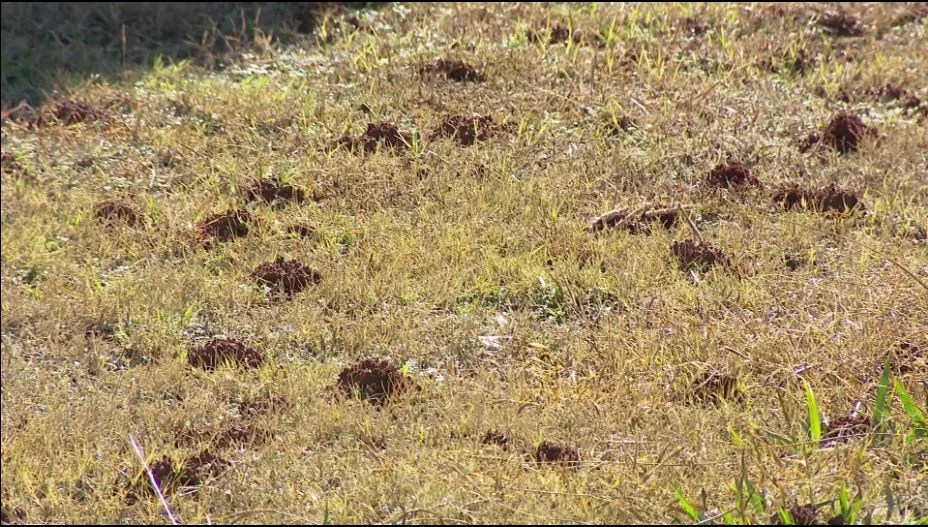
I sprinkle a hex over six dead mice and bury them under the oak behind my rental. “Sick, sick,” I say, sprinkling bay leaves over the mounds. “Remember what congestion tastes like.”
Normally, I would never, but the townspeople here have done me dirty for too long—my coworkers, neighbors, even people at the supermarket. Markle is the only one who gives me pause. She doesn’t deserve to be hexed, but she lives in this hell hole, and unfortunately everyone else here must pay.
I pat down the graves with a shovel, their tiny bodies disappearing under dry soil. It’s the end of summer, the time where the air puckers and you can leave your windows open to scoop in the breeze. It’s not at all like it was just a week ago when the last of the summer’s murderous heat hung everywhere.
One of my neighbors arrives, blasting heavy metal music. I keep my back to the fourplex, but I can tell by the lingering of his engine that he’s seen me. Little Andy with his Buick and his loud music and his pounding on my front door every time he gets drunk, yelling about the rainbow sticker on the back of my Ford.
“Hey!” he calls.
I ignore him.
“You deaf?” He laughs.
Please, I think. Just turn around and go inside.
He approaches, telling me he wishes we could’ve hung out two nights ago, when he drunkenly hammered on my door singing Sweet Caroline. Andy is this town: this town is Andy. Pushy, loud, mean, and always somehow finding a way to escape blame, like when I complained about him to the landlord, he said I was overreacting. I was just asking for the Wi-Fi password, he insisted. She is always so sensitive.
“Louise, I’m trying to talk to you he—”
My shovel cuts him off. It catches him in the chin. I’m surprised. It wasn’t my plan to hit him, but that’s what the shovel did. It jumped at him, hit him with a force I didn’t know existed in my body. Andy is surprised, too. The emotion splays across his face for a millisecond before he goes down.
At first, it’s almost like nothing has happened, and then he spews blood and begins to convulse.
+
I’ve never hexed a town before. My aunt only ever taught me how to hex individual people. For their own good, she said. A hex makes them learn. Sometimes you’ve got to be hard on people for them to finally change. Andy was never going to learn, so I saved us all the trouble. Even this hex, now pulsating through the roots of this dumpy small town, moving like fungus through weeds and ferns and seedlings, shaping the very soil itself, would not have been enough to make him repent.
I bury him next to the dead mice and return to my apartment. All night I dream of what the next seven days will bring. People coughing and hacking, people having accidents in their pants. I have hexed them with the most delightful of symptoms, all to last for a year with no respite.
The next morning, I wake in a good mood, dress with a smile, and head off to work. Only seven more days here. Seven more days of hell, just three of them at work, and then I’ll leave this town and God-awful state for good.
“Three more days,” I say to the receptionist.
She gives me a smile that bares her teeth, jagged canines, too pink gums. “Yes, we can’t wait for you to leave.”
The law firm perches on the fifth floor of a commercial building downtown. My office is barely a skeleton, just a monitor, laptop, and chair, no signs of life of what I once hoped it to be. When I arrived here, I thought my skills would be of assistance. The firm had never hired a sociologist to review their policies and procedures for equity before. It was new and exciting. But very quickly, I realized new and exciting didn’t matter to the staff. Anyone could do that, one of them said to me during my third week. It’s not special.
I set my things down and power on my computer. From my desk, I can see the rest of the town—brick buildings and stone bridges, old cobblestone streets, tilted, crooked apartment complexes, dirty and desperate to breathe.
“Three more days.”
I turn. Markle leans against the doorframe behind me, slunk like a cat. She’s tall and hefty in a graceful way, old fashioned features looking shaded somehow, like mini shadows living over her eyes and mouth and teeth. When I look at Markle, I feel an ache of something that could’ve been but never was, the regret of finding someone special, but the timing is off. “Can’t come soon enough.”
“Hey,” she says. “It’s not nice to leave a place on a bad note.”
“You’re the only one who was kind to me here.”
She pauses. “I wasn’t always kind.”
It’s true. Markle was a sodden bitch when I arrived, always one upping me in meetings until the last one, where I walked out crying, and then she switched over to sweet, like she’d forgotten normal people have feelings. That’s the problem with this place. People have forgotten how to feel things. They shove everything down, ignore, push away. They’ve been doing it for so long, they aren’t even human anymore.
“What are you thinking?” Markle asks.
Her eyes are so bright. I wish the bright of her could make things better, but nothing can fix the hurt this place has caused. “Too much,” I tell her. “Do you want to get drinks after work and chat?”
+
Burying Andy must’ve exacerbated the hex. Magnified it somehow. Because when I leave the office that evening, I can already see it. It’s in everyone’s faces on the streets, this white sheen, slowly morphing their faces—eyes bigger, noses wider and more puckered with pores. Like walking garden gnomes.
Stupid fucking Andy. I retrace the steps I took in my mind. Eggplant burial, silver wort, cayenne pepper, mice burial and bay leaf. The town is supposed to get a lasting case of the sniffles, a tickle in their throats they can’t untickle. The hex is a small thing, but this feels like something more serious.
The sun is two hours past its peak by the time I get to the bar. The area is showered with the chill of the oncoming fall. Whispers like a tight, dried face mask sit on the breeze. I ignore them and take an oval table near the outside bar.
“Usually, people sit inside for happy hour.”
I turn to see a waitress standing with two sweaty beers on a platter. Her face is like everyone else’s, looking faintly like death. “Sorry?”
“It’s just …” she gestures inside where a group of people crowd the inside bar. “It’s a little chilly.”
“Can I order inside and bring it out here?”
She looks me up and down. “I guess.”
I order a bottle of Coors inside and wait outside for Markle. The town center glimmers across from us. People gather around a small farmer’s market, chatting while standing on the stone carved pathways. The grass is neat and prim and void of absolutely anything that might help the bees or the birds or God forbid, the environment itself. The land here screams with frustration, the same frustration I have.
“Are you really going to leave?” Markle asks. “I mean, is it that bad here?” She approaches with a blue jacket slung over the crook of her arm, and I am surprised she doesn’t look like everyone else here. As she settles at the table, the smell of her middle-aged lawyer perfume wafts out at me. I examine her face. Her skin is tan, not white. Her nose is long and even, regular sized pores.
She meets my eyes, and I feel something tingle at the pit of my gut. Markle is a lawyer; I should know better. Lawyers are all intellect, no emotion. Markle is like that, at times. But then there are other times—like after I cried that one meeting—where she shows up with a depth of emotion like the ocean, all soft and kind and deep.
So, I tell her about how my career dreams went down the drain when I moved here and no one at the firm took me seriously. How people here didn’t want to buy my paintings, didn’t like them, didn’t see anything good in them. How I couldn’t make friends here because everyone was so damn mean and, at the same time, my friends from elsewhere slowly steeped away. How the house I bought was falling apart, and the car, and how I had three different health scares, and no one here cared. No one helped. No one offered a single condolence. And talking about it, a part of me feels guilty about Andy, but I realize another part of me feels justified.
Markle is quiet, exceptionally intent on me today. Her eyes stay focused on mine the entire time I’m talking, two blue dots of emotion big enough to swallow me, tempered only by her Bar exam and state licensure. “I’m so sorry, Louise. Bad things happen for no reason sometimes.”
True; bad things do happen. But unlike everyone else, I can address them because I have a fourth grader’s knowledge of magic. I can change things. Fix them. Regardless of what isn’t happening to Markle, something else—maybe something deserved—will soon happen to the rest of the town.
+
The next day, everyone at the grocery store slumps over, rounded shoulders and noses bulging, features comically large while the rest of them shrinks. They look like garden gnomes, little sniveling trolls. It’s everyone from the pharmacist to the boy bagging my groceries. They all slouch towards the earth, like gravity has been doubled, and yet, no one seems to notice.
My coworkers are the same—slouchy and grouchy, lumpy and worn. Everyone, that is, except Markle. It’s such a curious thing. Instead of slouching and grouching, she blossoms with light. It radiates out from her skin, warm like a sunbeam. She surprises me that morning at work by bringing me into a tight embrace and holding there long enough I can feel the beating of her heart. “You look beautiful,” she says, somewhat breathless.
“Are you feeling okay?”
She giggles. “Do you want to come over tonight? I’ll make dinner.”
Markle is not the type to invite me over for dinner. We talk, but our chats are always limited to the happy hour bar next to work. We have boundaries, Markle and I. We have never once broached her personal life like this. This is something different. Something …
I think back to when I was burying the mice. I was thinking about my hatred for the town, yes. Of course. It’s always there, an itch that festers right under the skin. But was I also thinking of Markle? Was I wanting her?
“Louise,” she says, “I can make sushi. I know you love sushi.”
It’s true. I do love sushi. Another uncomfortable truth: if I were still capable of deep emotions after two years in Massachusetts, I might also say part of me loves Markle. “I can bring a wine,” I say. “What time?”
+
By the late afternoon, the townsfolk have started decaying. They look like bodies that have been left in water too long, bloated and still gnome-like, but now their skin has started turning blue. It’s almost a mix between blue and gray, the pale color of dental rot.
“Everyone looks so funny,” I say to Markle, gauging whether she has noticed anything.
“Funny how?”
Markle’s home is a two story 1900s Victorian style house, much too large and echoing for just her and her two cats. “I don’t know.” I eye her, but she looks fine. Her skin glows with a soft tan. She sparkles in a way that makes me feel like I could sparkle again, too.
Markle arranges the sushi—sticky rice, Nori, crab meat, avocado, cucumbers, carrots. “You have to get your fingers wet,” she says. She dips them in a small toppings container full of water, then starts adding rice to a sheet of Nori. “Like this.”
She bends, face close to her work, I bend down next to her, watching. She arranges the rice neatly, rolling it into the Nori like she is kneading dough. “Thank you, Markle.”
“It’s fun. I need to do more things just for fun.”
I try to remember when I last had fun, but the memory escapes me. It’s just been work and dealing with my neighbor, avoiding road rage, making sure not to make eye contact with anyone while grocery shopping, lest the mere essence of me invoke someone’s temper. I have been so obsessed with how mean people are here that I forgot to have fun, and in doing that, I have squandered the last two years of my life. Worse, I have lost hope that good things might still happen, that fun and beauty might fill up my chest again.
“Seeing you so upset has changed my perspective,” Markle says, her voice lower and softer and more serious now. This is the voice she used on me after I cried that meeting, the voice that was gentle and reassuring. “I’m so sorry your experience here has been so bad.”
I reach out and run my hand through her hair. It’s smooth, lightweight, and thinner than my own. Markle straightens, and my hand falls away. “Things happen,” I say, thinking of Andy’s body fermenting the old oak tree. I remember the look of shock on his face, the surprise that someone had finally stood up to him. “I guess I could have responded better.”
She takes my hand and brings it to her chest. Her heat warms my skin, her fingers sticky with rice residue. It’s an unusual move for her. My Markle is soft and sweet, but she is also guarded. She is slow to let people in. This, I am sure, is the hex. Whatever I put in the ground will bring everyone else back to soil and dust, yes, but it has warped Markle in a different way.
“Maybe before you go, we can visit a museum in the next town over,” she says, dropping my hand to bend back over the sushi. She leans so her eyeline is right up next to it, her tall body bent like an L, so much of it in the space, I can barely stand not to touch her. “It’s supposed to be rainy the next few days.”
“That might be nice,” I tell her.
She giggles. We busy ourselves rolling and wrapping, our fingertips growing thick with rice paste, our laughter echoing into the hallway.
+
People start rotting from the inside out the next day. They blister and boil and reek and ooze pus. My coworkers have it the worst. They shout directions at me but it’s hard to take them seriously anymore, their frustration barely evident in their slowly disintegrating foreheads.
One of them screams at me during a meeting, and her teeth fall out, useless as dentures. “Stupid!” she screams, but her teeth are gone, so it comes out more like, tupid. “Tupid, tupid, girl!” she screams, over and over, until part of her face sloughs off onto the desk.
I finish my work, ignore the taunts. Within a day or two, these people will be nothing more than sludge, mud, the humus that brings life to the forest. Soon, there will be no one left to report Andy missing, to search for his body, or hold me accountable for my most heinous crimes. Soon, there will be no one left but me and Markle.
“This was you, wasn’t it?” I ask the trees, who waver in the wind, sun shining, perfect temperature, no humidity. When I question what is happening here, I know my co-conspirator was nature. She cradles me as I drive home, the streets now empty—everyone too broken down to drive anymore. The town is quiet as it should be, no more shouting or crowding or polluting. You can feel the difference in the land, like everything has relaxed, the trees branching higher, flowers standing taller.
I run a bath, play my music, and soak in the water. A few songs in, there is a knock at my door. I dress in a robe, my hair soaking the collar, and answer it to find Markle standing on the other side with a loaf of fresh sourdough bread in her arms. “I wanted to see you,” she explains.
She appears electric. Her skin glows tan, her wrinkles lean and solid as root lines, her freckles like stars. How have I never noticed how beautiful Markle is? Like an oak tree or a Black Eyed Susan, all strapped with power and the wisdom of a woman growing confident in her fifties. “I’m glad you came,” I tell her, and usher her inside. The smell of the bath—evergreen—mixes with the smell of the sourdough, an early song from the Alabama Shakes crooning from the bathroom to echo throughout the apartment. The windows are open, and a cool breeze lifts the ends of our hair as we move about the kitchen.
Really, this is all I wanted—for someone here to embrace me. I just wanted a person to talk to at happy hour, someone to cook for me when I’m down, to visit museums on rainy weekends, to show up randomly and unexpectedly, out of the blue when I wasn’t even thinking of them, because they were thinking of me. I wanted to be revered, I think, and despite all the bad things, it’s finally looking like I got my wish.
Chelsea Catherine began writing poetry at eight years old and eventually expanded into fiction and nonfiction. Their piece, “Quiet with the Hurt,” won the Mary C Mohr award for nonfiction through Southern Indiana Review and their second book, Summer of the Cicadas, won the Quill Prose Award from Red Hen Press. They live in the high desert of Colorado where they like bird watching, photography, and reading books about the art of living. Their dream is to become a cowboy one day. Find them at chelseacatherinewriter.com.
Image: kfor.com
Check out HFR’s book catalog, publicity list, submission manager, and buy merch from our Spring store. Follow us on Instagram and YouTube. Disclosure: HFR is an affiliate of Bookshop.org and we will earn a commission if you click through and make a purchase. Sales from Bookshop.org help support independent bookstores and small presses.
 Heavy Feather Review