
I was only ever good at two things and being a mother wasn’t one of them. I knew how to disappear when things got hard, and I knew how to make everything worse when I showed back up.
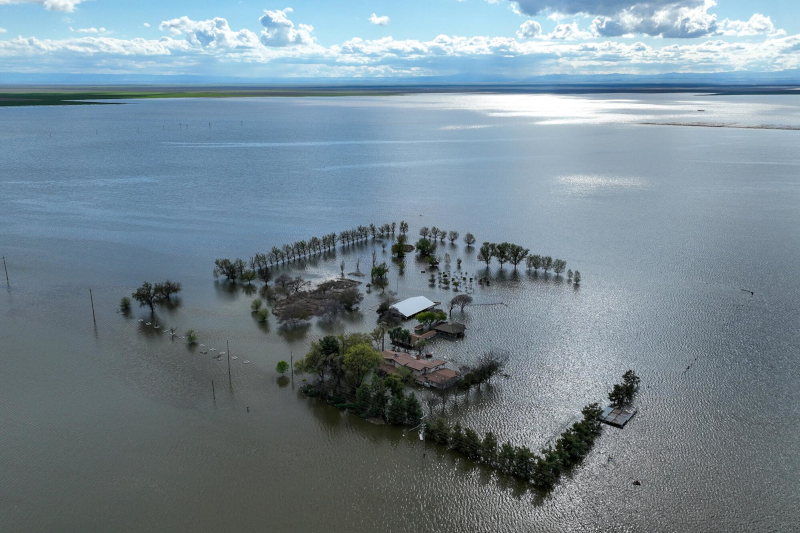
True to form, the flood came six months after I returned home. The sea levels rose so high they couldn’t be ignored, and the ocean ripped land back from us like it was a child who hated sharing. For the second time in six months, I fled my home. But it was the first time in a long time I didn’t leave alone.
#
I was up early that morning because I never went to sleep. I don’t think Isaac slept either. I thought about getting up, but it seemed important to be silent, to allow ourselves to enjoy the stillness, alone. I got up only when it seemed normal, when I’d usually be getting up for a shift at the hospital. It was 3:30 a.m., still dark. I snuck out of the room and eased the door closed behind me. The kids were still asleep on the air mattress at the top of the stairs just outside our door. Isaac and I told them it wasn’t safe to sleep so close to the stairs, but they liked the sound of the water.
The first floor was flooded; the kids’ rooms swallowed up. But that morning, while the rest of the house slept, it felt peaceful. Even the murmur of the water lapping at the walls downstairs was calming. I looked at my girls, Novella and Maggie, their breathing synched up. I wished that I could just let them sleep and keep this fragile thing called family together for just a little longer.
“Hey,” Isaac whispered to me.
“Hey,” I said, “I didn’t hear you get up.” He kissed my forehead. We stood still for a moment in the night so dark it looked blue.
“You ready?” I wasn’t. He wasn’t either.
“Yeah. I’m ready.”
The sun was just waking up. Isaac was going first, and we’d join him in ten days. He wore rain boots to his knees and a backpack filled with toiletries, two sets of clothes and insect repellant. He donned his fisherman’s hat and a headlamp strapped to his forehead. Our girls didn’t cry as much as I thought they would, especially Maggie. Little Magdalena. Only twelve-years-old but smart enough to know that tears don’t change things. She had this look that morning, like she knew this goodbye wouldn’t be like other ones.
“Dad, don’t forget this,” Novella said. She handed him his camera, an old Canon that shot in film and had a detachable flash. Isaac loved taking pictures of the ocean to the west and the forest to the north. He developed his pictures in our basement which he converted into a makeshift darkroom. When money was tight—which it almost always was—he’d get creative, experimenting with household developing fluids like beer or coffee. Isaac started taking Novella on his photo hikes a few years ago. She loved it so much she asked for her own camera last year. We couldn’t afford one but promised to get her one this year.
“El, it’s not that kind of adventure,” he said. He looked at her, hoping she understood. “Dad, take it. You always take it when you’re going somewhere new.”
Isaac sighed before taking the camera. Our daughter wasn’t being naïve, I realized. She was coping. It’s bittersweet seeing flashes of maturity from our kids. I’m proud of their resilience, and heartbroken that they must be resilient at all. She’s so strong because, in many ways, I’m a failure.
After taking the camera from Novella, Isaac turned to me. The moment our eyes met I could’ve broken down, could’ve begged him to stay. But I didn’t. Instead, I told him I loved him. I told him that I’d see him in ten days because that’s what we all needed to hear. Before climbing out onto our roof from the second story window, he took our photo.
I closed the window behind him. We watched as Isaac slipped into the water that had already risen a few inches since yesterday. He made a subtle splash and waited a moment to make sure he hadn’t caught anyone’s attention before swimming up our old street toward the forest, toward the city.
#
Our town suffered quietly for weeks before we decided that we had to leave. The water came quickly and never stopped. Before our phones died and the electricity went down, we saw pictures and videos on social media of farms being submerged, houses on the coast being battered and cars being swept away. It felt like we were being erased, like our existence was a mistake that needed fixing.
I got updates from the hospital for the first few days. The building’s generators, state-of-the-art technology decades ago, lasted a few hours. When the power went out, patients hooked up to life-saving equipment died. Others were evacuated to higher floors to avoid the flooding, but they couldn’t get to everyone in time. Videos posted online showed drowned patients floating down the streets near the hospital, some wrapped in their bedding, others completely naked.
The first few days, people came by in boats. They must’ve been with some humanitarian disaster agency headquartered in the city because they were all wearing the same red reflective vests with big, bold letters stamped on the back. The words were in the city’s language, a language I recognized but couldn’t speak. They dropped off essentials to the houses on our street. Many tried to get on the boats the first time they came, desperate to be saved. Their outstretched arms were met with guns; it quickly became clear that the red vests had no intention of being saviors. After that, the only person who tried to board the boats was our neighbor, an elderly man named Alexander. We didn’t know his exact age, but his frail body suggested he was close to eighty. After a red vest pulled the trigger, the whole street watched from their second-floor windows as Alexander drifted down the street, a bullet hole in his head. We stopped going outside for the boats after that. Eventually, the boats stopped coming all together. Sirens blared day and night from the center of town, but no one came to help. While we were being ripped from our homes, the rest of the world seemed content to watch it happen.
Isaac and I talked about leaving those first few days. We’d both seen the headlines on our phones that the city was taking in people that were fleeing. It was the city’s official position that they’d welcome all refugees. Housing, jobs, a new life. Everything we needed could be found there. I wanted to leave that first night, but Isaac was adamant that the flooding would stop and help would come. When I pleaded, he shut down. I don’t know if he truly thought it would get better or if he resented me for wanting to leave. Again. I don’t blame him. I was picking at a scab that hadn’t fully healed yet. After Alexander was shot, we decided that one of us had to go. There was no discussion about which one of us that would be. Isaac would leave and I’d stay with the kids. I wanted to stay with our girls, to prove to them that I wouldn’t leave them again, but it was clear that Isaac hadn’t forgiven me yet. He was going to leave and I would stay, as punishment.
#
“Mom, I thought we weren’t going to leave until Dad sent someone for us,” Novella said. I had changed our plan and the girls were concerned.
“I know, El, but we can’t stay here anymore. Go and pack your things, okay? We’re leaving soon,” I said. I wanted to sound reassuring but my voice faltered.
“And then we’ll meet Daddy in the city?” Maggie said, chiming in.
“Yes, Mags, then we’ll meet Daddy in the city.”
That was the plan. Isaac was going to head toward the city, enter as a refugee, and try to find work. He’d take the little money he’d brought with him, scrape together whatever he earned that first week and pay someone to get us from our town to the city limits. It was a three-day journey, on foot, through the forest along the coast, across the northern valley and over the Ogana Hills. It was our best plan because it was our only one. We agreed we couldn’t take the girls to the city unless we knew we’d be able to get in—we couldn’t risk being turned away with nothing to return to.
The girls and I waited fourteen days before we left. If someone was going to get us out of there, they would’ve already. We had mostly run out of food and there was nowhere to get any. The surge outside was slowing but the water wasn’t going anywhere any time soon. We needed to leave.
I told the girls to pack their bags and get some sleep. We were going to leave just before the sun came up the next morning. Lying in bed that night, my mind raced. Had Isaac even made it to the city? Was he safe? Why hadn’t he sent anyone for us? Would I be able to get our girls to the city? I’d barely made it myself six months ago.
“Mom? Mom, I can’t sleep.” Magdalena’s voice came from the doorway. I looked up but could hardly see her. It was so dark she barely made a shadow.
“What’s wrong, Mags? Come here.” I gestured for her to climb into bed with me. She stayed where she was.
“Mom, are you going to leave?” she asked. The question surprised me less than her delivery. She spoke with the same nonchalance she’d use when asking what we were eating for dinner.
I motioned for her to join me on the bed again and this time she did. “We’re all leaving tomorrow, Magdalena. You, me and El. We’re going to the city to find your dad.” I ran my fingers through her hair, cut inelegantly to the shoulders with a pair of scissors I found in the house. She didn’t come closer, but she didn’t pull away.
“No. I mean, are you going to leave me and El?” She turned her face to me. That she even had to ask me that question, that the possibility of my abandoning them had occurred to her shattered me. But of course it did, because it had happened before. I looked at her while I searched for the words that could undo all the mistakes I had ever made.
I placed my hands around her face and looked into her eyes. I expected a blaze of anger but saw only a flicker of contempt. Nothing turns a child into an adult faster than disappointment.
“Mags, I’m not leaving you or your sister ever again. I—I did not leave because of you two, okay?”
“Okay, then why did you leave?” Another question I deserved but couldn’t answer. Nothing I could say would be enough.
“I was scared,” I said finally. It was the truth, but it wasn’t an answer.
“Scared of what?”
“Scared that … my life wouldn’t change anymore. That I didn’t have any more options.” I paused, unsure of how much I should say. When Mags didn’t respond, I kept going. “I had you when I was very young, you know? I had to make a lot of decisions all at once. Your daddy was young, too. We had no money and we had no idea how to be parents. We couldn’t afford to get you the best clothes, the best toys, the best diapers,” I said, giving her a playful shove. I thought I saw her crack a smile but wasn’t sure. “I took the first job I could find, working as a janitor at the hospital, taking night classes so I could become a nurse just like your grandma was. Your dad found his job in the newspaper guiding tourists from the city around our coast because he spoke a little of their language. I … there’s a lot of things I wish I had done differently,” I said, sounding as pathetic as a car that won’t start. “But you and your sister are not one of them. Okay? I left because I felt scared and that was wrong. It was selfish. I hurt you, I hurt your sister and I hurt Daddy. I am so, so sorry, Mags.” The tears came before I could stop them. Before I knew it, Magdalena was comforting me.
“Are you scared now, Mom?” she asked.
“Yes,” I said. “But we’re going to be scared together.”
#
We swam through the streets of our town before the sun came up. If the girls were scared, they didn’t show it. They stayed quiet as we waded through the water, approaching four feet deep, pausing when we heard gunshots in the distance. We tried to move in segments, hiding behind cars that hadn’t yet been carried away by the water. We reached the forest just as day broke. We changed out of our wet clothes, hung them on branches and let the sun warm us. The girls slept for a few hours while I kept watch.
The forest is about two miles north and a few hundred feet above our town, situated on a scattering of hills. That morning, we sat on the forest’s southern face, looking out on the town below. On the northern side of the forest is another valley where we would stop the next morning. Just north of that are the Ogana Hills and then, the city.
The forest floor was soggy from the runoff but otherwise unchanged from the flooding. I watched the town below as the sun came up. It was a sea of brown water peppered with roofs and trees. Seeing the destruction from above shattered my hopes of ever returning. Building it all back up would take years of work and an amount of money our town didn’t have. It’s a town dependent almost entirely on tourism. By the time its coasts are cleaned and its resorts re-built, the tourists will find another place to spend their money.
When the girls woke up, I tried to rush us up into the forest so they wouldn’t have to see what their home had become but children are curious. I expected questions but much of the morning passed by in silence.
It was around midday when the girls started complaining about their feet hurting. We were deep into the forest and I didn’t want to stop but Novella started to cry. I told her we would look for a safe place to sit down and eat some of the bread and crackers we packed.
We sat leaning against the trunk of a fallen tree when Novella noticed a handful of birds flying in a circle just above a ridge nearby.
“Why are they doing that, Mom?” Novella asked, pointing to the sky.
“I think they do that when there’s food around,” I said. “Maybe we should keep moving, we don’t want to get in the way of a wild animal and their food.”
I stood up and started packing our things before Novella said, “Mom, what if an animal is hurt? Like a deer or a rabbit or something.”
“El, the only things I care about in this forest are you and your sister, okay? Let’s get out of here. Come on, pack your things,” I said, getting to my feet. Neither of my girls moved. I paused and stared at them both. “Pack your things,” I hissed.
It was Magdalena who spoke next. “Mom, El is right. What if an animal is hurt? What if it’s a person going to the city just like us? You’re a nurse, maybe you can help.” My daughters looked pleadingly at me.
“Okay, okay,” I relented. I knew my girls still thought I was a bad mother, but I wouldn’t let them think I was a coward, too. “I’ll go check. You two stay exactly where you are. If you hear me say ‘run,’ you run. No questions asked, okay? You keep running and stay near the coast. Got it?” They both nodded.
I left my backpack with Maggie and El, taking only the knife I packed and a couple of bandages from the first aid kit. As I got closer to the center of the crows’ circle, I didn’t see anything on the forest floor. Relief came briefly. Then I saw the feet.
I first saw it from the side. A body that seemed to be floating above the ground. My breath caught and my heart dropped. The body, belonging to a man based on its build, was pinned to the center of a large tree with metal stakes driven through his jacket just above the shoulders. He was hanging freely about six feet above the ground. Without thinking, I threw myself behind a tree. I squeezed my eyes shut and forced deep breaths in and out of my lungs. My heart was beating so fast I was sure the whole forest could hear it. After a few moments, I peered around the tree trunk again.
The body’s clothes were muddied and stained. From his stillness, I guessed he was dead. His face was covered in what looked like a white bed sheet, mostly clean except for a few specks of dirt and blood. The sheet was wrapped tightly around the dead man’s face like a ski mask without holes for the eyes and mouth. The white fabric was tucked behind the shoulders so the rest of the sheet draped around the body like a cloak all the way to its feet. His head was slumped forward, and his limbs hung without tension. Suspended in the air, the man looked almost like an angel sleeping. The bottom of the sheet—the wings—floated gently with the forest’s breeze.
I’d never seen something so horrific and I couldn’t look away. Who could have done something like that to someone? Hang them in the middle of the forest like a perverse piece of art? It was so intentional, so deliberately evil that I had to get closer to it.
Then, a man’s voice boomed through the forest, so loud it might as well have been a gunshot. It was only a few words, spoken in a language I didn’t understand, but I was never surer about what it meant. It meant I wasn’t supposed to be there, and I wasn’t supposed to see what I had just seen.
I ran all the way back to Maggie and Novella. When I got to them, I told them to run, too. We ran until we couldn’t run anymore and collapsed at the base of a tree on the edge of the northern valley. We’d made it through the forest. The girls asked what I had seen that made me so scared, but I didn’t know what to say. I told them there were other people in the forest and that they could hurt us. They tried to interrogate me, but I did my best not to answer. When the sun went down, they finally closed their eyes.
I sat in the darkness as the girls slept. My brain brought me back to what I had seen. Was it some kind of cult sacrifice? A lone madman roaming the forest? Or was that person, murdered and staged, a message?
“I almost got you hurt, Mom. I almost got all of us hurt.” Novella turned over onto her side facing me, so she was almost in my lap.
“It’s not your fault, El. You did the right thing. The brave thing. Someone could’ve been hurt, could’ve needed our help,” I said. I held her close to me. I tried to think of something to say that would comfort her. “Did I ever tell you why your dad and I named you Novella?” I asked. She shook her head.
“You were born earlier than we expected. I was at home and your dad was at work. I was trying to get some sleep because you were kicking like crazy in my belly the night before. It was like you were trying to tell me you were ready but I wasn’t listening, like you couldn’t wait to start your life,” I said. Novella had stopped crying, so I continued. “One of our neighbors had to rush me to the hospital because your dad was still at work and we didn’t have a car. It was just you and me in the hospital all by ourselves for the first few hours. Your dad was stuck in traffic on the bus. I wanted to hang on until daddy got there but you weren’t having it. You were born two hours after we got to the hospital.
“I was so relieved when you came, I couldn’t wait to hold you. But the doctors wouldn’t let me, they told me you weren’t breathing. The umbilical cord, that’s where you get your belly button from,” I said, pointing to her stomach, “was stuck around your neck. The doctors told me not to worry, that it was common. But I was so scared. I thought I had hurt you. Your father wasn’t there yet, and I felt so alone. But then they handed you to me all fixed up and I got to hold you and I knew you were okay,” I whispered. “When your dad finally got there, he asked me if we were okay and what had happened. I was too tired to talk so I told him it was a long story. That’s when he said we should name you Novella, a story that could fill a small book. You were born brave, El. You had only just been born and you already had a story. When we make it to the city, you’re going to be able to tell the rest of it however you want. I promise.”
#
I scanned the valley for another hanging body as we crossed it, but all I saw was nature going about its business. As we camped the following night near the peak of one of the Ogana Hills, I wondered why I didn’t feel more relieved. We would be in the city by midday at this rate. The girls were tired, hungry, and wet but they weren’t hurt. If the reports about the city were true, we’d be sleeping in beds the next night. Isaac would be there, he’d apologize for not sending someone for us, he’d say he didn’t make enough money that week or he couldn’t find someone he trusted. Our family would be able to start again, living in the city I ran away to. Wasn’t that what I wanted?
Six months ago, I made it to the city. I hopped the short fence by its southern border and walked—no, floated—for five beautiful minutes into my new life before I was stopped by border guards. The two guards sized me up, their index fingers testing the resistance of their rifles’ triggers. One of the guards told me I had two choices. Either I could go with them to a detention center and await an official decision about my eligibility to remain in the city, or I could turn around and never come back. No harm, no foul, it seemed.
They took my photo, scanned my fingerprints on a handheld device, and just like that, I was re-tracing my steps, walking back to the family I’d just abandoned. In truth, I was glad I got stopped. I was chasing a fantasy, but what would it look like if it became reality? I never told Isaac or the girls about making it to the city. I told them that coming back was my decision, that I’d turned around halfway through my journey because the guilt was too much. Another lie, another failure I’ll spend the rest of my life trying to make up for. Getting the girls to the city, seeing Isaac again, seemed like a good start.
#
We were almost at the border. With each step, a weight rattled off my shoulders like a deer shedding its antlers. We bound our way down the Ogana Hills toward our new life. At the bottom of the hills, we reached a coastal meadow. The smells of the marsh told me we weren’t too far from where I’d tried to enter the city months ago. The salt in the air promised that the ocean wasn’t too far west. The shrubbery and grass—types of flora that Isaac could’ve named—swayed gently. It was the kind of place that God, if there was one, would protect at all costs. Even if that cost was our little town to the south. The sun stayed hidden that morning and there was a thick fog that covered our surroundings in gray.
“You know, I’m sure your father will bring you both back here to take some pictures soon. You could even go to the coast, it can’t be that far from here,” I said. The future was clouding my senses more than the morning fog. When the girls didn’t answer, I turned around.
A few yards behind me, Novella and Maggie were crouched, inspecting something in the wild grass. Their backs were to me so I couldn’t make out what they were looking at.
“Girls, what’re you doing over there?” I yelled. As if they were waiting for the sound of my voice, a group of crows slashed through the air above us. I watched as they flew through the fog before disappearing again. Crows are often thought of as omens, although I never thought they were anything other than an irritant. But after seeing the horror hidden in the forest, maybe I was becoming superstitious.
I moved quickly toward the girls to tell them we needed to keep walking. Instead, I froze next to them when I saw what was lying in the grass. An old Canon film camera. A chill trickled down my back despite the early morning heat. What was attracting those crows?
I was sure I couldn’t move but Maggie’s tug on my sleeve proved me wrong. She pulled her sister and I towards a collection of rocks up ahead. We sat for a moment, and I watched Novella sob quietly with the camera in her hand. I must’ve looked just as helpless because it was Maggie that spoke.
“It’s going to be okay, El. We’ll find dad when we get to the city. I’m sure he just dropped it without realizing.” Magdalena turned to me, then, with a look that put me back together. “How much further, Mom?” she asked.
“Should be uh, less than a mile, I think.”
“Which way?”
I threw my thumb over my shoulder. Turning to El, I said, “Novella. We’re almost there, kid. Put the camera in your backpack and we’ll give it back to daddy when we see him.” She did as I asked. “Now, I need you to be brave. Can you do that?”
#
I felt the resistance of the girls as we started walking again. We had clipped our backpacks together so we wouldn’t be separated. They were scared and I was scared, too. But turning around wasn’t an option.
“Wait,” I said. We had walked less than five minutes when I put both my arms out to my sides to stop El and Maggie. There was something ahead, breaking through the fog.
I only saw the bottom, at first, peering through the fog like shadows under a curtain. It looked like the base of some kind of structure.
“Mom, what is that?” Maggie asked.
“Stay close to me,” I said.
We inched closer, hoping the structure ahead would reveal more of itself. The thing before us didn’t seem to end, stretching either direction past our visibility. I thought maybe it was a cliff or a mountain, an indication that we were lost.
As we got closer, it was clear that what was before us wasn’t an act of nature. It was man-made. A wall. Because of the density of the fog, I still couldn’t make out the material it was made of, but its size was without question. It seemed to stretch forever in both directions. As we got within one hundred yards of the wall, I noticed different colors, patches of browns, blacks, and whites. From a distance, it almost looked like a row of shoes.
I could feel my girls tense while my insides did the same. Where was the short fence I’d encountered six months ago?
What we saw as we got closer was worse than I could have ever imagined. It was a mass crucifixion, a wall of bodies. Some fully clothed in boots and raincoats, others stripped down. Some were splayed open like an eagle, arms and legs contorted unnaturally, while others dangled lifelessly, swaying with the wind.
The bodies fit together like puzzle pieces. They all had a white sheet wrapped tightly around their head, just like the man I found in the forest. There were dozens, maybe hundreds. Limbs overlapped, feet hung by the sides of heads and the people strapped to the top seemed to look down on us, with limp heads, like disappointed ghosts.
We all moved toward the wall in silence. Maybe I should’ve told the girls to stay back, to try and shield them from this but I didn’t. To turn away is to pretend it didn’t exist, and there is no ignoring what we saw. The murdered—all men and older boys, from what I could tell—were strapped to the chain links of a fence. Straw and mud were caked into the spaces between each body and stuffed into every mouth through holes cut out of the sheets.
I started to scan the bodies before me, hoping I didn’t see Isaac. I looked for his fisherman’s hat, his boots, something to identify him without seeing his face, but the dead all looked the same. I think the girls were crying but I didn’t hear them. Still tied to my backpack, I started walking, then running, along the length of the fence, hoping these were souls I never knew.
“Look for openings,” I shouted to my girls.
“Mom, stop! Please!”
“Mom, we need to turn around!”
I couldn’t do either of those things. I pulled them with me as we continued moving along the fence, but the inhumanity kept going. It seemed like it would never end.
“Mom, who is that?”
Novella and Maggie stopped pulling. I looked frantically along the wall, hoping they hadn’t seen Isaac.
“No, over there! In the fog,” Novella said.
I took my eyes away from the fence and followed Novella’s outstretched finger. In the distance, barely visible through the early morning fog, stood a shadow. I couldn’t tell which direction it was facing.
“Come here,” I whispered to the girls. “Close your eyes and cover your nose, okay?”
Before they could answer, I pulled them to the fence and pressed their backs to it. When I did the same, I felt the fingers of one of the dead brush the back of my neck. I wanted to scream. For a moment, the figure in the fog didn’t move. The smell of the bodies around us almost made me faint. I looked at the girls, their eyes clamped shut and their noses pinched between their fingers. When I looked back to the figure, its shadow was fading. It was walking the other way.
We waited another moment before moving from the fence.
“Are you two okay? Maggie, are you hurt?” There was a smear of blood on her cheek.
“No, I—it’s from one of them,” she said, pointing back to the fence.
“El, are you okay?” Her eyes were vacant, and she didn’t answer me. I grabbed her shoulders and shook her like I was trying to wake her from a nightmare because that’s what it felt like.
“Mom! Mom! Turn around!” Maggie shoved me.
As I turned, I saw three figures through the fog. They were closer this time so I could make out the vibrant red of their vests. They’d come from the other way. I didn’t even have time to think before Maggie threw herself to the ground, pulling her sister and myself with her, our backpacks still connected.
Bullets pierced the fog.
#
My first three days within the city limits were spent in a holding cell. The first day, the girls were separated from me and taken to a “segregated juvenile unit.” The second day, I tested the strength of the vault-like door to my cell with my shoulders to tune out the sounds of the desperate and the bored imprisoned around me. On the third day, I was handcuffed, blindfolded, and marched through hallways and down a flight of stairs. When the guards uncovered my eyes, I was standing in a windowless storage space masquerading as a conference room. I was joined by three men in military attire seated behind a grandiose, oval desk. The only other decorative piece in the room was a picture of the city’s landmark Lighthouse Tower at twilight.
The man on the right spoke first in a passable attempt at my language. The men were a part of the city’s government office called the commission of admittances, he explained. As members of the commission, they decided who could enter and remain in the city. He glared at me until I nodded in understanding.
“You will not be entering the city today, or any day after.” Before I could ask why, he continued. “You are subject to removal, effective immediately.” The words took a moment to sink in. The man on the left jumped in, explaining that because of my prior attempt to enter the city illegally six months ago, I was ineligible to enter now as a refugee. I would be dropped off on the other side of the border by day’s end. I tried to think of something that would change their minds, but I couldn’t.
Instead, I asked about Novella and Maggie. Reluctantly, the men told me that they were eligible to stay. The city was accepting “abandoned” minors, children under eighteen seeking acceptance into the city without a parent or guardian. If I were to surrender my girls to the jurisdiction of the city, they’d be allowed in.
“If I … surrendered them, could my husband take them?” The men shared a glance between themselves before asking for Isaac’s name. One of the men typed slowly on a tablet and scanned its screen. The commission has no record of your husband entering the city.
I felt completely hollow. Was Isaac hanging from the wall outside? Where would my girls go?
I promised my daughters that I would never leave them again. But I also promised them a new life. If I left my girls, what city would they belong to, the one offering public promises of asylum or the one with a border wall made of murdered refugees?
I cursed myself for being so selfish six months ago and I cursed myself again for thinking all I had to do was get my girls to the city and everything would work out. Either way, I was letting down my daughters again. I tried to be a good mother, but I have never been any good at it. They’d have a better chance alone in the city than with me on the outside.
“Can I see my girls before I go?”
The men nodded, marked their papers, and motioned for the guards.
John Mitchell started writing in 2021 and tries, with varying degrees of success, to get just a little bit better with every story. For years he worked with a Philadelphia non-profit that offered pro bono legal services to immigrants. Now, John attends CUNY School of Law in NYC, where he hopes to pursue a career as a public interest lawyer, dedicated to providing legal services to those that need it most. He’s an avid fan of professional wrestling, baseball and, of course, books. He lives in Queens with his partner and their pitbull, Leroy Brown.
Image: latimes.com
Check out HFR’s book catalog, publicity list, submission manager, and buy merch from our Spring store. Follow us on Instagram and YouTube. Disclosure: HFR is an affiliate of Bookshop.org and we will earn a commission if you click through and make a purchase. Sales from Bookshop.org help support independent bookstores and small presses.
 Heavy Feather Review