
Oh great king, this world we traverse together is, as you know, a sea of cruel desires and insatiable deceits. Let me distract you with stories from another place and another time.
The Oceans of Cruelty is a reinterpretation of the Sanskrit epic, the Vetala Panchavimshati, which spans twenty-five parables told within a framing narrative, not dissimilar from The Canterbury Tales or 1001 Arabian Nights. The outer-tale follows the hero King Vikramditaya, who is tasked with carrying a Vetala, a spirit trapped within its own mummified corpse, to a sinister yogi. The Vetala is cursed by the gods to whisper ancient fables to the king, who is then forcefully compelled to share his interpretation of the story/stories. If the king does not answer, he experiences searing pain until he speaks.
Penick, whose previous work includes operas, translations, and history, bestows the proper opulence these stories demand; glistening like rubies when delving into the details of vast fortunes or ancient cities, but also like viscera when the tales take a turn for the tragic or macabre. Plots are hatched and dispensed, dynasties cruelly extinguished in brutal subterfuge, and an ever-complicating web of lovers span across the ancient world.
The Vikram-Vetala tales are widely known, just not widely depicted in America. They have been regularly adapted in India since 1921 for film and television, and it’s not hard to see why. Often stirring, violent, and intentionally overwhelming, the source material grants Penick plenty of opportunity to put his operatic flourishes to good use:
He felt he was struggling among hordes of hungry ghosts and demons. Snakes emerged from beside the path and coiled around his legs. When he reached the abandoned cemetery, the storm had suddenly stopped. Clouds of fog rose from the ground all around him in the form of misshapen ghouls, writhing, digging up graves and devouring corpses. The air smelled of rotting meat … He could see jackals with glowing green eyes stalking among the trees and howling.
Murderous suitors, lusting wives, dismembered lovers, demonic forces, talking animals, and the gods themselves peer out from the Vetala’s words. It is easy to get lost in these stories, which intentionally overlap more and more as the journey goes on. Lest we find ourselves adrift in the experience, Penick allows the king’s gradual introspection to anchor us by working the confusion into the fabric of the overall story. The dialectical spine in The Oceans of Cruelty, in which the Vetala interrogates Vikramditaya’s self-assured judgements, culminates in the king’s eventual enlightenment and offers to take us down a similar path. Penick’s care and passion for the subject matter is clear, and his innate love of fables imbues the Vetala’s tales with grace that is sometimes difficult to achieve in translating work across languages and time.
Stories, if the Vetala is to be believed, were stolen from the gods, by accident of course. They are the product of overhearing the gods passionately whispering to each while making love. Like the Vetala, we are perhaps doomed to retell these myths until its audience has learned their lesson. If that’s the case, we may be reading The Oceans of Cruelty for a long time.
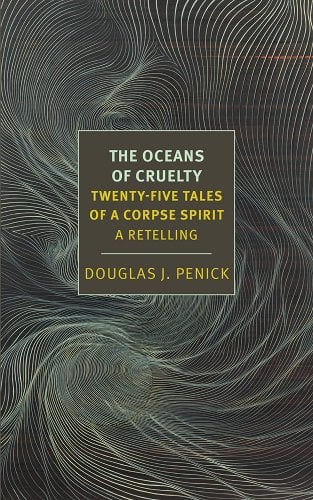
The Oceans of Cruelty: Twenty-Five Tales of a Corpse-Spirit: A Retelling, by Douglas J. Penick. New York, New York: New York Review Books, October 2024. 184 pages. $17.95, paper.
Adam Camiolo (@upandadamagain) is a writer, and occasional firefighter, who lives in New York. He has reviewed books for Heavy Feather Review and Five South. His work can be found in the Schuylkill Valley Journal, The Daily Drunk, and The Foreign Policy Book Review. Adam Camiolo is a member of the Five South Critic Pool.
Check out HFR’s book catalog, publicity list, submission manager, and buy merch from our Spring store. Follow us on Instagram and YouTube. Disclosure: HFR is an affiliate of Bookshop.org and we will earn a commission if you click through and make a purchase. Sales from Bookshop.org help support independent bookstores and small presses.
 Heavy Feather Review