
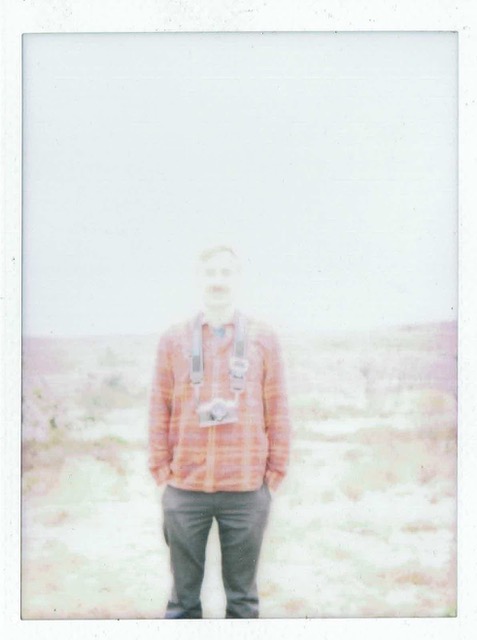
Lazarus Goat
The goats dawdle in the field. They show no remorse for yesterday’s incident. I had been all set to go home. Nothing to do but call the goats in, count them, and lock the gate. Mopface and Lamby, the pair of massive komondors, were lying on either side of the entrance, their lion paws stretched before them, panting happily in the face of the setting sun, fearless and alert. The goats lost their wiley attitude as they passed between them, children before figures of true authority. The final goat came lollygagging in, but I was still one short. I did a quick recount of the goats in their pin, but the missing one failed to apparate.
“Moppy, with me,” I told the dog. He was by my side in an instant. No one had taught me any commands for the pair. Rather, they seemed able to understand English, at least on a rudimentary level. Lamby whined once, but stayed with the herd as me and old Mopface headed out into the six acre prairie. It’s not like there was much of anywhere for the goat to hide. The six acres were flat and open. I could see the fence line in the distance. The whole expanse had been divided into ranchettes. Large, garish houses spotted the prairie. Each with a blue pool twinkling in the golden light.
“Go find the goat,” I encouraged Mopface. He looked up at me happily, his corded coat hanging like heavy threads of yarn, and then he moved ahead at a trot, sniffing the fenceline. The goats like to brush up against the barbed wire in order to scratch those hard to reach places, but sometimes they accidentally slip through. They have no real desire to escape. As soon as they find themselves on the other side, they begin bleating, wanting to get back in with their friends.
I listened expectantly, but heard no such noise, and had made it halfway around the perimeter with no sign of the lost goat. It was growing colder and I just wanted to be back in my truck with the heater on, heading home, but I couldn’t leave until I located this missing goat.
It was when we reached the final turn in the fence and began heading back towards the house that Mop got a hint of something. He sniffed the air with interest and then started towards a large hay bale. I saw nothing. The goats had been eating from and playing on it for the last few days, so it was sure to smell of them. I tried to call Mop off it, but he was insistent, so I went over to check it out.
The goats loved jumping on top of the huge, round bales. Well, they had eaten one side back on this one, or so I pieced together, so that it became unstable. A goat must have jumped on top and rolled it while this poor fellow was underneath, grabbing a bite to eat, for Mop and I dug out a crushed goat body from beneath the heavy bale. I wasn’t sure what to do with it. There was no gore to speak of, rather it seemed as if his neck had been broken, so I carried it up to the house and wrapped the body in a tarp then dug out my phone.
I really did not want to call Ivan and tell him that one of his goats had died under my tutelage, not so soon into this new job, but it had been a freak accident, I reminded myself. Nothing I could have done about it. I gave the man a ring, but he did not answer, so I left a message, and hung up the phone. My gaze dropped to the body in the tarp, and my mind raced. I had no idea what to do with it. I couldn’t just leave it out, but it was already dark and I had to be back at six in the morning, so I didn’t much want to spend any more time out there digging a grave. Making up my mind, I once again lifted the cumbersome package, stiff and immobile within its wrapping, and tossed it in the garage, closed the door, climbed in my truck, and drove away.
The goats are secondary to the mushrooms. They had not even been listed in the job description. It had been stated almost as an afterthought, one extra little task, be sure to feed the goats. I watch them from the back porch as they occupy the back pasture. That is all they seem to be doing. Occupying space. Some are staring back towards me. Their devilish horns curling wildly away from thoughtless eyes. Old Mopface and Lamby patrol the border, eager for some challenge, some excitement, but there is doubtful to be any. I’d seen a coyote once, loping along the asphalt farm road near the cemetery, but that was miles from here, and he’d been small and skittish. Closer to a fox in size. All these white-eyed suburban ranchers had long ago killed off the more impressive specimen. There were only a few scraggly survivors left these days, eeking out a living on a diet of garbage and ditch water rich with petroleum runoff.
Stepping back inside, I enter the brewery smell of grain and fermentation. I’d been bagging all morning. My back aches, arms are itchy, and I’m all out of good podcasts.
This farmhouse had been vacant for a few years. In all probability, no more than three or four, but an abandoned house is an abandoned house, and it had taken on that distrustful atmosphere, an evil will, a refusal to be won back over. The glowing tents housing mushroom gardens in rooms where children once slept was just adding insult to injury. The house did not like my presence. I could feel it as I sat in the open living room on a folding metal chair, back stooped, scooping contents into large plastic bags. Something was always creeping up behind me. Bodily I could feel it. The cold drip, the tingling nipples, the hair on my neck going stiff. I’d dragged an old mirror out of a closet and placed it before my workstation so that I could stave off my paranoia with a simple upwards glance rather than cranking my neck all the way around, but it brought no peace.
Houses are meant to be lived in. They want to be lived in. Put to any other use, they grow mean, become haunted, if only by the house spirit itself. I tried, in the beginning, to be at home here, to broker some kind of peace. There are rituals of induction, ways to bless objects with attention, but, after meeting such stolid resistance, I eventually gave it up, shoved my AirPods in, and kept myself busy.
What was the nature of the house spirit and did it meet, after hours, in the astral realm, with the mushroom spirit? The mushrooms are immature, cut off from one another, caged in plastic bags. Unnatural. Mushrooms want to connect. Mycorrhizal networks link plants together to transfer water, carbon, nitrogen and other nutrients. Fungal networks move like biology’s tectonic plates, the nervous system of forests. An eight-thousand-year-old mushroom creeps beneath the surface of Oregon, the twenty-four-hundred-acre organism living beneath the state’s Blue Mountains is the largest known creature on this planet.
A proper fungal system may have, in time, projected a spirit on par with the house, something with the same psychic heft as is projected by a human family, and they may have reached a symbiotic relationship, a dynamic synthesis with one another, but the inner space was not to be given over fully to the mushrooms. To do so would ruin the resale value. So everything is kept as sealed off as possible. Nature may always be working towards a flow, but it is my job to disrupt that. After bagging, I clean. I keep the house as spotless as possible. I vacuum up anything that might be brought in from without. I dawn a mask and gloves and enter the grow tents. I spray and scrub and take apart the fans and filters which become clogged with spores and I spray and scrub some more. Afterwards, I harvest. The mushrooms double in size every day. I harvest those of the appropriate size. Our harvesting capacity is not huge, and most of it goes to our signature Mushroom Jerky. The surplus leaves us with just enough to make short-term deals with local restaurants and natural grocers with whom I meet on Friday afternoons.
I rush to finish the day’s work by lunchtime then I call the goats in early, leave plenty of food and water for the dogs, and load some sample boxes to take into the city.
“Hey, it’s the Goatman,” a chef at one of the restaurants greets me.
Goats—the word resonates through me as I recall the perished goat in the garage. It had somehow slipped my mind and now I won’t return until Monday. The neighbor boy comes over to feed the animals on the weekend, but no one goes inside the house which means that the goat body will go on festering in the hot garage for days.
I never heard back from Ivan, which is no huge surprise. He is a nice man, but has too much money. This mushroom venture is just some side business he bought up. In my interview, he introduced himself as Shark Tank without the cameras. And when he is not buying up new ventures, he is going on these spiritual retreats to try and slow the soul rot brought on by his fortune. And of course these are the sort of desert spas held in compounds consisting entirely of yurts wherein CEOs and their ilk put away their cell phones, drape themselves in white robes, listen to ambient music, and meditate in dim chambers to the soft rumble of industrial air conditioners.
He is out of reach. It is up to me. Well, I decide, I will deal with the goat on Monday. I won’t let it ruin my weekend.
This mantra continues on repeat for the next forty-eight hours.
The Monday sun rises from another system and beneath its light nothing is quite the same. The physics of this phenomenon are little understood, but its effects are widely felt. It rises in my face during my northern commute. I know better than to question this. Its source is overly bright and produces a glare across my windshield that will not be wiped away, but the rays it cast upon the land are somehow muted, so that the landscape is a wash of greys. I leave the highway and follow a series of country roads to their finale, taking a left every time, passing pioneer cemeteries, trailer parks in endless prairies, cryptic business fronts into and out of which pour steady streams of large trucks, and finally, as I pass into the outer fringes of the next town, the sprawling pastures are chopped into bite-sized ranchettes.
The headquarters of Toadstool Tannery are located in one of the few original houses still standing. It is much smaller than its McMansion counterparts, built in the ranch-style made popular in the house-buying craze following the second world war. It sports a long, low profile of red brick. A very informal and welcoming sort of place, reminiscent of the house I grew up in, as well as the majority of my friends. A proud symbol of comfortable middle classness. A family home. Or at least it had been.
As I slot into the driveway beneath the ill Monday sun, it has the slumped look of abandon. The weeds have grown up around its borders and I know I’ve got to take care of that, but somehow it won’t be enough. The living room reeks of grain and fermentation, but it is the bedrooms that are truly haunting. Hidden within each, behind newspapered windows, are glowing grow tents of frosted plastic. They must be unzipped to enter, and doing so never loses the feel of entering a government quarantine, and the mushrooms bursting forth from their plastic sacks are more than willing to play their role of alien life forms, stashed with scientific creepiness in neat rows upon four levels of shelves. They reach towards each other across the aisles, having proliferated over the weekend. Doubling in size each day, some have grown so large that they have snapped off and fallen to the floor. Their airborne spores have clogged the fan, so that the air is still and toxic with fungal notes. The sound of my breath is elevated by the mask I must wear as I go about harvesting. It is what I must do first thing each Monday, before any more fall beneath their own weight. Even the goat must wait.
I harvest a near-record weight, but leave most of the bags where they are. The mycelium remains alive within and will continue to put forth new growths. I repeat this process in each of the four bedrooms. The smaller three contain a single tent, but the old master bedroom is large enough to house two grow tents. Each tent contains a different variety.
Each room leaves me amazed. It seems every variety enjoyed a record-breaking weekend. I make careful note of the conditions, and save the file. Next I go out back and feed the dogs, check their water level, and wait for them to finish their bowls. The sun has continued to rise, but the air remains filled with a colorless haze. When the dogs have cleaned their bowls, I go to the gate and open it, releasing the goats unto their six acres, and then I return indoors to deal with what I have been putting off.
The three smaller bedrooms are separate from the living room, contained down a hallway on the far end of the house. The kitchen is divided by a bar and a change in flooring, from carpet to white tile, separated by a golden ridgeline. Around the backside of the kitchen, there is another hallway, leading to a pantry, the master bedroom, and finally the garage. I wrap through the kitchen, and enter this hallway. The door at the end awaits me. I cannot help but imagine the scene I will walk into. The goat is wrapped in a tarp, at least, and I don’t plan to open it up to pay witness to whatever putrefaction has occurred within, but surely there has been some leakage, and a smell. I put on a fresh mask and pull my T-shirt up over my nose as I slowly open the door unto the garage, prepared to gag on the grave rot air. I shoot a blind hand in to hit the button that opens the garage door and then slam the interior door shut again. I let it air out for a minute or so, but I’ve got work to do and can’t afford to spend my whole morning on this, so after a deep breath, I plunge my nose back inside my shirt, pull open the door, and step inside the sunlit garage, and nearly choke on my heart.
Standing before me, having spent the weekend munching upon the tarp, is the Lazarus goat. It does not look exactly lively, but there is no denying that it is standing upon its own cloven feet.
“What the…” I mouth slowly. This goat had been crushed. I’d seen it. Not exactly FUBAR, but I know dead. Now here it stands. Refusing to be denied. It is all I can do to close the garage door to prevent it from running away. The door slides down slowly, peeling away the spill of grey light from the deeper reaches of the garage down to the open-air exit. I stand as I am, prepared to lunge if the goat tries to escape, but it does not move, and neither do I until we are each encased in the stale heat beneath the low wattage bulb behind its milky plastic cover.
“You’re alive,” I state, and the Lazarus goat does a little sidestep, the sound of its hooves against concrete resounding loudly in this closed box. The light remains on for a little bit, programmed to give drivers long enough to exit their car and make it inside the house, but then it clicks off, and I feel a cold drip of fear in my torso as heat rises in my face, and I scramble madly backwards, reaching out for the low glow on the wall behind me, and mercifully, the light clicks back on. The Lazarus goat had moved closer in the dark spell. In my panic, I must have tuned out the clacking noise of his steps. He stands at my side now, and ducks his bristly head beneath my hand like a friendly dog. I pat it once or twice, but its skin has too much give beneath the short, sharp hairs. A few good scritches and I’m afraid it will slough right off, easy as a loose-fitting glove, as if the goat is decaying from within even as it goes right on living. I look for something to tie around him so I can lead him outside. He follows my every step as I explore the bare garage.
“Okay goat,” I say finally, giving up on finding anything, but semi-confident he will follow me wherever I lead him. I open the door of the house and he cautiously follows me indoors. He is unconfident on the slick tile, but bends to take a bite of the carpet as we cross into the living room. I give him a good smack to stop him from tearing a hole in it, and he glares up at me through eyes more focused than I knew goats were capable. It sends a chill through me and I find myself apologizing. I quickly slide open the glass door at the back of the living room and usher him onto the long back porch. I hope he will recognize his surroundings and prance off into the pasture in search of his friends, but he glums onto me.
“All right,” I sigh. “Come on then.”
I set off to quickly march across the pasture, and sure enough the Lazarus goat follows beside me. “Didn’t know I was signing up to be a goddamn shepherd,” I mumble as I avoid piles of goat droppings and swat at tiny stinging flies hanging in the humid air. The goats are way off on the far side of the pasture, grazing on the same hay bale that had befallen Lazarus. They see us approach, but Lazarus will not go to them, and they seem wary of him. Mopface and Lamby even run over low on their limbs with deep, cautionary rumbles in their throats. I call them off, but they, for once, don’t want to listen. They continue their slow approach, and I back off, with Lazarus positioning himself behind me.
Admittedly, I don’t know much about goats. I took this job off a Craigslist ad with the aid of a somewhat inflated resume. Perhaps they’re like cats and cannot just be thrown in together, but must be slowly introduced. I back away until Mopface and Lamby calm down and then I turn and head back for the house. Lazarus follows beside and I lock him in the backyard, separate from the others. I make sure he has some actual food, and plenty of water, and then I head inside, having to kick him away from the entrance, and slam it shut to prevent him from following me in.
I attempt to put Lazarus out of mind by blessing each scooped bag with my full attention, but it is a hopeless task. I give up after only a few and dig out my phone and begin searching for a podcast to distract myself with.
My listening is interrupted by a barrage of noises from down the hall. I remove my AirPods and stare into the mirror before me. Over my shoulder, I see the dark maw of the hallway. A cold tingle tickles my neck as I slowly stand and brush my hands clean on my pant legs as I prepare myself to check it out. A house spirit is not some haunting force from the outside. It is a naturally emitted presence, like gut biotics. It is affected by the energies and happenings within the structure, and slowly influenced by the indwellers, forever carrying their imprint, but at the same time it has its own effect on them, so that a synthesis is reached. I have not yet been synthesized. I move about the house as a parasite and I feel it with every step.
The sound continues. It is soft, fleshy, and wet. Like a sizable fish leaping and slapping back down against a dry surface. Leaping and slapping. Leaping and slapping. It is coming from the most distant of the childrens’ rooms. There is the false sunshine of the glowlight beneath the door. It brings me back to another door. The strip of light beneath a door: is there a word for that? I’d ingested another kind of mushroom, but I was no pleasure seeker. Back then, I had been a dog after enlightenment, what I would do if I ever caught it, I had no idea, but something inside me continuously spurred me on, so I had ingested a handful of psilocybin and was sitting cross-legged in my apartment bedroom, trying to meditate, but all I could do was stare at this line of light. It seemed far too bright to be emitting from the weak overhead lights in the living room. If I were to throw the door open, I felt sure it would have opened unto a wall of sheer light. That was the intensity of airy gold burning in that strip above the carpet. I could have thrown that door open and given myself to it.
The nuclear bomb has also been called a false sun, and its explosion: a mushroom cloud.
A rose by any other name has lost something essential.
As I place my hand on the doorknob, there is a crash from the living room. A large pane of glass shatters and cloven hooves resonate against the slick tile. Before I can move to investigate, Lazarus goat is at the other end of the hallway, now looking truly ill. A strip of undigested tarp is dangling out of its back end, and there is a line of bloody drool dribbling from his wet lips.
He moves forward on wobbly legs, his blocked-up stomach distended, ballooning out on either side. He continues to edge towards me as I feel behind my back for the doorknob. As he passes the first door and then the second, I fumble to twist the door behind me open as Lazarus goat picks up speed, and ducks his horny head. I manage to slip into the room and slam the door shut just in time. He batters against the door and the aged material gives in around the center, a crater forms in the wood with two small holes blown clear through by his short horns. The sound of fish slapping on a surface continues behind me, now more loudly. It is coming from inside the grow tent.
Another loud thud as Lazarus goat rams again into the door. The cratered center cannot hold. The door splinters in thin fissures, with a sizeable hole now punched nearly clean through its middle. There is nowhere to go, but inside the tent. I do not have a mask. I am not meant to enter without one. The air is full of mushroom spores, and I can hear that the fan has stopped again. I pull my T-shirt up over my nose, unzip the plastic door, and step within the glowing frosted orb.
The air is steamy and rich with mushroom flesh as I zip myself inside. Amazingly, the mushrooms have grown, over the course of this morning, too large for their stems to support them. This is the oyster room, and their white, fanned caps scatter across the floor. Those that are still attached to their bags seem to be swelling in fast forward. I cannot believe my eyes.
Outside the tent, there is another crash, and this time the door gives. I huddle in the center of the mushroom garden as the sound of hooves, muted by the carpeted bedroom, stalk around the tent, interrupted only by the soft splat of oversized mushrooms raining from the sky.
As the Lazarus goat’s footsteps eventually slow, the ridiculousness of my situation dawns on me. I lift myself from the cushioned layer of mushroom caps and exit the tent. It’s just a goat afterall, and an injured one at that. Perhaps it only needs my help. I’d seen dogs dangle turds still attached by long strings of hair, and all it took was a little tug to free them, perhaps that is what the goat needs. He has calmed down and I am able to approach from behind, but as I latch onto the trailing tarp, he grows nervous and bucks forward. I, still holding the tarp, find it is now spooling out of his anus. As he continues to buck forward, now releasing sounds I did not know goats were capable of, I see it is roped around his intestines, which are now trailing bloodily behind him as he circles the tent. As Lazarus goat comes up behind me squealing, he veers to his right and crashes through the open door of the tent, straight through the shelving, collapsing the bags which burst and mix there upon the floor, eventually getting himself so tangled in the mess that he finally stops, and pants for breath on the floor.
All I can think is that I must put this poor goat out of his misery. Carefully stepping over his trail of intestines, I return to the living room in a panic. The house has been emptied of all homely paraphernalia. There is not so much as a poker in the fireplace or a knife in the kitchen. I have a small window-breaking hammer in my truck, and rush out to retrieve it, but as I near the room, the thought of ending this goat in such an intimate fashion leaves me queasy. Luckily, for me, the wretched creature has passed by the time I return to the room. It lies upon a mound of torn plastic, bent metal, and newly mixed mycelium, his blood emptying into the rich compost.
Mini-interview with Jacob Austin
HFR: Can you share a moment that has shaped you as a writer (or continues to)?
JA: I am not exactly what you might call a career-oriented person. Every few years, I move into a new job. These positions tend to range in everything except for wage (low) and schedule (atypical), so every few years I must relearn how to shape my time as a writer. And while I would hate to call work an inspiration, dissatisfaction with my employment situation has always acted as a sort of muse.
HFR: What are you reading?
JA: Lately I have been reading a few books on Zen Buddhism as well as Joy Williams’ recent collection of short stories, Concerning the Future of Souls.
HFR: Can you tell us what prompted “Lazarus Goat”?
JA: Based on a true story, actually … kind of. I interviewed for a job on a mushroom farm and the set up was basically as described: old farmhouse, undisclosed goats, barefoot European entrepreneur. A quick glance at my CV will reveal a knack for finding odd jobs like this, but ultimately it was not one I accepted, more because of the commute than any lurking mycorrhizal spirit, but that interview planted the spore.
HFR: What’s next? What are you working on?
JA: Yet another novel manuscript. Some essays. Shepherding along a flock of half-formed short stories, waiting for one to take flight. You know, the usual.
HFR: Take the floor. Be political. Be fanatical. Be anything. What do you want to share?
JA: Democrat, Republican, the foreign policy of the United States is an exhibition in atrocity. Always has been, but the past ten months have been beyond horrific. The United States has contributed billions of dollars in military aid to Israel’s ongoing genocide in Gaza and cracked down on protestors with extreme violence. What democracy is it we are meant to be saving, again?
Free Palestine.
Jacob Austin is a Texas-based essayist and fiction writer. His published work is collected at jacobottoaustin.com.
Check out HFR’s book catalog, publicity list, submission manager, and buy merch from our Spring store. Follow us on Instagram and YouTube. Disclosure: HFR is an affiliate of Bookshop.org and we will earn a commission if you click through and make a purchase. Sales from Bookshop.org help support independent bookstores and small presses.
 Heavy Feather Review