
Wandering
(Sailing)
It’s a small boat
a child among boats
it only takes a second to walk
from the front of the boat
to the back and back
again under slender strings
of smoke rising over the boat
over the water spreading
ash on the water
holding onto the ropes
to keep them from flapping
or lifting sheets of smoke
that soften without accumulating
or dissolving while the land
pulls back into the soft
sponge of the waves
pulling away: there’s no one
moment when it disappears.
(Leaving)
Every place is a place
you leave another place
for people leave when they’re tired
of staying or they have a problem
staying they don’t even want
to stay
why not?
Of course you can’t make them stay
you don’t want them to do
something they don’t want to
why not?
It’s true people who leave one
place often leave another
they don’t even know
how to stay
it’s more like a survey,
not even turning around
or turning back
to look back
why not?
It’s easier to forgive them beforehand.
(Moving)
The waves slip
through each other
sagging like cupped hands:
this is a way of putting things in order,
no
wait
it’s the opposite
out of order
as when you write a story
with an eraser
moving further away from
what you’re moving
away from as if the movement
is a form of disappearance:
it’s not the kind of abandonment
where everything is erased
and you don’t even know
what it was to begin with.
(Digressing)
There are a lot of places
that aren’t home
if you’re looking for
a place that isn’t home
it’s not hard to find one
even if you’re not looking:
not at home when you’re
not somewhere else
am I explaining this correctly?
It’s not an accurate trip—
since when is it exactly the way
you want it to be?
The world isn’t empty anywhere,
this is what I truly believe
sometimes you move away
from what you think
you’re moving toward
as in a story that adds onto
itself when you keep reading.
You don’t start out
thinking you don’t know
where you’re going
to end up.
(Delaying)
If the water is washing up
cleaning everything up
we need to be patient
although patience
technically
isn’t a propellant
lifting our arms wrapped
in breathing fleece that insulates
completely when we’re dripping
wet pursued as in a hunt
but it also seems as if we’re
the ones who are pursuing
as if satisfying a need
to satisfy a need—
navigation is just this combination
of desire and incapacity
while the waves
wash up, cleaning
everything off
wiping it away:
closed in and dislodged
like a birdcage inside a hurricane.
(Floating)
It’s not a reservation
in the sense of an appointment
arranged in advance
or the reluctance
to move any further
I mean advancement requires abandonment
but abandonment doesn’t always involve
advancement much as the mind does
if something is in the way
it’s probably because
there isn’t any other place
for it. It’s difficult to anticipate
what’s unexpected—it’s a long story
at some point it becomes your story
you bring others into your story
although they don’t know
it isn’t theirs.
There’s a lot it doesn’t say.
(Pausing)
Sometimes you find what
you’re not looking for
like a form of forgiveness
somebody’s saving you
a place sharing a room
to save space, moving closer
to you to save space
not leaving before you need to
or staying longer than you
need to when someone is holding
onto you there’s someone to hold
onto at the same time
as in a story
that doesn’t know how
far away the end is.
(Returning)
If it isn’t time yet even after
all this time the boat rattles
like a box of parts
leaving in order to be on time
lines radiating out
in flattened starbursts
like a form of forgiveness
when you turn around
everything that’s behind
you is in front of you—
if you think of it as an interpretation
isn’t it obvious?
Keeping an eye on the light
that looks like an eye
that’s looking around
we return when we want to know
what it’s like when we know
what already happened
as far as forgiveness is concerned
it doesn’t even cost anything.
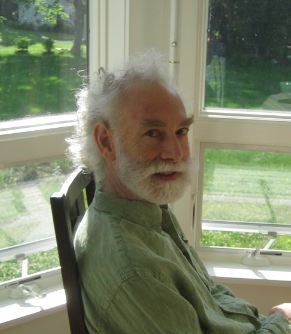
Peter Leight lives in Amherst, Massachusetts. He has previously published poems in Paris Review, AGNI, Antioch Review, Beloit Poetry Journal, New World, Tupelo Quarterly, Matter, and other magazines.
Check out HFR’s book catalog, publicity list, submission manager, and buy merch from our Spring store. Follow us on Instagram and YouTube. Disclosure: HFR is an affiliate of Bookshop.org and we will earn a commission if you click through and make a purchase. Sales from Bookshop.org help support independent bookstores and small presses.
 Heavy Feather Review