
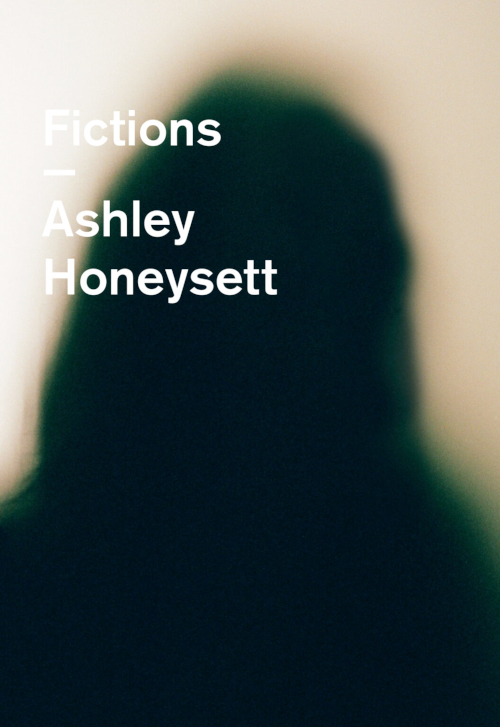
Rumors about the death of autofiction have been greatly exaggerated. Moreover, claims—in Publisher’s Weekly and elsewhere—that there is no such thing as an autofictional novel (or novella) are themselves less redolent of fact than of fiction. Ashley Honeysett’s genre-bending hybrid novella Fictions is a sign that, in the third decade of the twenty-first century, autofiction is alive and well. Honeysett’s novella recounts an unnamed narrator’s attempts to write stories, to turn facets of her life into fictions, sometimes under the auspices of a creative writing group to which she belongs. An indicative moment occurs when the narrator submits an early draft of the text we are reading to her writing class for feedback. One of the group’s members, responding positively, nevertheless insists that the manuscript is not a novella but a memoir, perhaps a writer’s diary. Notably, the issue of the novella’s genre becomes a central theme in its early readers’ responses: it is interesting and original, but what is it exactly? It seems to be an account of the author’s writing of the novella we are reading, a sly metafictional comment on the novella as a way of exploring the parameters of what it itself is: a piece of writing that has generated its own existential crisis—in what does its isness consist?
The answer must be bound up with the idea of hybridity, both hybridity of form and hybridity of content. Fictions, to be sure, is a novella whose subject is its own composition, a narrative that delineates the course of its own textual weaving, but with Honeysett also the Penelope of its own fabulationary discomposition. The question of whether or not the text is autobiographical is—equivocally—addressed when the narrator describes what she is writing as “a long, semi-autobiographical thing” comprised of tales that do not “add up to a grand narrative.” Rather, the narrator reflects, “stories are the things you spend your life sifting through.” Honeysett’s focus, then, is more on the cognitive process of producing and developing stories than on the stories themselves as “finished” artifacts.
The title itself, the plural Fictions, suggests the interplay between the one and the many: Fictions purports to be a sequence of narrative constructions that add up to a book, one which wins the University of Miami Press Novella Contest, the win itself a refutation by the contest judges of those who insisted the book was a memoir. But Honeysett’s text is both one and many, something that shares similarities with another subgenre of the novel that has gained traction in the twenty-first century: the novel or novella in flashes: a larger fictional form comprised of many discrete smaller fictions—another aspect of the polyvalent hybridity of this text. With these kinds of texts, the traditional “unity” of the novel or novella—the unity Edgar Allan Poe posited as a defining feature of the short story—has shattered into a more tessellated form, one we may well associate with postmodern pastiche: the pixelated play of Cortazar’s Hopscotch or the thematically linked yet generically diverse episodes of Julian Barnes’ A History of the World in 10 ½ Chapters, as opposed to the architectonic unity of Ulysses or Remembrance of Things Past.
Perhaps it is no coincidence that this novella shares a title with the first of Borges’ books to appear in English, Ficciones, itself a hybrid (a fusion of The Garden of Forking Paths and Artifices) that challenges the idea of arbitrary boundaries by evoking the porousness of the borders between fact and fiction, truth and illusion. The whole idea of the Borgesian game of fiction, of paradoxical works of fiction that in some way or other generate their own undoing, seems to operate subtextually within the narrow parameters of Honeysett’s novella. But what makes this a truly twenty-first century venture in the production of fictions is perhaps mostly the relation between its content and its form. Numerous small episodes describe the fashioning of stories, as well as their modification and revision: recursive stories about the writing of stories, the process by means of which stories get written and rewritten, but also the process of selection—of episodes, ideas, imagined scenarios—and then, after this executive selection of matter, the procedural process of means: What should be added or removed? What should be given more (or less) prominence? What should be sent to publishers? The rationale of the writer’s decisions and indecisions in attempting to answer these questions also becomes an integral part of the creative process as represented in the novella. In this respect, there is another genre of writing that Honeysett subtly weaves into the hybrid fabric of her text: metafiction—fiction that self-consciously represents its own constructed and artificial nature: the author as narrator-artificer, writing about writing, sentences—as in the work of John Barth—that discuss at length the appositeness of the metaphors they are about to employ, chapters—like those of Calvino—that describe the reader walking into the bookstore, taking the book off the shelf, and opening the book in which they now find themselves described on the first page, standing at the shelf and reading about themselves reading.
But since the materials of Fictions also amount—or seem to amount—to a recollection of writing projects past, the element of memoir is also tantalizingly present. What is original and also amusing about Honeysett’s novella is the breezy, apparently mundane manner in which the narrator, almost in diaristic fashion, describes the process of deciding to write about this or that subject, then proceeds to a description of how the story was first composed, how it was revised (often with outside input and early reader response) and then also how the—tentative—final product was sent to this or that magazine and rejected or accepted or received editorial feedback, which itself then came to be folded into the tale of how the story evolved and became what it is. Similar books have been written in the past (a particularly stunning example is Jose Saramago’s The History of the Siege of Lisbon) but Honeysett’s novella is unique in that it takes the whole process of producing fiction—from conception and various drafts to dissemination and tabulation of rejections in Excel—as its subject and thus recursively turns the process of writing fiction into a novella whose subject—in almost Hegelian fashion—is ultimately itself: we become aware that the book we are reading is both the book we are reading and an account of its own genesis, its own being and becoming.
Or is there a further dimension of fictionality beneath the surface of this novella that can quite reasonably be mistaken for a writer’s memoir? Here an even more tantalizing possibility emerges—that the author has not just invented this novella but has also invented the implied author and all the fiction-writing episodes that form the story of how this book came to be written. For perhaps Ashley Honeysett has written a book that—and here Nabokovian and McEwanesque games come to mind—only appears to be a novella about its own emergence, one that generates fictions about the fictions of which it is comprised. And, if Honeysett has (simply or complexly) manufactured these tales about a putative author-narrator’s search for stories among the facts and facets of her lived and imaginary experience, rather than relating accounts of actual creative exertions on the part of the author—then she has produced something doubly inventive and bewitchingly paradoxical: a book about itself that is actually nothing to do with itself.
The title again becomes a fascinating clue: the novella appears to be an account of a creative writer’s efforts to write, which culminate in the production and publication of this book. But perhaps the reality is more complex and radical: the novella as a meditation on fictionality itself, with the relation between fact and fiction so deftly and playfully woven that the status of the text itself is indeterminate. And if that is the case, then the novella proves to be an adept exercise in probing the ontological conundrums of which it is comprised. Fictions, then, can be seen as a complicated—yet modest and playful—meditation on the nature of fiction. Perhaps its title suggests that fiction as a phenomenon is not one but many, is not singular but plural, is not a category but an architecture comprised of many categories, less a construction than a structuration. What is striking about Fictions is how it manages to evoke these considerations of genre and category, of status and definition, all within the short purview of a novella, one divided into two main parts that are themselves divided into many discrete smaller units, all of them relating on various levels to the process of writing different kinds of stories. But the novella is also Protean, a text that is constantly shifting shape, for some stories are “fixed” and given a specific final shape, but others are in a state of constant flux, with narrative flux itself becoming what is ultimately represented: stories as Heraclitean fluctuations that never remain the same. Fictions, as a “whole” can, then, be seen as an interrogation of fictionality, the relationship between writing and life, between art and reality. Perhaps a good philosophical fiction is one that does not answer such fundamental questions but rather generates and frames them in new and intriguing ways. Fictions thus provokes an enquiry into the philosophy of fiction of which it is representative.
Since the world around us is an evolving process rather than a stable entity, fiction—if it is to reflect the complexity of this world—must necessarily represent this complicated evolutionary quality of reality. Ashley Honeysett’s novella is innovative and subtly challenging, a work which suggests that, in 2024, reality and fictionality are intertwined, the relation between them fluid, vacillatory, indeterminate. Some representative works produced in this era, it follows, would be animated by a literary uncertainty principle that produces permeable boundaries and prose resistant to classification. Honeysett’s novella should not be reduced to the sum of its apparent intentions. For this fascinating little book represents, not just one writer’s beginnings, not just the genetic origin of various species of tales, but also the hybrid, dynamic, and evolving nature of the world in which we live, the imaginary worlds we construct, and the relation between the two.
Fictions, by Ashley Honeysett. Oxford, Ohio: Miami University Press, May 2024. $17.00, paper.
Mark Crimmins has published stories in Confrontation, Prick of the Spindle, Eclectica, Cha, Cortland Review, and Tampa Review. He teaches in the Department of Humanities at the Chinese University of Hong Kong, Shenzhen.
Check out HFR’s book catalog, publicity list, submission manager, and buy merch from our Spring store. Follow us on Instagram and YouTube. Disclosure: HFR is an affiliate of Bookshop.org and we will earn a commission if you click through and make a purchase. Sales from Bookshop.org help support independent bookstores and small presses.
 Heavy Feather Review