
You don’t like cutting anymore. You don’t like stitching too. You are broke, mostly a failure, and the only place where they will allow you to cut and stitch is in the hospital located at the outskirts of the sugarcane field. You stay in a room at the periphery of the hospital. The women yell, they yell loudly and they yell mostly at night and there is this curious mix of their harsh vocal chords rhythming into the call of cicadas. You wake up in the morning and sometimes feel like giving them a shot of painkiller in their arms. Painkillers are costly and this ain’t that type of hospital. And they are not women either. They are young girls. They can take in the pain. They all do. Anyways, morning time is when you collect the bags of severed uterus, cyst, ovaries laying on the floors and then straight into the incinerator it goes.
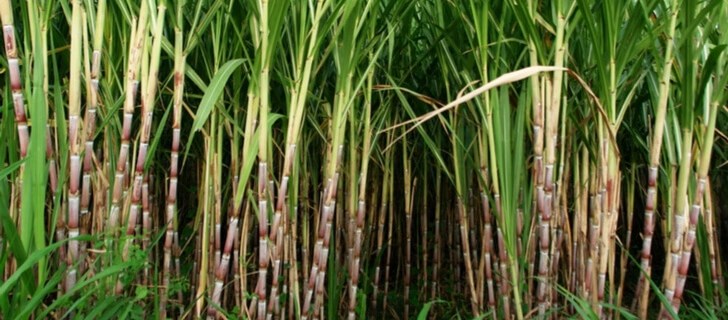
There are no trees around here, only lengths and lengths of sugarcane grass. Thick stems, girdled by strong nodes and leaves at the top so sharp if they don’t cut them well it gives painful papercuts on their fingers. These are not green trees, these are monsters that suck juice out of soil and uterus out of the girls. Most nights you have a recurring dream where you go with a can of kerosene and burn all the canes down. Then you invariably wake up by the noise of these hospitalized girls. All is sweaty. The girls, their scars around the navel dissecting them like zigzag railway tracks that run on valleys, their nails, the calluses on the feet, their stiff necks broken down by kilograms of sugarcane hauled daily to be taken to the Coca-Cola factory. Sweaty. Too sweaty. Sweaty to the point of being ugly. What is beautiful is the deep red colored uterus, the perfect formed cyst on the ovary, the ovary itself. So pretty, so beautiful, just like a wow. Sometimes it looks like expensive pastries to be served in five star hotels. Once you kept the door of the incinerator open, and slow burnt the organs. The flame in contact with the meat charred blue and eventually engulfed the tissues completely while turning into lilac green. You imagined yourself inside the incinerator and got goosebumps.
You start your day at 9:00 a.m., you do the hysterectomies by 1:00 p.m. and 2:30 p.m. is your lunch time. After that, you smoke for an hour. Once a month, the government official comes to update the records of no of surgeries performed in the hospital in his red register. Well, if one can call them surgeries that is. He had asked you—was it needed? while looking at one of them whom you had cut the previous day. She barely looked thirteen. You replied—is it ever needed? and that’s that. He never asked anything again. You pick up the red register and scratch the back of your head while checking out the reasons for cutting as written by the official while he moves out to drag a smoke. You remember the story of Chitragupta—the divine accountant who keeps records of every thing in the universe done by every human in every life and wonder what these girls have done wrong in their past. You are not good at ruminating, you go ahead and share a fag with the official.
Some nights girls don’t cry. The cicadas don’t click too. You count the hours to the morning with the number of uteruses you have pulled out from their place in descending order of age. You stop when the age count reaches eleven, mostly because you are sleepy. You think about life choices that have led you here. Suddenly a dog cries outside. Or maybe a girl yelps in pain. At least you aren’t being operated by you. You chuckle. You doze off while the dog or the girl intensifies the noise.
You have to do the paperwork when one of these girls dies after the operation. Married at thirteen, dragged off to sugarcane fields to clear of generations of debts, sent here to prevent heavy bleeding during menstruation. The work can’t stop, Coca-Cola and Pepsi need the sugar to put in the world’s belly. Maybe she had a dream—not like Martin Luther King—just a simple dream of working in a grocery shop without debts—paid to do chores. Father fell in a large bowl of boiling cane—mother had hysterectomy at eighteen—and now she—and now she dead. You look out of the room and see the half burnt father, holding the mother’s hand. The husband’s cheeks seem red—might have cried. You ask the dead body’s surname—they reply Kumari in unison. Mother used to call the dead body Minu when it wasn’t dead.
Imagine for a moment a world without sugar, the weightlessness of that heavy commodity. The first time you had it, and you had smiled, chuckled, giggled and had it again and again and again from a Coca-Cola can or a Pepsi tetra pack and Minu’s mother had fainted, father had stirred the large bowl of the sugary broth for twelve hours and her future husband had paid the twenty rupees dowry so that she could start working in the sugarcane field right away. A world without sugar equals a world with living uteruses. Somewhere, the thoughts get mixed up and your tears fall on the dead scars of its abdomen.
You could call journalists, be a whistleblower and try to tilt the scale of justice towards these girls. Some reporter from London would come and write a fantastic article with high definition images and aerial drone shots with photographs of scarred navels. Pulitzer prize for investigation for sure she would get. People around the globe would weep. She would become editor of renowned magazines, sip wine and preach sermons in D.C. You wouldn’t be mentioned in the article. You would stay nobody, mostly a failure, still broke.
Sugar won’t stop producing itself. You will be beaten up, maybe even killed. Or they will simply forget. Uteruses will be taken out, maybe even by a proper doctor this time. The cicadas will stop clicking in the morning, the girls will get tired from yelling to moaning and droop away to slip. The non stop buzz of Minu’s mother gets to you and you give her a smile. You fucking won’t be a hero. You complete the paperwork, go out of the room, light a cigarette, slowly inhale smoke and exhale rings while the evening sun warms your spineless body.
Gogol is a forest conservationist based out of the global south and is working for the betterment of indigenous communities who live in forested areas and are worst affected by climate change.
Image: eos.com
Check out HFR’s book catalog, publicity list, submission manager, and buy merch from our Spring store. Follow us on Instagram and YouTube. Disclosure: HFR is an affiliate of Bookshop.org and we will earn a commission if you click through and make a purchase. Sales from Bookshop.org help support independent bookstores and small presses.
 Heavy Feather Review