
Over the past two weeks, please list the items you have lost.
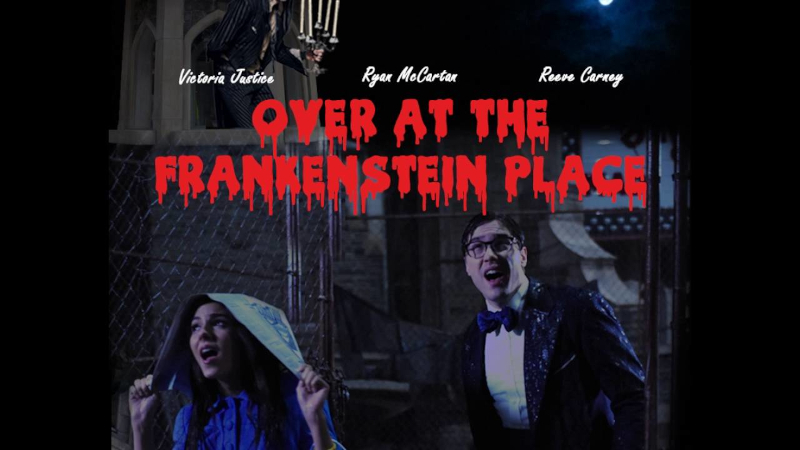
As a teenager I knew how to scam my way into the midnight showing of The Rocky Horror Picture Show. They still did it at the Chelsea Cinemas, which is closed now, and graffiti adorns its sad plywood window coverings. But this was before the death of culture. It was eighteen plus and they checked ID, but you could go down the line and ask adults if they would pretend to be your chaperone, so you could get in. This was related to how we got cigarettes or if we got really lucky, alcohol. It wasn’t difficult to find someone sympathetic to our teenage plight, since we were fighting the good fight—teenagers still interested in a cult classic movie and dressed appropriately punk rock. People took pity on us and got nostalgic for their own childhoods. With booze it was harder and much more illegal. But this was just good, harmless fun, and the internet was ruining us anyway, so why not?
At the present moment, do you know the location & number of your teeth?
Oh, I was obsessed. I loved it all. An awkward teenager just turning sixteen, this felt like where I was supposed to be—this was where there were suddenly people like me. I wouldn’t feel more like I belonged again until the first time I walked into Trans-Pecos in Bushwick in 2018 for a totally sold out Deli Girls show. The Rocky Horror Picture Show had it all. Its heroes were not the plasticky, sculpted celebrities that had taken over in recent years (although I couldn’t have predicted the rise of Kim K, this was still only 2013) and the characters it depicted were sexually explicit but also honest, passionate, often very loyal, and a little bit fucked up. There was room for freaks like Frank-N-Furter, but also people like Eddie, played by Meat Loaf, and Rocky, and so many others. Frank-N-Furter was bisexual, too—an often overlooked but important detail—he doesn’t really discriminate when he seduces Brad and Janet. I’ve never been a real supporter of musicals, either, but this was smart and funny and most of all, self-aware.
(in grams) Please estimate the weight of each of the following: Left lung, half-liver, three fingers on your right hand.
It’s a little shocking that such a queer-coded movie had so much success in the 1980s, or even that it wasn’t banned in some kind of major way. Not only are Brad and Janet coming across a transexual convention—maybe it’s okay because they’re all actually aliens—but the main antagonist is a transvestite. There’s quite a bit of gay sex and a lot of flipping between sexualities and a number of partner switches as well. Frank does die, possibly punished for his actions, but Brad and Janet don’t really get the moral satisfaction of acknowledgment for the vaguely nonconsensual sex they’ve been forced to participate in, and Rocky, who dies, doesn’t exactly have an arc of redemption either.
Thinking about the movie from a critical standpoint, we see a sexually deviant mad scientist celebrating his deviancy through some kind of dangerous chemistry which is specifically coded to represent some kind of endless or unquenchable sex drive. When his work is threatened he becomes violent, and after he essentially takes advantage of his guests, confusing them sexually, he is only stopped by his death by mutiny as his own staff turns on him. It’s not really a happy story or a celebration of queer joy.
(in miles) Please estimate the distance from the back of your skull to the skin of your eye.
At the same time there are a number of elements that are specifically catering to what could be considered a “queer,” audience, even as the movie was written and produced in the mid-70s. The gender-bending elements had entered the mainstream and were tied with the LGBTQ community as they had been for decades. In 1978, Newsweek called the film, ‘tasteless, plotless, and pointless.”
But isn’t that part of the fun? The final scenes go ridiculously and absurdly over the top. This kind of excess can be seen as the ultimate queer expression in many ways. The film escalates and then continues to escalate—it never stops and it never slows down. Rather than making a tasteful or thoughtful happy ending, or even an ending that remotely makes sense, the movie takes a sharp left turn, and declares that it’s actually been about aliens the whole time, but about drag or transvestites or mad scientists or even about sex. We’re still trying to keep up as Brad and Janet and Dr. Scott fumble around in the dark. And then suddenly, it’s over.
Over the past two weeks, please estimate the number of times you’ve attempted to start a conversation and failed (including, but not limited to: grocery stores, living rooms, when you are alone).
This movie—along with Kristen Stewart playing Joan Jett in that biopic—and then Joan Jett herself, standing Sexton in that pink fucking suit on her album cover—and finally, Anne Carson’s Autobiography of Red, these were my bisexual totems. But I was still shocked when in high school my two best female friends admitted that they had done something sexual together. I’ll spare you the details. “We just wanted to try.” I didn’t want them to date because I was going to end up in the middle of it. I said this, but it turned out I was right and by the end of the year I wasn’t friends with either of them and one of them had left my high school, whereas the other had left her respective school and gone to private school. I told this to my mother, who told me we couldn’t afford it, no matter how much I didn’t like my school. “Don’t even think about it,” she said.
(in incandescence) How much light passes through you? Is it enough to write a letter? Pick a letter. Pick a new name.
It’s so many years later, when I am an adult and a normal, sexual person, and I’m speaking to the most beautiful woman I’ve ever seen in my life at a Halloween party. Simultaneously we admit that Joan Jett is how we realized we like girls. I fall in love with her the way you pour a drink or shut a door, it just happens. Then she mentions a girlfriend, someone she lives with, and I have to mention my boyfriend, who I also live with, and it’s like the door shuts, yes, but not in the good way. Not in the good way at all. The good news is that I have met so many women who are the most beautiful woman I’ve ever seen in my life. There’s a lot of them out there. So I put it out of my mind even though I don’t get her number or her Instagram or even a lock of her hair, a handkerchief, something to remind me of her. I only have this hazy, half-drunk sense-memory of her silhouette, illuminated by the floodlights on in the backyard, a cigarette hooked between her two fingers, me saying, “Oh, I don’t smoke.”
Can you hear the woman singing?
“Desire is no light thing.” Autobiography of Red by Anne Carson is one of those books that’s infinitely re-readable, and you can always find something new within it, as you keep leafing through the thin, fragile pages. My copy is not new. I started the book in my senior year of high school, a decade ago, in an independent study about postmodern poetry. I can’t tell you how many times I’ve been through it.
I want a happy ending for these characters—loosely continued in red doc>—but I understand what has happened and why we don’t get it. Rather than contributing to the tragic queer narrative, Carson has created a more honest picture of what life is like. Bad things happen and you figure it out. If you’re lucky you have someone to help you. Sometimes you don’t. But this particular moment in Autobiography of Red, it is a snapshot of something—maybe innocence. I’ve met many people who were deeply moved by it. First love, which is what the book depicts, is a relatively universal experience. It’s easy to slot oneself into the shoes of another, perhaps a character in a novel, when you’ve in the throes of this experience. And Carson’s prose is stunning, an added bonus.
What was your death’s taxonomy? Where is its kingdom & domain?
Carson has the amazing ability for what I’ll call, elegance, as we see in this quote: “They were two superior eels / at the bottom of the tank and they recognized each other like italics.” Her inventiveness when it comes to metaphor or almost any other poetic device hinges on her understanding and knowledge of the rhythms and basics of the language itself. As a classicist—and this is just a theory—her background in language allows her greater access than the average person into what can be possible and what the limits of words can be, as well as how to manipulate those limits.
The result are lines that feel easy and obvious, even effortless, but are clearly draped with a clever and meticulous hand. We don’t naturally think “first love,” and “eels,” in the same sentence most of the time, but now we will. This is the fun but also the lesson of Carson’s writing—some kind of accelerated and over-caffeinated version of thinking outside of the box.
How important do you feel to others?
Over the weekend, a man tries to dance with me in a club. “I’m gay,” I tell him. “Thanks for letting me know,” he tells me, then moves on to his next victim. I like this approach. It keeps your options open, and if someone is interested, they’ll let you know. If not, you can keep it moving; there’s no need to be pushy with someone who isn’t interested.
Desire is something I think about often. I think often of the phrase from Eduardo C. Corral’s debut: Slow Lightning. Sometimes we go dormant but that doesn’t mean I don’t care or think or feel. It just means I need time. Lightning can and does strike the same place twice. Sometimes you have to go backwards to go forwards. Three steps forward, two steps back.
Are you sitting atop the creaking hinges of something only you can see?
The material that has shaped this essay (the italicized questions) are from the poem, “Diagnostic Quiz for Human Ghost,” by poet James Fujinami Moore. The questions seem random and at times nonsensical. We begin with: “Over the past two weeks, please list the items you have lost.” This beginning feels slightly innocuous, and a little bit too quiet for a poem that essentially interrogates the idea of grief from the perspective of the self—but not just grief, also loneliness, and feelings of loss. From a structural perspective there are some very successful moments; I really enjoyed the lack of question marks at the end of some of the final lines, which felt decisive and sharp. The straightforward and bureaucratic way that this writing functions is effective and the unsentimental approach is deeply welcome, especially as we become inundated with wartime poetry—an essential but difficult process.
Genre—how do we approach this concept? As I do more of my own research, I find more and more writers who are breaking down the boundaries, including many who have been doing so for years. We can go back in time a bit, and talk about Gabriel García Márquez with his speculative novellas. e e cummings and his use of punctuation—although in many of his poems he is not using established grammar rules he does some revolutionary (for the time) things with parentheses. Beyonce is a classic example of a genre-hopper. Contemporary novelist, one of my faves, Jen Silverman, is trained as a playwright. Lots of poets and writers I love from Diane Seuss to Ocean Vuong to Denis Johnson.
The more we look the more it breaks down. Seuss’ “sonnets” which read like absurdist prose poems, almost reminiscent of Rimbaud. Richard Siken’s movement away from highly indented, page-filling work and into narrative-based prose poetry, not unlike the work of Robert Hass except that Siken’s work is usually humorous in a dark way, whereas Hass’s prose poems can be quite dark. Some of the confessionalists, like Theodore Roethke or Robert Lowell, involved themselves in very complicated rhyme schemes which are hard to emulate in modern day, but the material continued to be deeply personal and ground-breaking, for the time. In both Sarah Ghazal Ali’s Theophanies and Gaia Rajan’s Killing It we see a resurgence of the ghazal with a modern twist, while Rachel Zucker’s work continues to jump nonsensically around the page.
Moore’s writing falls in line with this trend, and his questions are extremely interesting, tongue-in-cheek, and relevant to the way both this poem and his larger body of work will fit into the current publishing market. There’s a real luminescence to some of his lines but for the most part they are fairly straightforward; it’s the way they are arranged that makes this poem interesting. Continuing to push and hone his own voice will be key to standing out in a playing field where poets from many different backgrounds are all jostling to be noticed.
Writing—and writing trends—are always evolving. At the moment, there’s a trend of poets writing novels, as we can see with Ocean Vuong or Kaveh Akbar. It’s impossible to predict what next season will bring, but if you subscribe to Publisher’s Weekly, you can probably make a pretty good guess.
Are you certain there is no part of your body that is missing.
Moore’s questions and suggestions have helped give a scaffolding to this exploration of a variety of queer icons. This juxtaposition between life and death is one that we all struggle with. The idea of “missing,” feels curious since we’re considering death specifically. This irony is pleasing but also a bit confusing. I want to like the humor here, and I do like the direct address. There’s a frustration and an urgency.
Just as gender becomes obsolete, our bodies become ephemeral, too. If we are indeed human ghosts, we will be entirely missing. Is this Moore’s implication?
Are you certain there is nothing missing at all.
The bureaucratic aspect of this poem is what makes it so memorable. Moore is in total and final control and the lines are well-articulated and thoughtful. He’s putting words to what we all fear—that we will lose something deeply important like our minds, and we won’t be able to return.
The idea of certainty is repeated. Why do we have to be certain? Is this something that could happen without certainty? This is where Moore is putting all of his power, as he moves through the poetic landscape. His weight and heft are in these last lines and this is where he is focusing his energy.
The question becomes less about queerness and more about legacy. What are we taking with us, and what are we leaving? What does the body need to tell us? And what do we need to know about the poems that surround us?
“Sometimes the strangest corners make curious shapes,” writes Moore. Perhaps he is right. Isn’t this the working definition of queerness? To be forced into a shape that just doesn’t totally fit, and spend one’s life chasing this idea that someday it’s possible to find the kind of life or love that others are told is possible, but we are not? I haven’t always believed in the soul and I go back and forth about this. If I ever decide, I’ll let you know.
Joanna Acevedo is a teaching artist from New York City. She is the author of three books and two chapbooks, and her writing in multiple genres has been seen across the web and in print, including in Free State Review, The Rumpus, Bending Genres and Hunger Mountain, among others. Currently she is Associate Editor at Frontier Poetry, Craft Editor at Palette Poetry, and she received her MFA in Fiction from New York University in 2021, in addition to holding degrees from Bard College and The New School. Read more about her and her work at joannaacevedo.net.
Image: billboard.com
Check out HFR’s book catalog, publicity list, submission manager, and buy merch from our Spring store. Follow us on Instagram and YouTube. Disclosure: HFR is an affiliate of Bookshop.org and we will earn a commission if you click through and make a purchase. Sales from Bookshop.org help support independent bookstores and small presses.
 Heavy Feather Review