
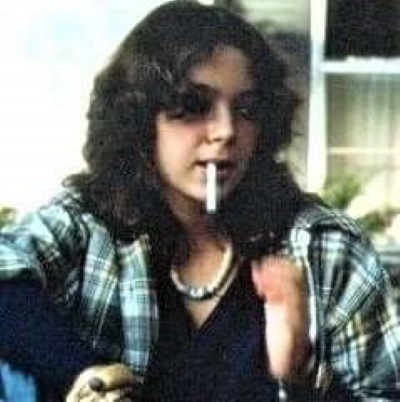

Diane Seuss is the author of six books of poetry. frank: sonnets won the 2022 Pulitzer Prize for Poetry, the National Book Critics Circle Award for Poetry and the PEN/Voelcker Prize. Still Life with Two Dead Peacocks and a Girl was a finalist for the National Book Critics Circle Award and the Los Angeles Times Book Prize; Four-Legged Girl was a finalist for the Pulitzer Prize. Seuss was a 2020 Guggenheim Fellow, and in 2021 she received the John Updike Award from the American Academy of Arts and Letters. Modern Poetry is her latest book, published this month by Graywolf Press.
In the following interview, Seuss discusses John Keats, the challenges working-class writers face, and how poetry matters despite the outrages of the world. Thank you to Graywolf Press for providing an advance copy of Modern Poetry.
William Lessard: It has certainly been an interesting few years for you. What do you know now about writing that you didn’t when you started out?
Diane Seuss: Well, I see it as a strange unfolding, from my first encounters with poetry when I was very young. In terms of knowledge about poetry as literature, I began with very little. I was in a rural school. My mom started teaching there just before I entered high school. I couldn’t have her in class, so my choices were limited. What I did have was a sense of the music of language, and the intensity and purpose of language. In that weird space between waking and sleeping, from the time I was very young, I’d hear full poems, in iambic pentameter, running through my head. I had that, and it carried me through for a while. Then, when I met my mentor, who helped me go to college, he taught me something about structure and compression and actually getting poems on the page the way I heard them.
I’d say what I know now, after all these years of practicing and reading, is the preciousness, the value of poetry. I don’t think when I was younger that I recognized that so much. I knew that it was a thing I dug, but I didn’t know how precious it was. Now, I see when I look back that it has been the core, it has held me together more than any person or idea or thing. It has been my way of speaking back to life and maybe especially to suffering. I don’t know that I know more, but I’ve suffered more, and I need it more. It has become, with practice, more intuitive. I don’t have to think it through so much, it’s just there.
WL: I see a lot of young folks and they’re clearly gifted, but they think that writing is about being clever.
DS: Yes. I don’t know if we should have the capacity to know more than that when we’re 22.
WL: At the same time, we have a very ageist society, where everyone is chasing the new-whatever. Well, what about the “old-whatever”? What about the person who’s, in my case, 57 years of age and is just getting into a groove? What about that, rather than, “Oh, they just graduated from Iowa” and all that fucking horseshit.
DS: Ha. That’s the marketing aspect of the poetry world which can limit the range of voices that we have access to. I need the wisdom of elders (if I can find anyone older than I am!) and the energy of the young, and of course the perspectives of people who think and perceive differently from the way I think and perceive.
WL: I was going to get into this later in our talk, but hey, since you brought it up, I feel like a lot of the diversity that we have is illusory, because yes, it may be ostensibly a broader range of voices. But if you look at the situation, it is mostly people from the same three or four schools and everybody—surprise, surprise—is rich.
DS: I’m frustrated when I hear conversations around diversity with no mention of the powerful impact of class, poverty, work, on every aspect of the poem. On voice, on access, and on nuances of understanding. The MFA can be a very valuable and supportive experience for writers, but one has to be careful of becoming a product of a hermetic system. It’s important to retain your quirks. For instance—where are you from, and what landscape made you?
WL: Well, I’m a guy from the Bronx, hence the accent.
DS: I was raised in the middle of rural Michigan. Not in the middle, at the bottom of rural Michigan. I’d never heard of a poetry reading or an editor or an older writer I might learn from, until my mentor found me, in a profound act of serendipity. But that place had other things. Thank God for the things it had. Some of it was really crappy, but some of it fed my imagination in a way I don’t think even other kinds of access could have provided. It’s probably best that I didn’t have access. That’s just speaking for me, from my own experience.
WL: In popular culture, working-class life is populated with all these broken people and trauma. Yes, it is all that, but it’s a lot of fun, too.
DS: I don’t know that I’ve fully gotten to it in any of my books. Yes, there is obviously a provincialism or a narrowness of experience, but there’s also a kind of wildness that you just don’t get anywhere else. I don’t know how to fully explain it to people.
WL: My little neighborhood in the Bronx was like a cross between Goodfellas and Porky’s. Instead of competing for who could get the highest SAT score, everybody was competing to see who could be the biggest maniac. Growing up in a place like that you wind up with lots of funny stories. On an emotional level, you come out of the experience, and you say, “I’ve been tested by life and I’ve survived.” And that is joy.
DS: Yes. I love that brand of joy. As a very small child, we lived in an even smaller town, a village, and our rental house was next to the cemetery. This is where my dad got sick; he died when I was seven. But that cemetery was so … I don’t know if I’d call it joy or what, it was something. The names on the stones, the grievers, the horses right over the fence, the bog, the milkweed pods. The presence of death. That’s really all I needed to develop an imagination. We didn’t have toys, really, but there was this charge that was very beautiful. So really, I’ve been running on those fumes most of my life.
WL: That, and your own sense of spitefulness. Spitefulness is great. It takes you far in life.
DS: It can fuel the audacity to write anything at all. It gives you the guts to just put anything down on the page. Isn’t it kind of audacious to believe that you have something worth putting down on a page when you’re 13, 16, 19, 40, and maybe, at least when I was coming up, female? So, whatever it is that gives you the confidence to believe you have something of worth to put down, it can be spite, it can be rage, it can be joy, it can be chasing after power. For me, I think it’s always been truth-telling. I love that feeling of just laying down the truth as I see it.
WL: With the new collection I get the sense that by titling it Modern Poetry and putting a younger version of yourself on the cover, you’re saying, “I’m here”—as a way to introduce yourself to a broad audience of people. Was that your intention?
DS: It’s a good question and I think the answer is still mysterious to me. The title poem, called “Modern Poetry,” is about the first poetry class I ever took, called Modern Poetry, and my lack of preparation for understanding. We read Wallace Stevens, Theodore Roethke, Gerard Manley Hopkins, William Carlos Williams, and Sylvia Plath. I was ill-prepared. That poem is about a certain kind of education, during a certain time in my life and in history, and the violent event that began to help me understand poetry’s preciousness.
WL: That’s where it all started.
DS: When my mom went to college after my dad’s death, she brought books into the house. Texts. There was a little red and white book called Modern Poetry that I wasn’t ready for—I was maybe eight years old—but it drew me. It drew me in. In titling the book, I thought back to that book that first arrested my attention. That book even appears in one of the later poems in Modern Poetry. It struck me, when I considered the title, that it would be an audacious claim to call a book of poems Modern Poetry. Is it a textbook? What is it? What is modern? What is modernism? And then to put my own young face on the cover. Partly, it is my modern, my entry point into poetry, and my particular kind of education and defiance. Then part of it, as you’ll see in the book, is it moves between the modern and the romantic, and how they play themselves out in my imagination.
I wrote the book during the Great Plague and the Great Fascist Plague in our country, and I had come to a place where I began to doubt the worth or efficacy of poetry. When I was writing frank: sonnets, I had no doubt about the worth of poetry, the power of telling your tale. But in the years after, I began to question the capacity of poetry to make meaning. That is the question I brought to these poems. Can poetry still mean? Can poetry matter, in the face of so much suffering and outrage? I think you’ll see by the end of the book, my answer is yes, but it’s a struggle to get there. That is the book’s trajectory. The real meaning of the title is that question, which for me is a burning personal question. Modern Poetry: Can it Still Mean? I come to “yes” in the last poem, but it’s hard. It’s a hard one. Yes.
WL: Your book reminds me of D.H. Lawrence’s Studies in Classic American Literature.
DS: I love that book.
WL: That book is so great because, like your book, it has a generic title, but then you read it and it’s all this stuff about how Melville was a weirdo and Poe was a weirdo and so on.
DS: Ha! So true. Lawrence and I are both dorks. You know, on my couch, next to where I write, I have a plaster cast of Keats’ death mask, and there are times that I touch him, I touch the mask, and I feel very humanly connected to those who came before us. I think your first question, what have I learned about poetry that I didn’t know before, is that when I was young, I would’ve been like, eh, fuck those corpses. Now I feel so linked. So engaged in a lineage.
I feel connected to Dickinson, to Keats, to Brooks, to Hopkins, to Lorca, to all these people who, like us, were struggling as valiantly as they could with a lot of turmoil and loss. Keats died, what, he was 24, 25? Racked with tuberculosis, had helped his brother die right before him; young, sick, estranged from his country and his love, and he still wrote “Ode to a Nightingale.” Those reminders keep me writing more than anything else. More than anything that’s happening right now.
WL: I’ve been reading Hemingway a lot lately. Last night, it was the last section of “The Snows of Kilimanjaro.” That last section is sublime, where the speaker imagines he’s being put in the plane and he’s being rescued, and the plane starts going up and and all the things start getting smaller on the ground, and then he realizes suddenly that he’s going over the mountain and what’s really happening to him.
DS: Yes, and he’s gone. He’s dead, and yet that stands. That passage stands. That’s the irrefutable thing about language, about art. It’s still there. Maybe because my dad died young, my great leading question through life has been what stays, what doesn’t die? The closest I’ve come to an answer is poetry.
WL: Your book is making that argument, and it especially makes that argument in the last poem. One of the speakers, who’s a scholar, lists all the reasons Keats would be a bad boyfriend. But then you say, “But The Nightingale.”
DS: “But The Nightingale.”
WL: How did we get here, Diane—that we’re supposed to not care about “The Nightingale”?
DS: I think in the pop psychological culture that we live in, the cloying optimism in the face of chaos … Oh, what’s that phrase? “Living your best life,” when I hear that, I just want to blow something up.
WL: Oh, yeah. Definitely.
DS: I hate that phrase. I have compassion for young writers who have to find a way to shut out the noise of “living your best life” and to discover language that is absolutely self-owned. Truisms like “self care,” and “healing.” That there’s such a thing as healing, that there’s such a thing as redemption. Without healing and redemption, you get to poetry.
WL: Poetry isn’t for everyone.
DS: No.
WL: Any kind of art, if it’s going about its business properly, allows you to be okay, at least momentarily, with things that are not okay.
DS: Keats called it negative capability and Lorca called it duende. That’s my religion if I have one. The capacity to sit with complexity and darkness without trying to solve it or fix it, and to reflect it and portray it and examine and explore it without trying to mend it. I tend to not resonate so much with writing that is … I think I say in one poem in Modern Poetry, there are too many poems about light. It’s okay if people are into light, but it’s just not my jam. I have always been more interested in the roots than the tree.
WL: Last question. What advice do you have for working-class writers?
DS: Are you asking in terms of poetry itself?
WL: Yes.
DS: I relate to poetry as work, as a working-class person thinks of work. So I value persistence, and I think persistence is a key for working class writers. I knew a lot of writers early on who were as or more so-called talented as I was, but who for whatever reason dropped it. Maybe they just didn’t need it as much as some of us, or maybe they had other things they were good at.
Read what you need, but other people’s poetry is not an instruction manual. Find one or two people who will tell you the truth, and trust them. Remember that poetry isn’t primarily a social event. It requires solitude. Don’t be afraid to be lonely.
If you continually don’t get poems taken by magazines, then ask yourself honestly, why not? And have somebody tell you why not. In one way, you have to be like, fuck all the conventional wisdom, and be absolutely tuned in to whatever unique quirk was born with you and comes through in your approach to the poem. At the same time, you have to be willing to treat your writing life as work, like being a barber or a pipefitter, and find out maybe there is weakness in my work, in my thinking, that I can repair.
Here’s an example, Bill. I wrote a version of what became Wolf Lake, White Gown Blown Open, which was my second book. I sent it all around and nobody took it, and nobody took it, nobody took it. There was one panel of judges for some contest, it was all guys, and one of the guys wrote to me and said, “Too many divorce poems.”
WL: Wow.
DS: My first response was “fuck you.” So when the guy said, “Too many divorce poems,” rather than rebelling, or at least rather than only rebelling, I thought, okay, what does that mean? What would that look like? How do I move? How do I work on this manuscript in a way that honors his bitchy comment, even as it honors my experience? And it helped the book. It strengthened the book. The book got bigger. Even if it hurts, even if you want to reject it, take in what somebody tells you about your work before you reject it. And really think about if it has truth in it.
It’s important not to get too defensive about your own work. Don’t fall too much in love with it. If you have a trusted reader, listen to them. Listen to them even if it hurts. The pain is part of it. Write whatever is in front of you. If the pain of hearing crap about your work is in front of you, write that. Write your defensiveness, write your ambition. Be honest with yourself about what habits aren’t gelling. How have I become conventionalized? What can I do to breach the divide between myself and the reader? None of those answers are easy, but have the guts to really get better. Do what it takes to get better. Just don’t give up on yourself, on your words, on your worth.
Thank you, Bill.
WL: Thank you. Talking to you was even nicer than I expected.
DS: Good. For me, too.
William Lessard is Poetry & Hybrids editor at Heavy Feather Review. His work has appeared in American Poetry Review, Beloit Poetry Journal, Best American Experimental Writing, FENCE, and Southwest Review. His chapbook, instrument for distributed empathy monetization, was published in 2022 by KERNPUNKT Press. Read more of his work at: williamlessardwrites.net.
Check out HFR’s book catalog, publicity list, submission manager, and buy merch from our Spring store. Follow us on Instagram and YouTube. Disclosure: HFR is an affiliate of Bookshop.org and we will earn a commission if you click through and make a purchase. Sales from Bookshop.org help support independent bookstores and small presses.
 Heavy Feather Review