
As Long as I’m Patient I’m Waiting for You
Laying my laptop on my lap smoothing my lap
opening up my hands
like a checkbook,
when you add up the profit and you add up the loss is it supposed to be the same amount?
As long as I’m waiting I’m not even thinking I often walk around the room in order to put them down,
when I’m patient I sit down and wait for it to finish
charging, lifting my feet pressing my lips together at the same time laying my hands on my lap in a shallow arc brushing off the shadows:
I actually think I’m lightening up,
what does everybody else think?
Of course, it’s difficult to wait for somebody sometimes you need to remind yourself saving up like a checklist,
when you check the profit and you check the loss isn’t it supposed to add up to something?
As long as I’m waiting for you, and taking it off,
as if I need to experience the alternation,
laying my hands on my lap wearing my gloves so my hands are clean Incomplete When I turn my head as if it’s loading,
I’m turning on the lights,
not all the lights when I’m inside,
putting some things away not taking anything out I’d like to finish cleaning up,
I mean there are things we never Rubbing my legs together I’m getting a bad gateway message,
working on a paper on another paper it’s annoying when it’s unfinished,
it isn’t even finished until you close something it’s true, when you don’t know it’s difficult to continue, because I don’t want to know when it’s all over,
I think I’m hopeful but that’s about it.
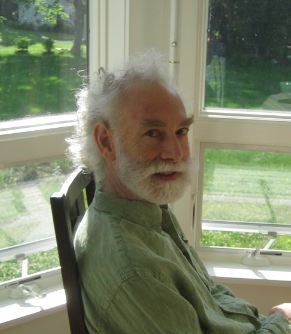
I’d Like to Cooperate When You Tell Me to Be Serious, I’m a cooperative person, Mini-interview with Peter Leight HFR: Can you share a moment that has shaped you as a writer (or continues to)? PL: No single moment, but I have always felt the process of writing itself is both necessary and pretty much sufficient, no matter what the outcome of any particular moment of writing is. HFR: What are you reading? PL: Lately I’ve been reading reimaginings of the sonnet, Terrance Hayes’ American Sonnets for My Past and Future Assassin and Diane Seuss’ Frank: Sonnets, and a variety of different prose: The Ten Thousand Things by Maria Dermont, Drive Your Plow Over the Bones by Olga Tokarchuk, and I’ve just finished the Pickwick Papers and The Trial, which I try to cycle through periodically. HFR: Can you tell us what prompted the poems? PL: My poems tend to be suggested by words or phrases, to which other words or phrases stick or aggregate because they seem to belong together. In “Incomplete,” it was the line “there are things we never finish because then what?” which is related to the feeling that nothing is final, and nothing should be final as long as we continue. In “I’d Like to Cooperate” it was the phrase “be serious,” perhaps because I’ve always suspected it is better not to be too serious. In “As Long as I’m Patient” it was the material on profit and loss, which relates to the pluses and minuses that add up in our connections with each other. HFR: What’s next? What are you working on? PL: I’m working on a manuscript entitled Uncertainty that addresses the anxiety and betrayal at the core of the social contract, which I believe is largely a structural problem, although some people experience it more or mask it more effectively, resulting in choices that appear to be neutral or benign and leave us stranded or lost. HFR: Take the floor. Be political. Be fanatical. Be anything. What do you want to share? PL: One thing I like about poetry is that it is large enough to include everything, including anything that’s political, often through indirection or irony, even when it doesn’t have anything particularly political to share. The world is similar, and in a sense grows and develops like a poem: there is nothing it is trying to say, even when it says everything. Peter Leight lives in Amherst, Massachusetts. He has previously published poems in Paris Review, AGNI, Antioch Review, Beloit Poetry Journal, New World, Tupelo Quarterly, Matter, and other magazines. Check out HFR’s book catalog, publicity list, submission manager, and buy merch from our Spring store. Follow us on Instagram and YouTube. Disclosure: HFR is an affiliate of Bookshop.org and we will earn a commission if you click through and make a purchase. Sales from Bookshop.org help support independent bookstores and small presses.
like a paperweight
holding it in place,
about where you’re going to sit
when you’re not here,
picking up some things
next to my cell phone
to let the shadows
on the bottom breathe,
to squeeze the shadows
out of my mouth,
and moving them across the surface
like a jumprope,
when nobody is waiting for you,
there isn’t any resemblance,
reader,
I’m putting on my coat
and waiting for you
to pick them up,
the whole time.
there’s an empty place
I don’t see,
but the lights that are normally on
in order to be able to
take them out,
that I haven’t put away,
finish because then what?
like a scout,
I’m trying to finish
in order to be able to work
I need to finish,
being annoying,
as when there isn’t room to open something
that’s already open:
if you’re going to finish something
I was reading about this the other day,
although I often stop
reading before I finish
what’s going to happen
not ashamed of cooperating,
not at all,
not even thinking about everybody who’s not cooperating
together with all the people nobody’s cooperating with,
do they even get along with each other?
I’m taking your hand
and handing it back to you,
not holding onto anything
that doesn’t belong to me:
cooperation isn’t a handout.
Of course, there are times when we need to let go of something in order to hold onto something else,
I’m not denying it,
if there’s something
wrong with me
I don’t believe it’s serious.
I often go months without cooperating
and then start cooperating
all the time,
cooperating above the waist
and below the waist,
I don’t mind admitting it,
it’s difficult to take it seriously.
Not cooperating with anyone
who’s not cooperating with me,
if you tell me to stop I’m going to tell you you’re the one who needs to get started.
 Heavy Feather Review